Global Server Market – Trends and Outlook for 3Q26
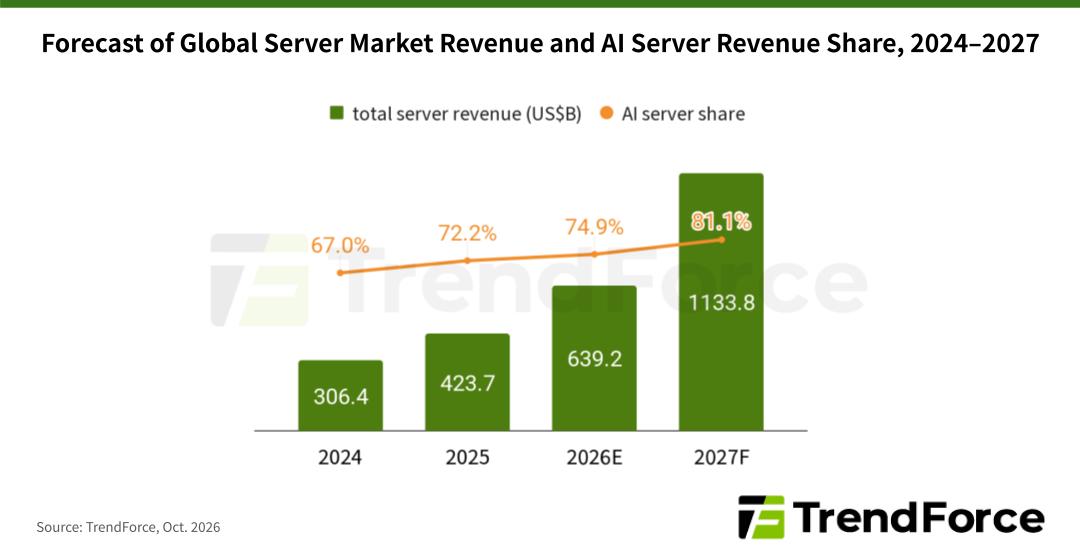
Global AI server momentum builds as CSPs expand rack buys, hyperscalers advance in-house chips, and OEM orders grow.
JEDEC-defined SPHBM4 frees HBM from the interposer, trading latency and power for cost and layout.
As global computing power expands, traditional cabling faces severe thermal and power bottlenecks. Emerging Micro LED CPO technology, with its micron-level size and ultra-low power consumption, has become an ideal alternative for short-distance high-speed transmission in data centers. Despite processing hurdles and fierce competition, supply chain alliances are expected to drive mass production and substantial market value in the coming years.
CSP capex growth lifts server and AI shipments, chip forecasts rise, ODMs shift to racks, cooling gains traction.
AI chip demand surges in 2026, with high-end GPUs dominating. NVIDIA leads, ASICs gain share, liquid cooling expands, and AI server value hits record highs.
Photonic packaging drives AI infra, shifting to mass production. CPO and glass platforms solve bottlenecks.
Analyst View: Anticipating future supply shortages, buyers are actively replenishing server memory inventories, boosting suppliers' pricing power. Although long-term agreement price caps limit average gains, contract prices are projected to sustain a quarterly upward trend driven by extra demand.
The surge in demand for AI chips and high-speed servers is driving the demand for high-end fiberglass cloth. However, constrained by technical barriers, equipment bottlenecks, and yield challenges, the release of new capacity remains slow, resulting in a persistent supply-demand imbalance for critical materials. Consequently, high-end products are expected to remain in short supply in the short term.
AI drives data centers from air to liquid cooling. Vendors deploy high-density power and tech, boosting growth.
Research Areas:
Industry News