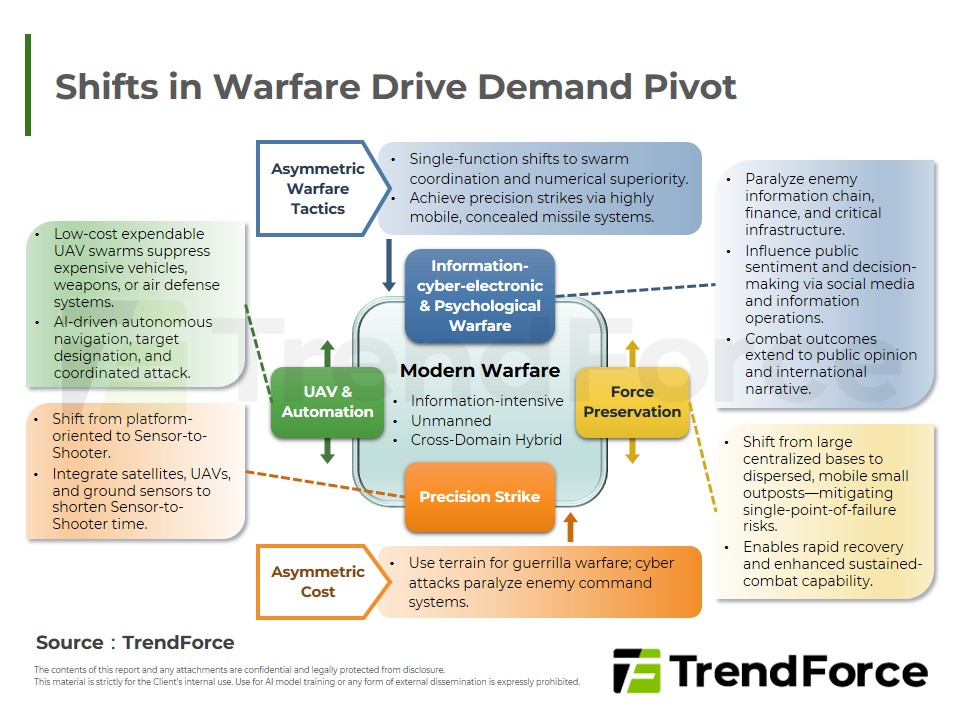
Intensifying global geopolitical conflicts are driving up defense spending, and warfare is pivoting toward asymmetric and information warfare, making low-cost unmanned vehicles (UAVs) crucial. China is deepening military-civilian integration to break through technology controls, while Taiwan is fully developing localized UAV and AI defense supply chains to strengthen resilience.
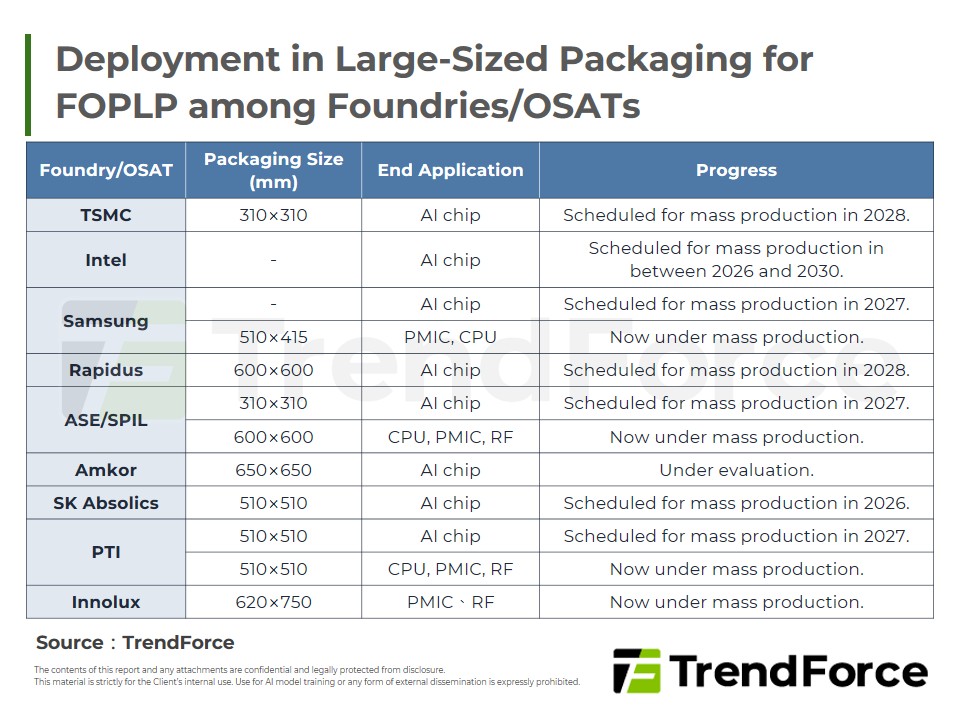
With Google, Meta, and MediaTek all considering adopting Intel’s EMIB packaging technology, Intel’s technological progress in advanced packaging and glass substrates has once again attracted significant attention in the industry. In particular, Intel showcased the first sample at NEPCON Japan on January 22nd 2026 that combines Intel’s EMIB packaging with a glass substrate, capable of supporting a chip twice the reticle size, with bump pitch shrunk to 45µm, and claimed to have achieved No SeWaRe (no micro‑cracks) during testing, implying that glass substrates are one step closer to mass production. On the other hand, besides Intel, TSMC, Samsung (SEMCO), Rapidus, and SK Absolics are also expected to achieve mass production of glass substrates successively between 2027 and 2028.
This report mainly provides in‑depth analysis of: (1) trends in large‑size chip packaging; (2) the advantages of glass substrates; (3) the glass substrate technology roadmaps of major foundries/OSATs; (4) challenges in mass production of glass substrates; (5) glass substrate solutions and corresponding suppliers; and (6) an overview of the glass substrate supply chain and opportunities for Taiwanese manufacturers. This report analyzes current demand drivers for glass substrates, technological bottlenecks, supplier performance, and potential supply‑chain opportunities for Taiwanese companies.
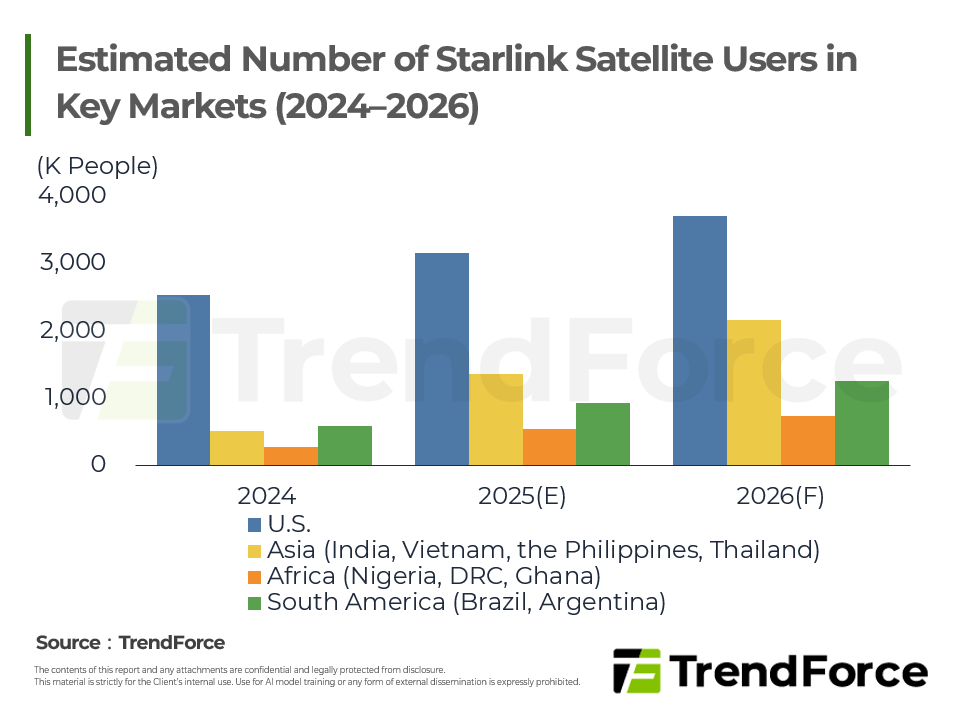
The global satellite market is expected to reach $392 billion in 2026. Competition will intensify as Starlink continues expanding satellite broadband and direct-to-cell (D2C) services into emerging markets, prompting MEO/HEO/GEO satellite operators to accelerate multi-orbit deployment strategies to counter Starlink’s growing influence.
Meanwhile, early-stage 6G deployment is underway. As global satellite service markets rapidly scale, Taiwanese manufacturers are shifting production bases to Southeast Asia while increasing shipments of key satellite components.
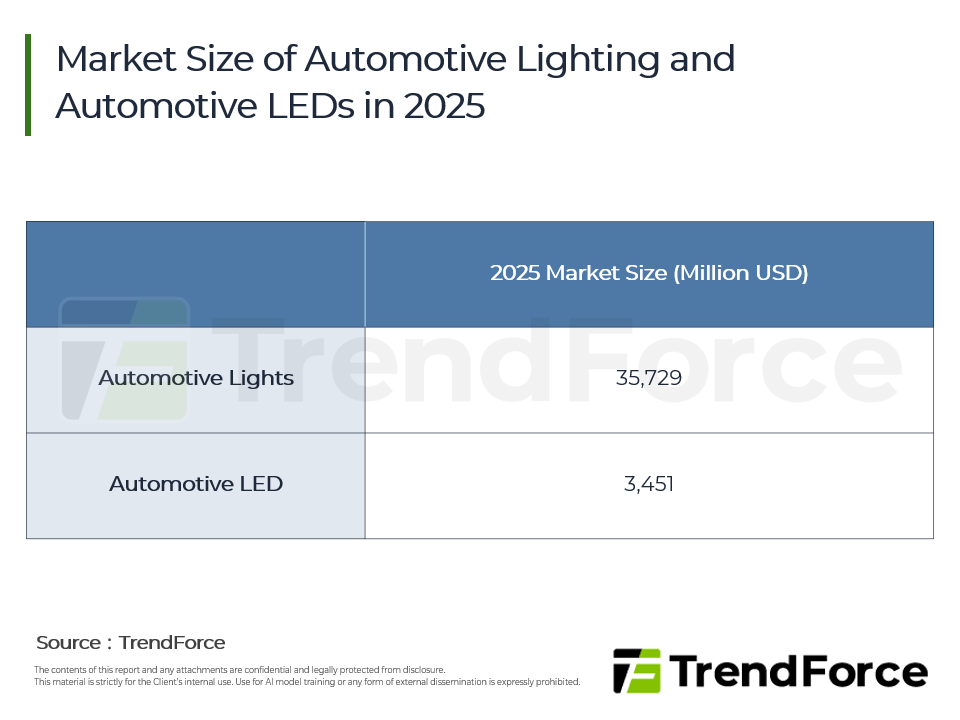
The global automotive LED market for lighting and display applications in 2025 is expected to face significant pricing pressure due to ongoing macroeconomic uncertainty. However, an analysis of order performance among automotive LED suppliers indicates that vehicle production may recover in the second half of 2025. Along with the continued adoption of advanced technologies in 2026 vehicle models, the market value of automotive LEDs and automotive lighting is projected to grow to $3.451 billion and $35.729 billion, respectively.
Automotive lighting and display technologies are progressing toward personalization, communication displays, driver assistance, and safety enhancements. In response, automakers are increasingly promoting advanced technologies as high-value features. These include adaptive headlights, Mini LED taillights, full-width light bars or through-type taillights, grille lights, and broad front light strips, intelligent ambient lighting, ground projection, and Mini LED backlight displays.
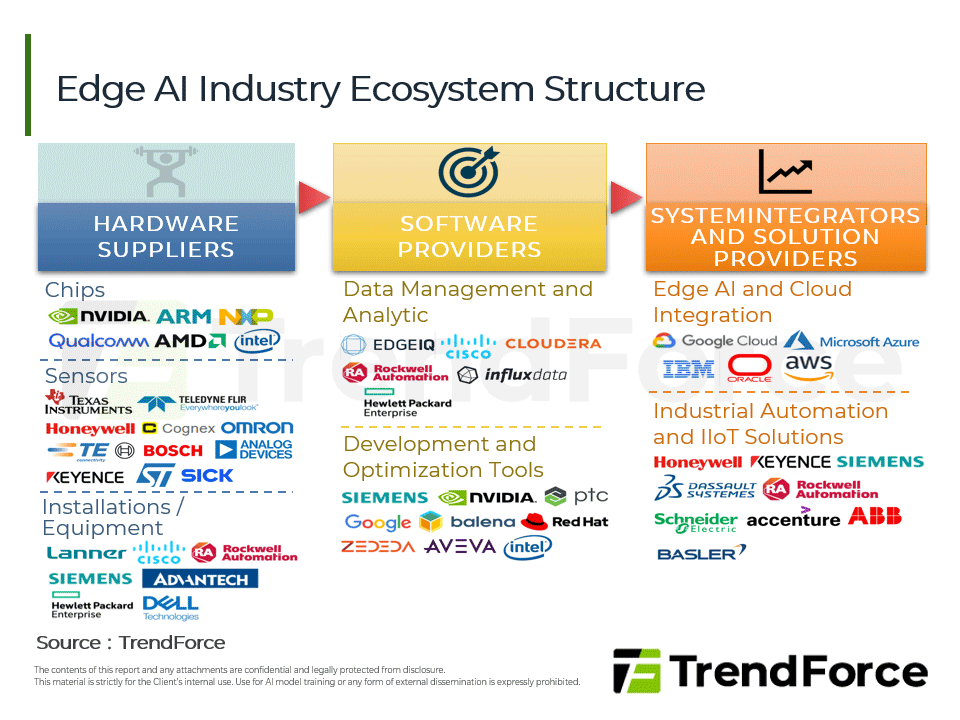
In its endeavor to bolster its global leadership, the United States is actively promoting the reorganization of supply chains and the repatriation of manufacturing through the implementation of reciprocal tariffs and a significant increase in strategic investments. This report provides a comprehensive examination of the U.S. smart manufacturing landscape, with specific attention to the semiconductor, automotive, and fast-moving consumer goods (FMCG) sectors. It delves into the strategic postures of key companies and their deployments in hardware (e.g., chips and sensors), software, and integrated systems.
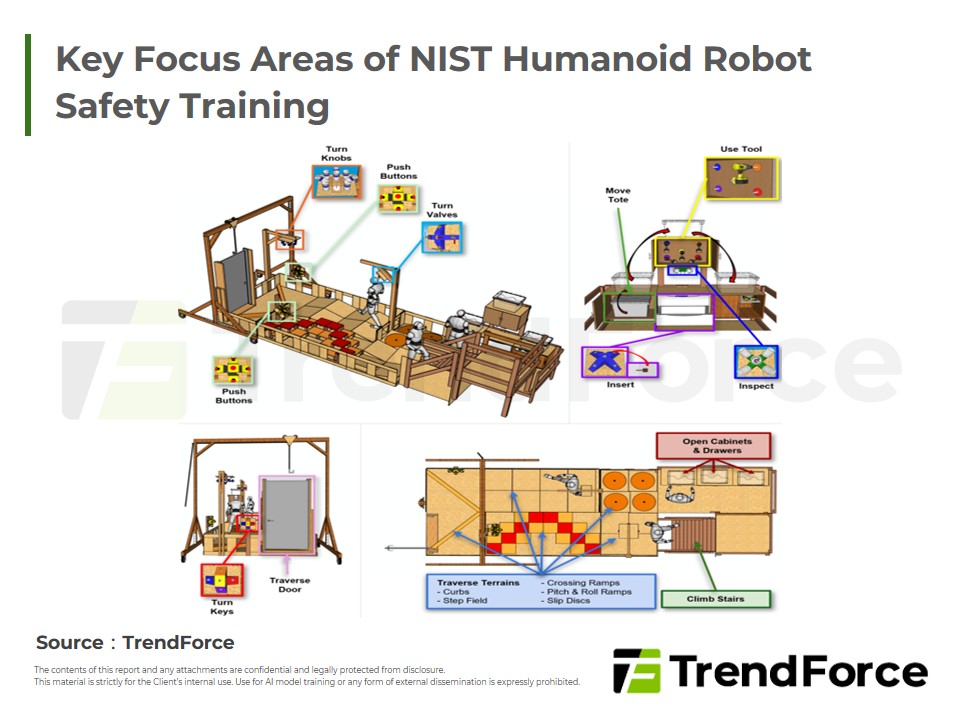
As the global market expands its investment in AI computing and the development of related applications, humanoid robots are expected to become the largest AI application by market size. The introduction of torque and inertia sensing technology by manufacturers is critical for humanoid robots to walk flexibly and mimic human behavior in various scenarios. These two sensor systems need to work perfectly in sync, driving robots from simple programmed actions towards more natural human behavior. Humanoid robots need to operate in complex and variable environments and possess reaction speeds similar to humans. Their sensing systems must accurately perceive and respond to their surroundings. Currently, several robot manufacturers are specializing in improving their walking performance.
DeepSeek’s rapid rise not only highlights the role of algorithm optimization in balancing model performance and hardware efficiency but also signals a shift in AI development toward inference-driven applications. AI agents are expected to become the primary form of such applications, gradually evolving into systematic Agentic AI, enabling greater automation and goal-oriented task execution.
Demand for large panel driver ICs is set to rise sequentially throughout 2024, with ample overall supply. However, uncertainty in end-user demand has led to conservative stocking practices in the supply chain, fostering a reliance on short-term, rush orders—a practice that threatens long-term supply chain health.
In 2023, mobile TDDI chips benefited significantly from active repair and second-hand markets, resulting in annual shipments far exceeding intial forecasts. The release of lower-cost capacities by Chinese wafer foundries has helped sustain robust demand for mobile TDDIs through 2023 to 2024. Nonetheless, intense comptition in this segment has escalated price wars.
For AMOLED driver ICs, the introduction of new production capacities has boosted demand as AMOLED smartphone panel penetration increases. Currently, the market faces no-short-term supply shortages. As more suppliers enter the AMOLED DDI market, prices continue to decline. Maintaining profitability in AMOLED DDI production remains a critical challenge for IC manufacturers, especially with stable wafer prices.
1. Development of Global AI Industry Chain
2. Analysis of Cross-Modal Business Opportunities in AI
3. A Breakdown of Hardware Supply Chain
4. TRI’s View
1. Global Overview of the AI Market Development
2. The Necessity of Openness in AI Development
3. Current Applications and Development of AI
4. TRI’s View