
TrendForce offers you a complete analysis on DRAM industry supply/demand sufficiency, cost analysis and price forecast.
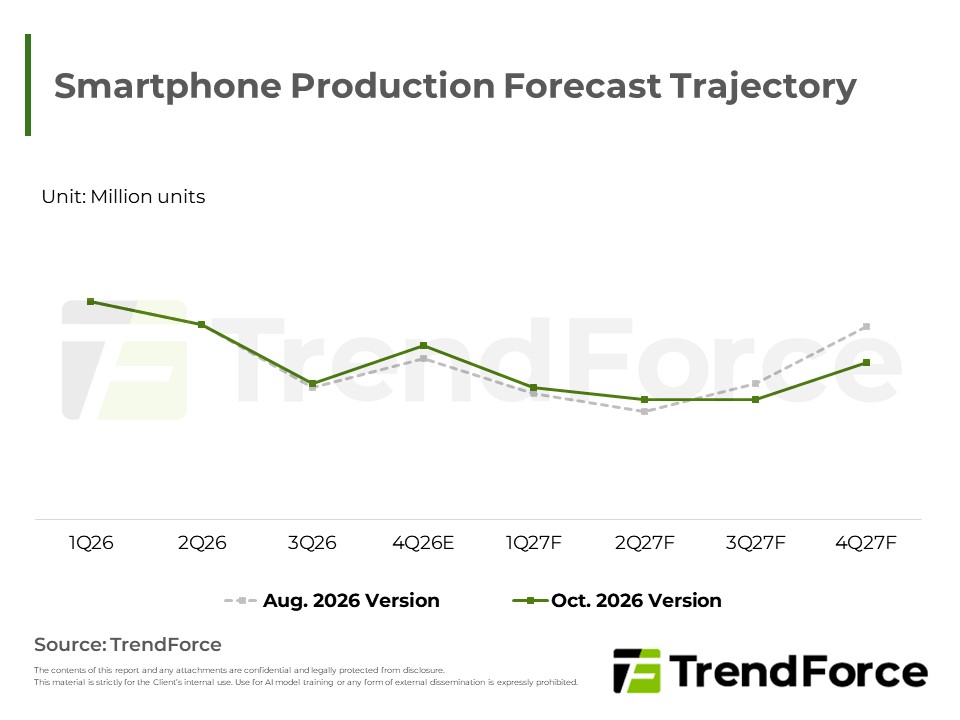
Rising memory prices curb next year's smartphone output, eased by pulled and downgraded parts; server demand props up quotes, but ample consumer inventory leaves trading thin.

TrendForce offers you a complete analysis on NAND Flash industry supply/demand sufficiency, cost analysis and price forecast.

Market Flash is a dedicated membership program that provides clients with access to special reports on display-related markets, offering timely insights and exclusive research updates through a secure...
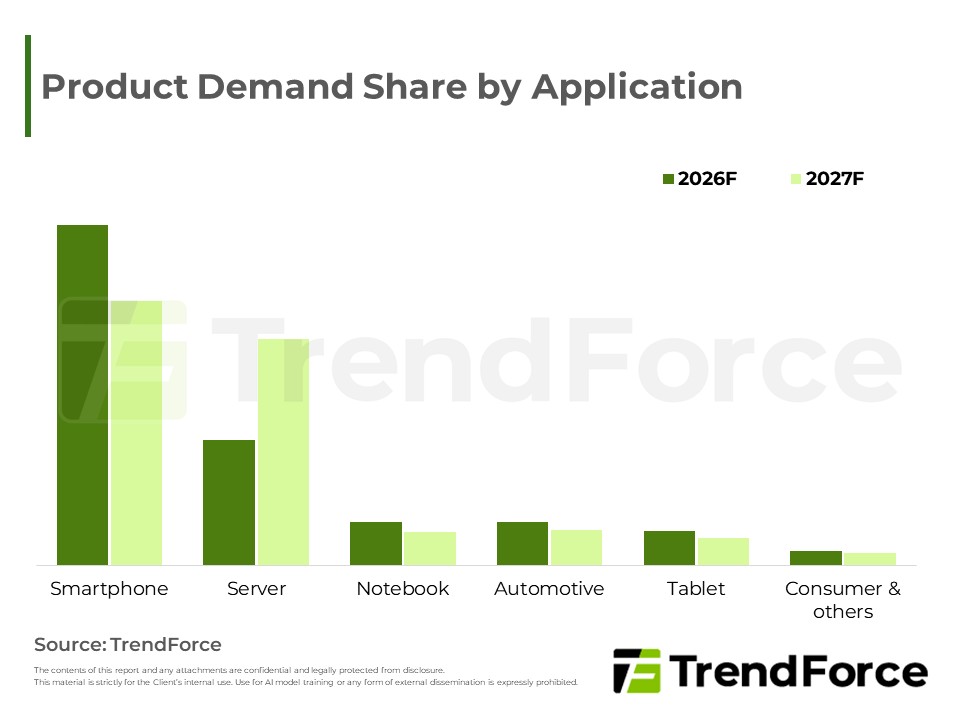
Agentic AI elevates memory as LPDRAM shifts to servers, squeezing smartphones and widening the gap for smaller brands.
Quarterly Smartphone Market Status Update tracks on global smartphones market trend. Through the discussion of market scale, trend of panel spec, cost and price changes as well as the movement of capa...

Market Flash is a dedicated membership program that provides clients with access to special reports on display-related markets, offering timely insights and exclusive research updates through a secure...
Market Flash is a dedicated membership program that provides clients with access to special reports on display-related markets, offering timely insights and exclusive research updates through a secure...
AI servers continue to crowd out DRAM capacity, driving a supply-demand imbalance and price hikes that will persist into 2027. Impacted by skyrocketing component costs, global smartphone shipments are...
Surging memory prices have triggered early purchasing, driving a short-term recovery in smartphone production this year; however, this pull-in effect will exacerbate market deterioration next year. Co...
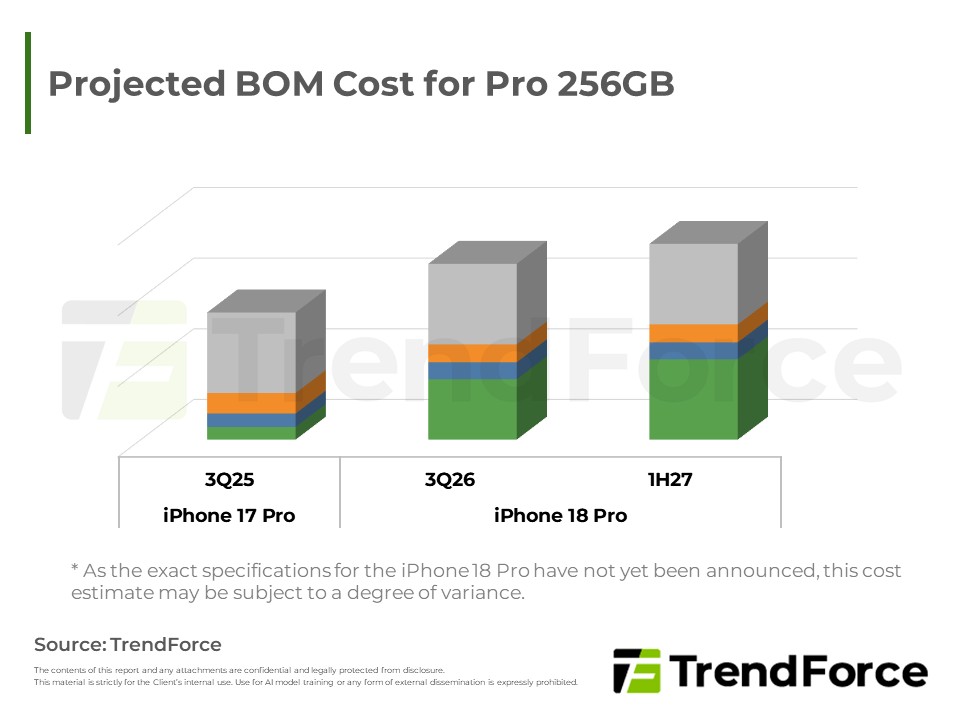
New CEO Ternus leads Apple's first foldable launch; modest specs upgrade amid surging memory costs puts pricing and AI delivery at center stage.
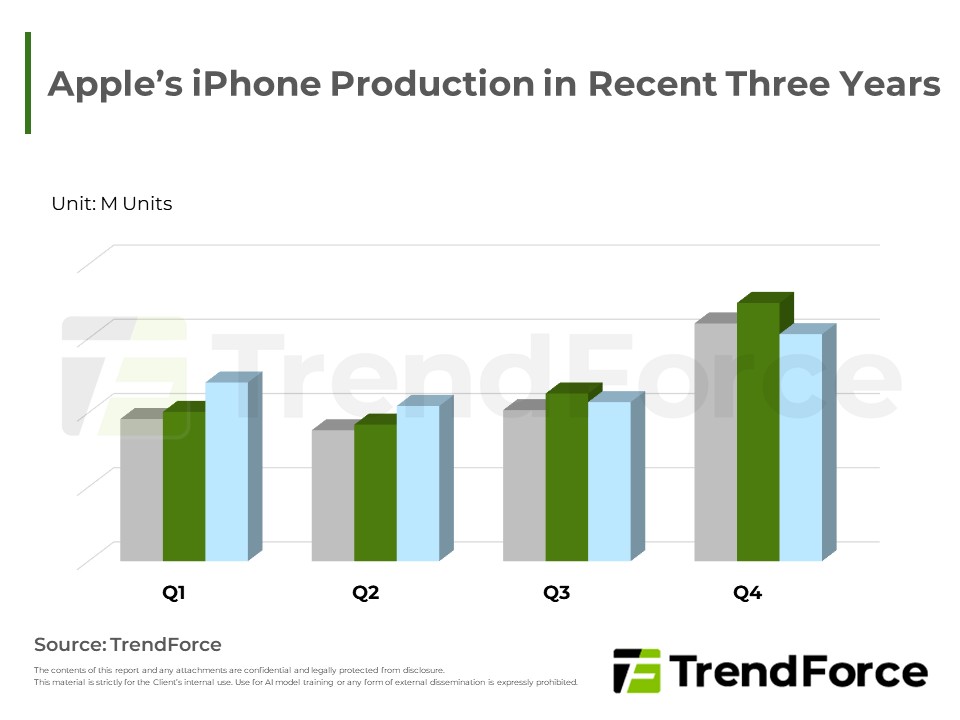
Rising memory costs triggered premature purchases as consumers sought to beat price hikes, driving a short-term rebound in smartphone production and prompting TrendForce to revise its full-year output...
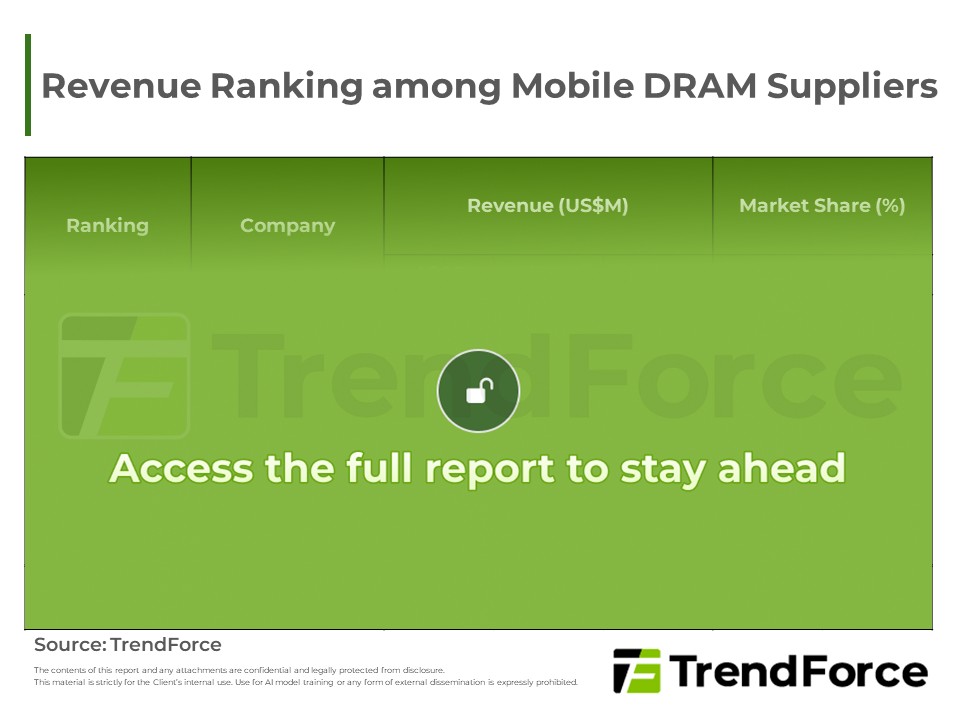
Mobile DRAM revenue surged sharply in 2Q26; four vendors dominate. Growth will moderate in 3Q26 as price gains slow.
Mobile DRAM and Mobile NAND Flash latest market supply/demand update.
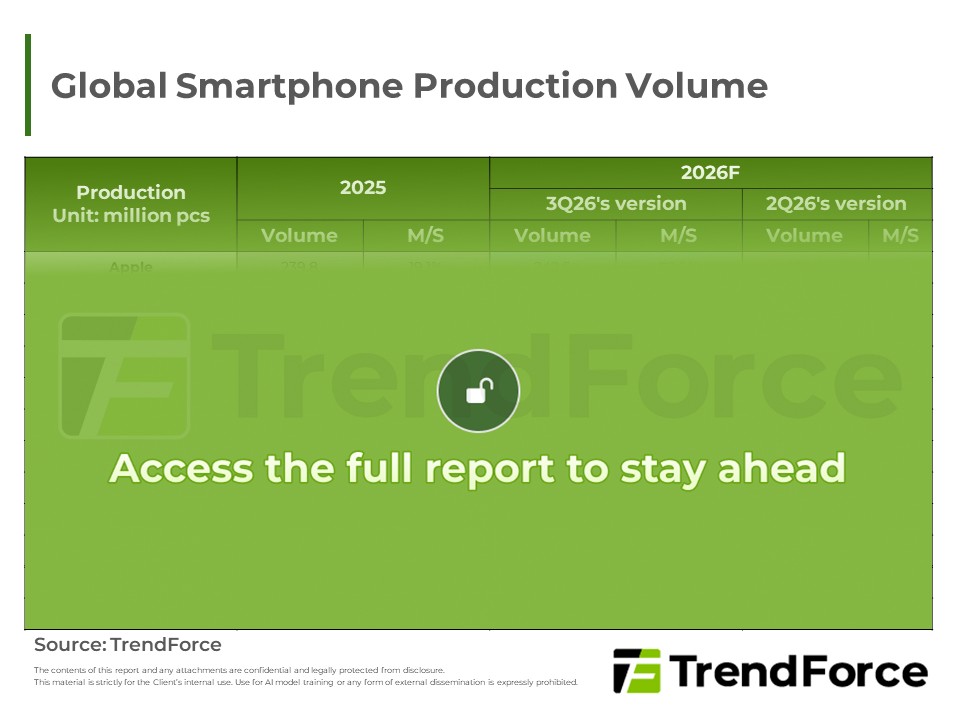
TrendForce revises 2026 smartphone output upward, driven by demand pull-forward, not recovery; rising DRAM costs in 2027 risk deeper market contraction.