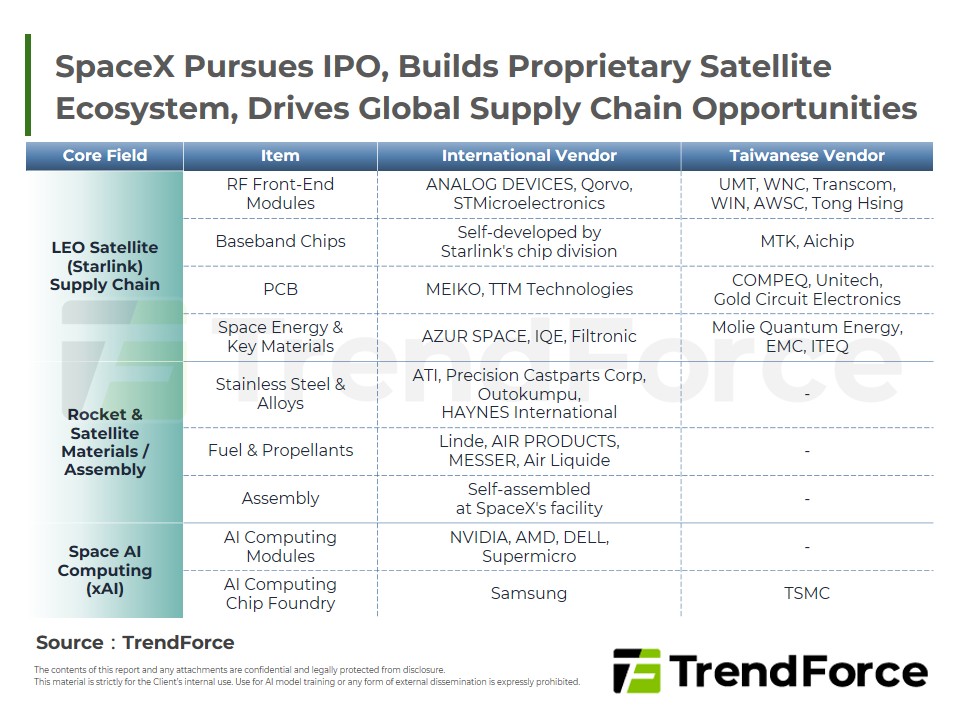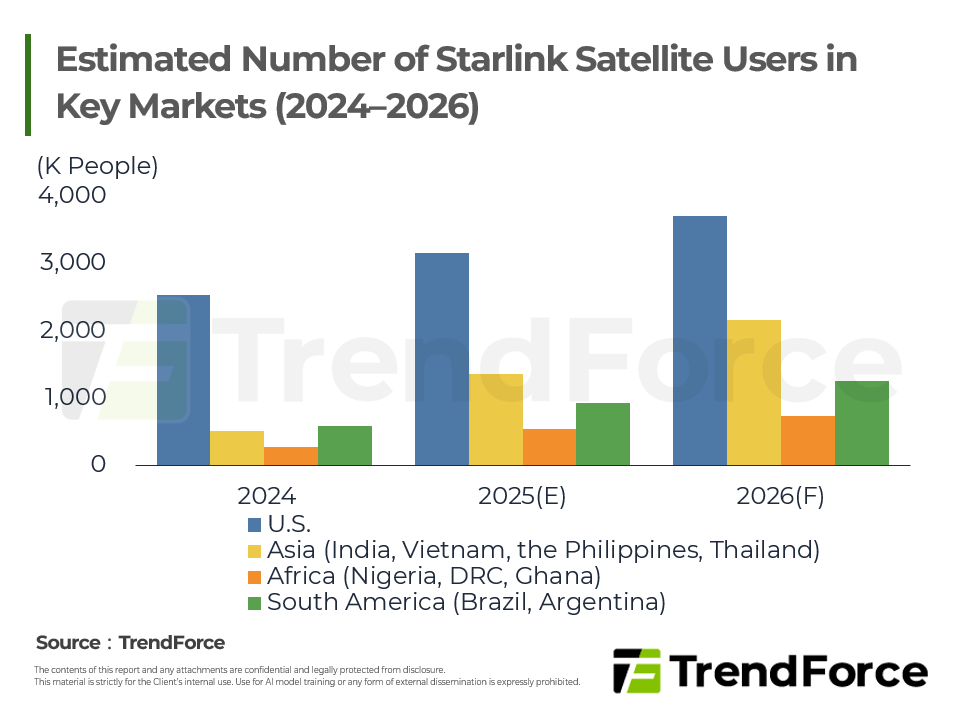
Following its IPO, SpaceX is building a proprietary satellite ecosystem spanning broadband, direct-to-cell, and space computing, creating fresh global supply chain opportunities. Leading operators use proprietary protocols to strengthen market moats, while facing challenges from space debris and spectrum regulation. Taiwanese suppliers leverage quality and flexibility to deepen ground equipment positioning.
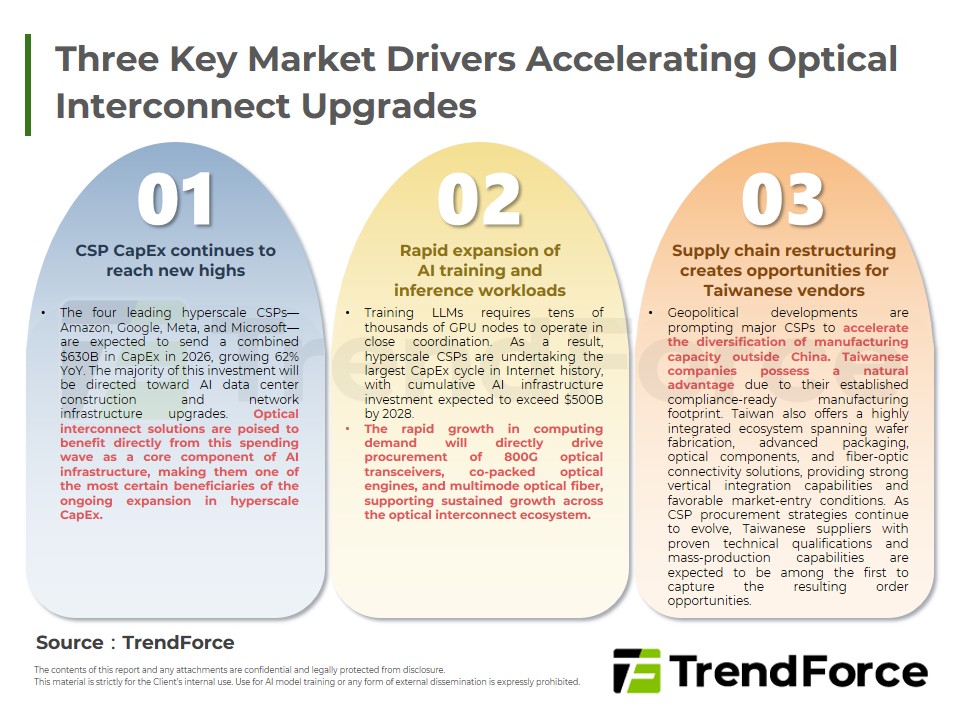
Co-packaged optical (CPO) technology is entering the commercialization stage, driven by AI data center demand for higher bandwidth and lower power consumption. Volume production begins in 2026, with large-scale procurement expected in 2027–2028. Fiber alignment, thermal management, and testing costs are the three core technical barriers to production ramp. Silicon photonics wafers, InP substrates, and FAUs are highly concentrated among a limited number of suppliers, posing supply disruption risks. Taiwanese manufacturers are entering via contract manufacturing and assembly; securing upstream material access will be the defining strategic priority in the next phase.
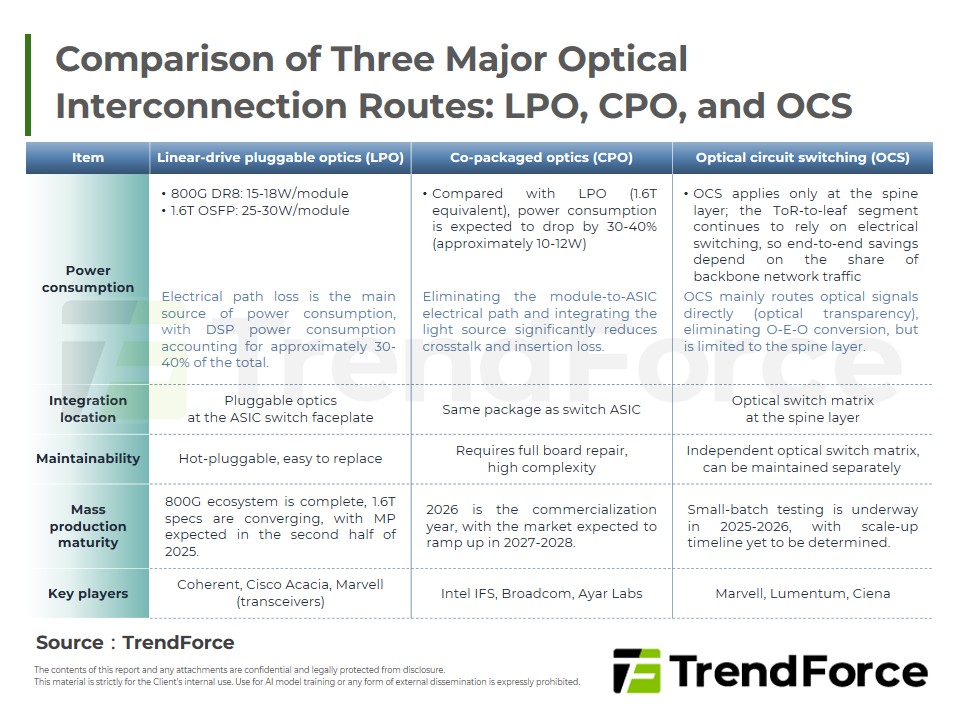
Optical interconnects in AI data centers are shifting from legacy pluggable optics toward LPO, CPO and OCS. LPO streamlines the signal chain to improve power while keeping a pluggable model, CPO co‑packages optics for higher density and efficiency, and OCS uses optical switching for large, dynamic AI networks, together forming key next‑generation infrastructure.
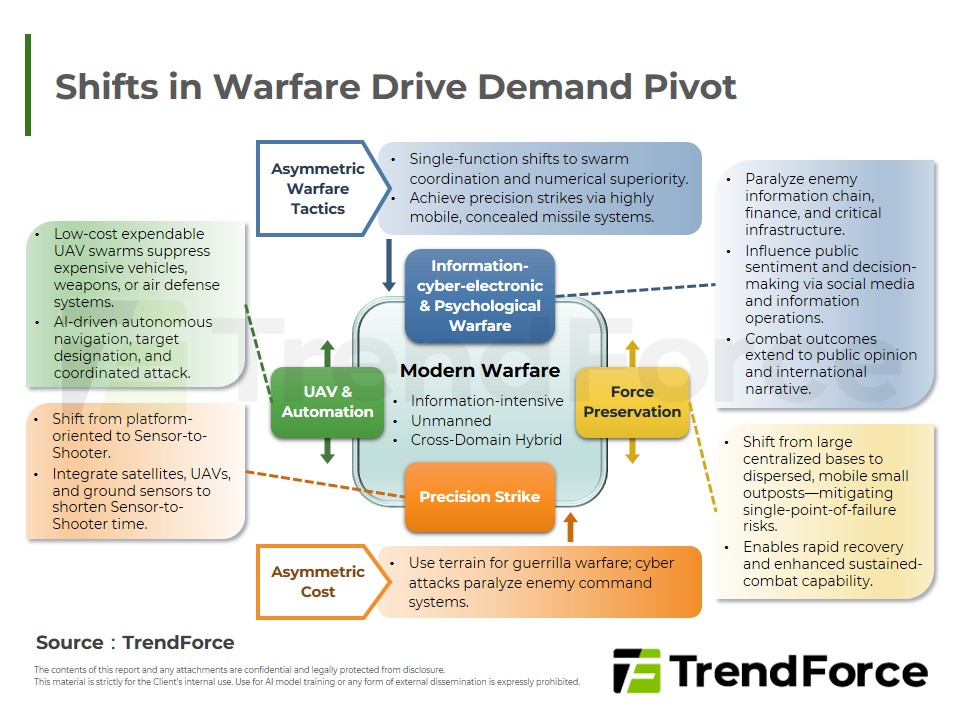
Intensifying global geopolitical conflicts are driving up defense spending, and warfare is pivoting toward asymmetric and information warfare, making low-cost unmanned vehicles (UAVs) crucial. China is deepening military-civilian integration to break through technology controls, while Taiwan is fully developing localized UAV and AI defense supply chains to strengthen resilience.
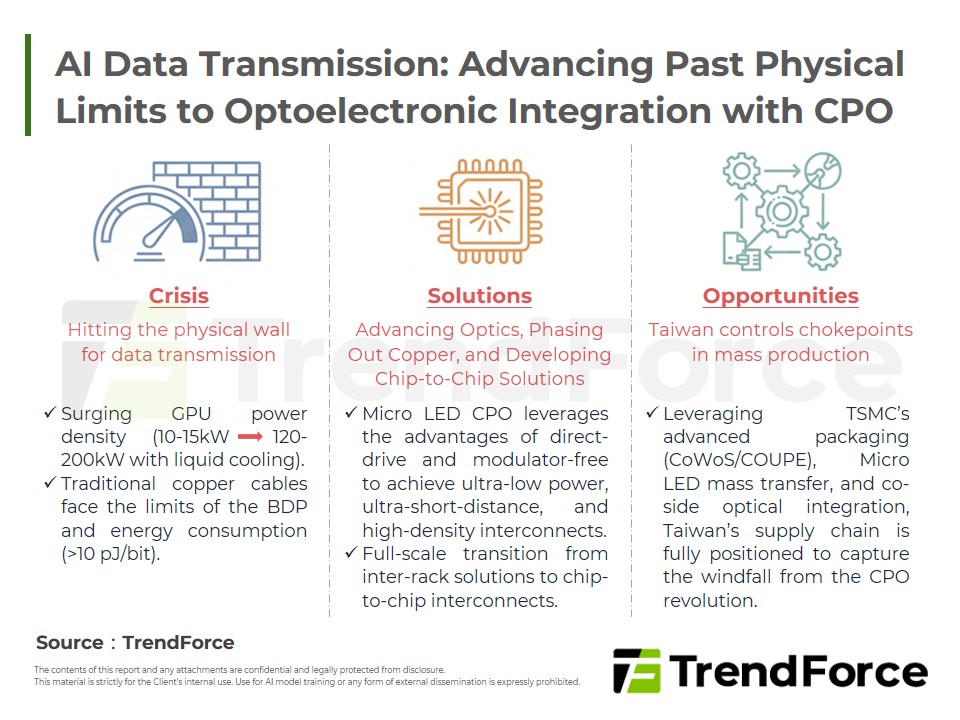
With the generative AI market expanding at a CAGR of over 35%, data throughput for a single large language model (LLM) training task has reached the exabyte (EB) level. As transmission speeds evolve toward 1.6Tbps, traditional copper cables are hitting a “physical wall,” limiting transmission distances to under one meter and creating a massive energy drain. Leveraging cross-domain technologies like TSMC’s Compact Universal Photonic Engine (COUPE) advanced packaging and Micro LED mass transfer, Taiwan’s supply chain has built a comprehensive ecosystem—spanning wafer foundries and ASIC design to photoelectric testing. Consequently, Taiwan has become an indispensable strategic hub in the global AI computing infrastructure.
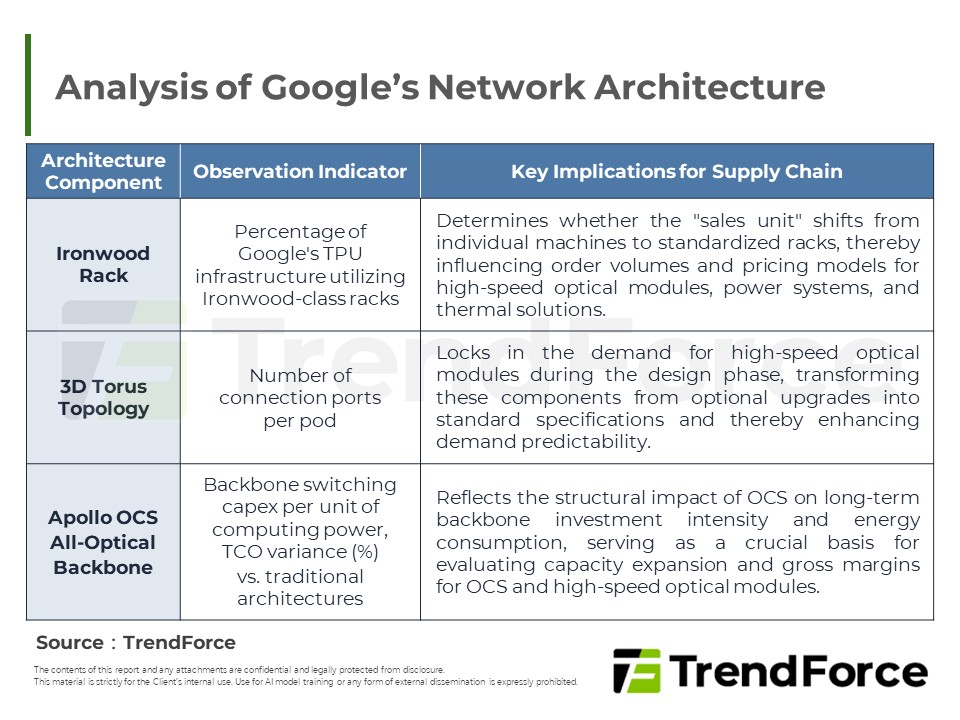
1. Google is consolidating its proprietary TPUs, Ironwood racks, 3D Torus topology, and the Apollo OCS optical backbone into a unified high-speed interconnect architecture. As a result, the focus of cluster planning is shifting from individual servers to modular designs centered on racks and Superpods.
2. Under this architecture, the share of 800G+ high-speed optical modules in data centers deployments is projected to grow from roughly 20% in 2024 to over 60% by 2026. No longer an optional upgrade, these modules are becoming the baseline configuration for next-generation clusters, driving annual demand into the millions.
3. For the optical interconnect supply chain, 800G+ optical modules and OCS systems are becoming critical elements deeply integrated with Google’s infrastructure. Between 2026 and 2028, supply tightness and profitability within the sector will be primarily driven by the available production capacity and yield rates of lasers and MEMS.
4. For industry strategists and investors, assessing the market outlook over the coming years requires looking beyond GPU and TPU shipments. It is equally important to track the shipment volume and penetration of 800G/1.6T optical modules to fully understand the structural shifts between computing power deployment and high-speed interconnect investments.
The exponential growth of generative AI is forcing data center infrastructure into an unprecedented architectural overhaul. As system bottlenecks shift away from compute and toward the “I/O wall,” the physical layer is accelerating its migration from copper to optics.
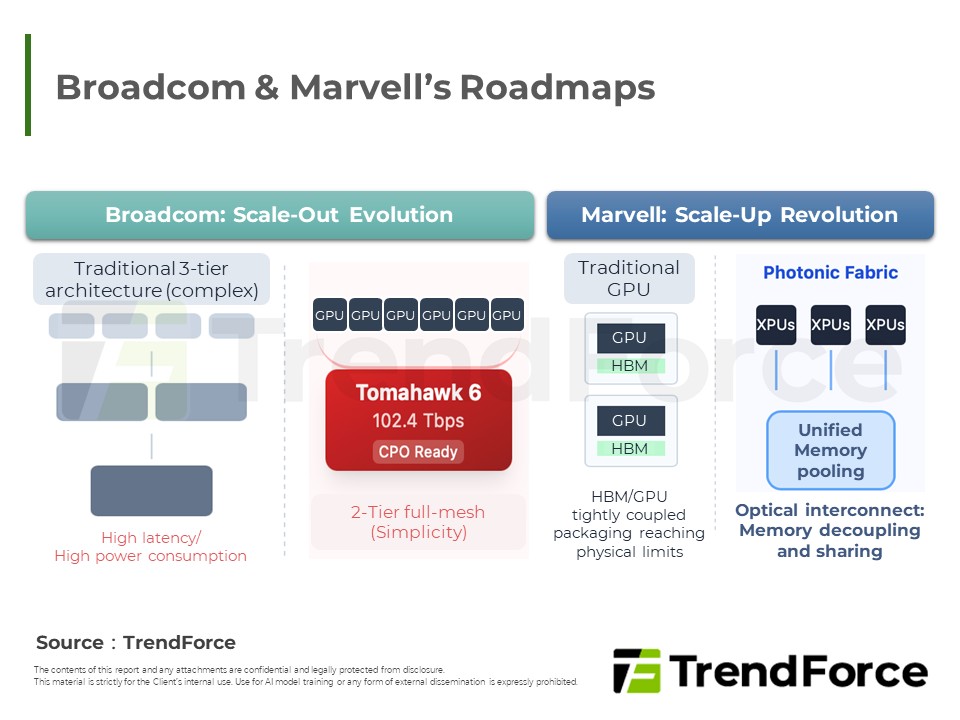
This report examines the strategic divergence between Broadcom and Marvell—one favoring evolutionary dominance, the other pursuing architectural disruption—and explores how the convergence of 224G SerDes and the rise of the Ultra Ethernet Consortium (UEC) are reshaping industry standards. It further analyzes how Taiwan’s supply chain is emerging from traditional manufacturing roles to become a key enabler and architect of next-generation system design.
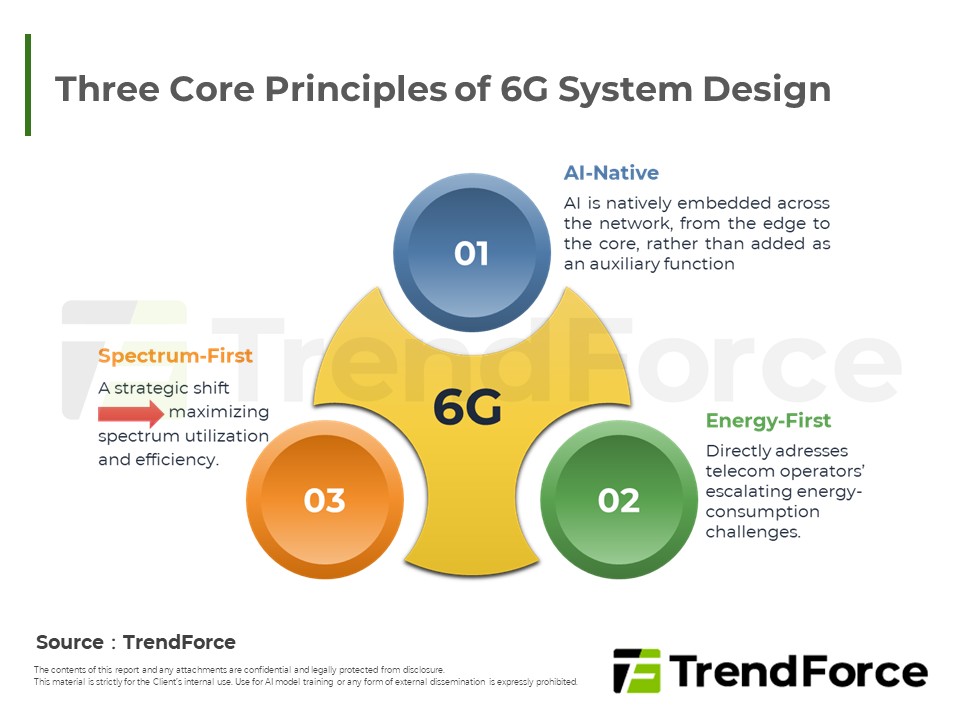
The arrival of 6G marks a fundamental shift toward fully AI-native network architectures, reshaping both communications technologies and market structures. Compared with 5G-Advanced, 6G design places a much stronger emphasis on energy efficiency—measured as energy per bit—driving a new division of labor between C-RAN and O-RAN, broader adoption of GaN and SiC materials, and deeper integration of photonic and electronic interconnect technologies.
AI is becoming increasingly central to RAN control, beam management, scheduling optimization, and spectrum allocation. At the same time, emerging materials such as AIN, Ga2O3, and diamond are demonstrating significant potential to surpass the performance limits of today’s mainstream semiconductors. Together, technological advances and commercial imperatives are jointly reshaping competitive dynamics in the 6G era, unlocking high-value markets spanning Industry 5.0, autonomous driving, smart healthcare, and AI agents
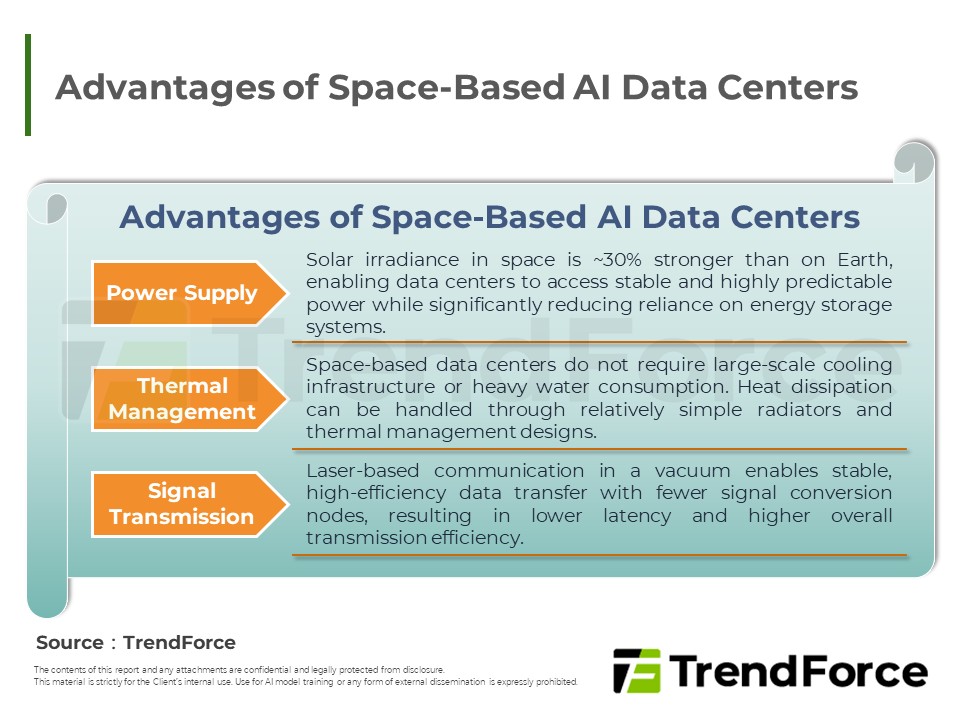
This report examines SpaceX’s latest developments and competitive advantages in space launch services and LEO satellite communications. It also highlights SpaceX’s recently disclosed plans for space-based AI data centers and identifies Taiwanese suppliers that have already entered—or may potentially join—SpaceX’s space industry supply chain.
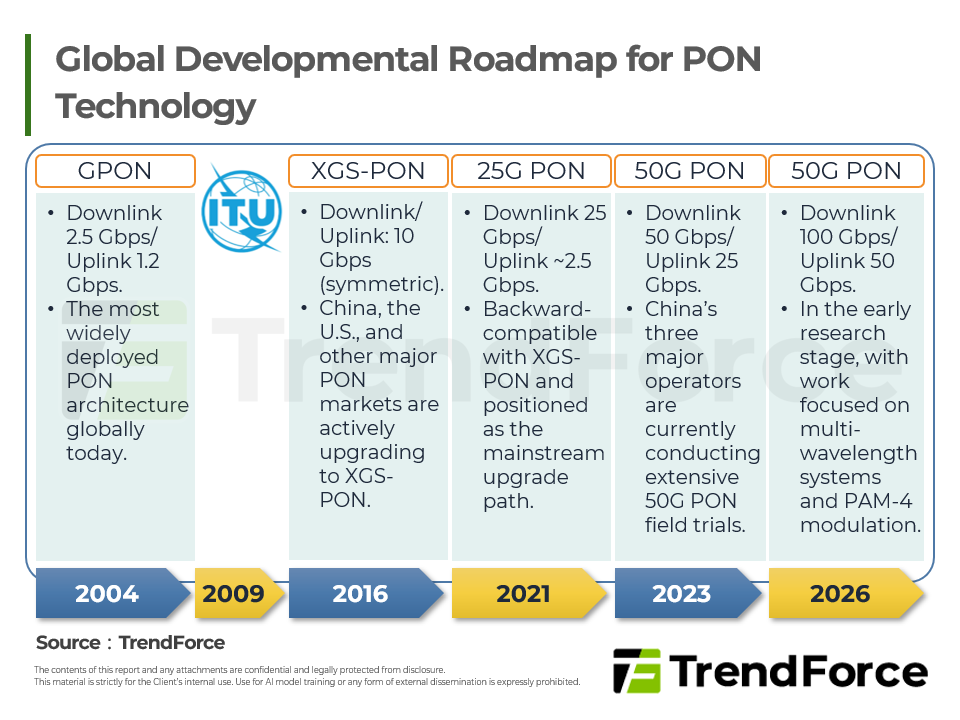
The need for upgraded passive optical network (PON) technology is accelerating as global residential and enterprise demand for FTTH continues to surge. Driven by policy initiatives, China and the U.S. are steadily advancing from traditional gigabit-PON (GPON) toward XGS-PON, 25G PON, and 50G PON. Meanwhile, major telecom operators and equipment vendors are collaborating not only on large-scale deployments of foundational GPON and Ethernet-PON (EPON) networks, but also on field trials of next-generation, high-performance systems such as the 50G PON.