Non-TSMC foundries head into 2027 with higher utilization, price hikes, and sustained strong revenue growth.
Taiwan foundries see a strong 2027 as utilization rises, capacity expands, and prices climb across the board.
AI peripheral demand drove advanced nodes and spilled into mature nodes, while consumer restocking continued, lifting 2Q26 revenue to a new high. Top five stayed stable; VIS rose on stronger demand, r...
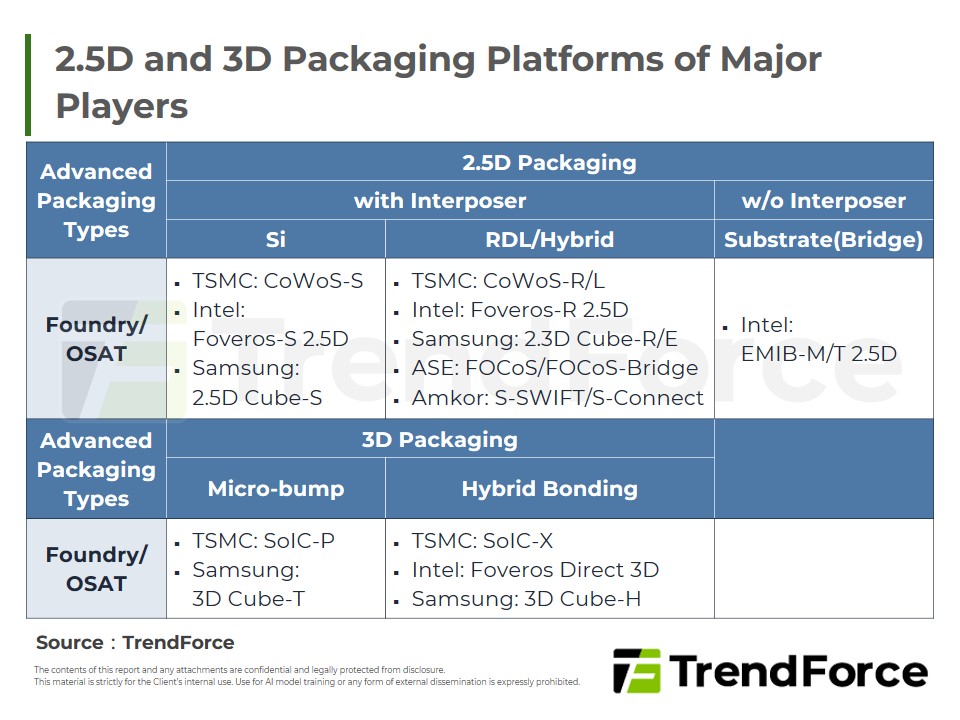
In the OCP APAC Summit held in August 2026, suppliers including TSMC, ASE, and AMAT all highlighted the future trends of 3D IC. In September, during SEMICON, the 3DIC Advanced Manufacturing Alliance (...
A Vanguard Fab3 rooftop fire spared the cleanroom; output resumed, CMP is recovering, revenue impact stays limited.

The Platinum reports provide analyses of the foundry industry, starting from TrendForce’s memory industry analysis and application demand in the downstream, extending to the semiconductor upstream, en...
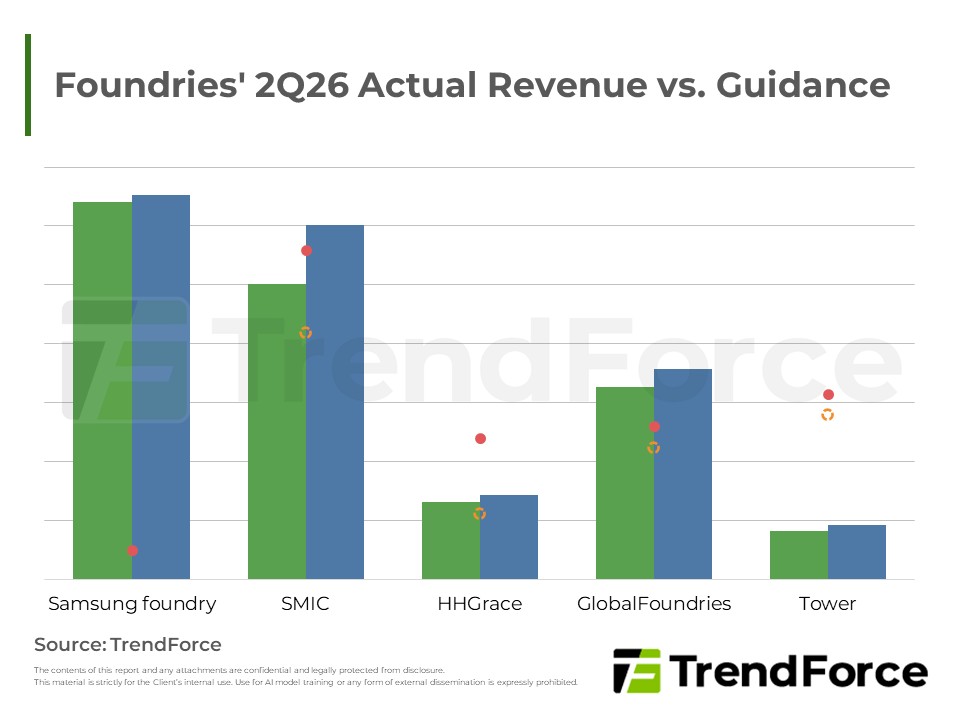
2Q26 foundry revenue rose broadly; overseas, China fab expansion should keep capacity tight, lifting full-year momentum.
TSMC, UMC, Vanguard and PSMC posted higher 2Q26 revenue on price hikes and strong demand, with capex broadly raised.

From a professional analyst's perspective, the global semiconductor market is strongly driven by surge in artificial intelligence and cloud computing, boosting high-performance chips and opti...
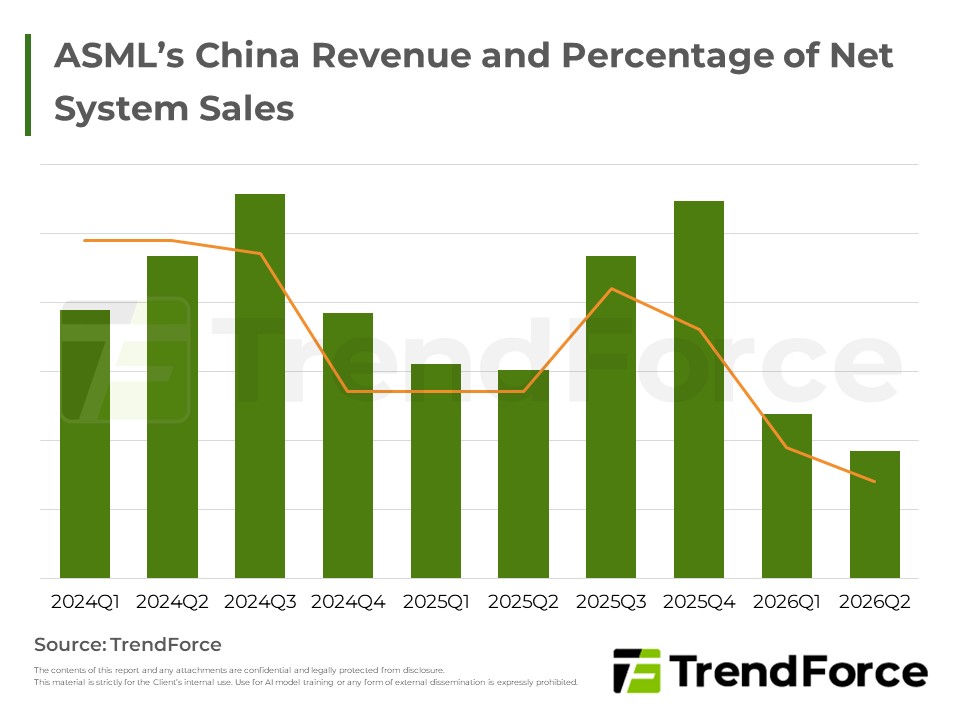
China's lithography drive poses little threat to ASML, but other mature-node process gains erode Western and Japanese rivals' revenue.
A major quake hit TSMC's JASM fab in Kumamoto, forcing a brief halt, but damage looks contained and impact stays limited.
AI demand reshapes foundry priorities: photonics, packaging gains, tight mature nodes, rising power investment.
Major foundries push fab buildouts, transfer orders, price talks, and specialty processes to boost capacity.
AI-driven demand displaces mature node capacity, triggering price hikes across 8-inch and 12-inch foundry that could last through 2027.

The Diamond reports cover major foundries such as TSMC, UMC, Samsung, SMIC, and GlobalFoundries, etc. The Diamond reports provide extended analyses of these foundries&a...