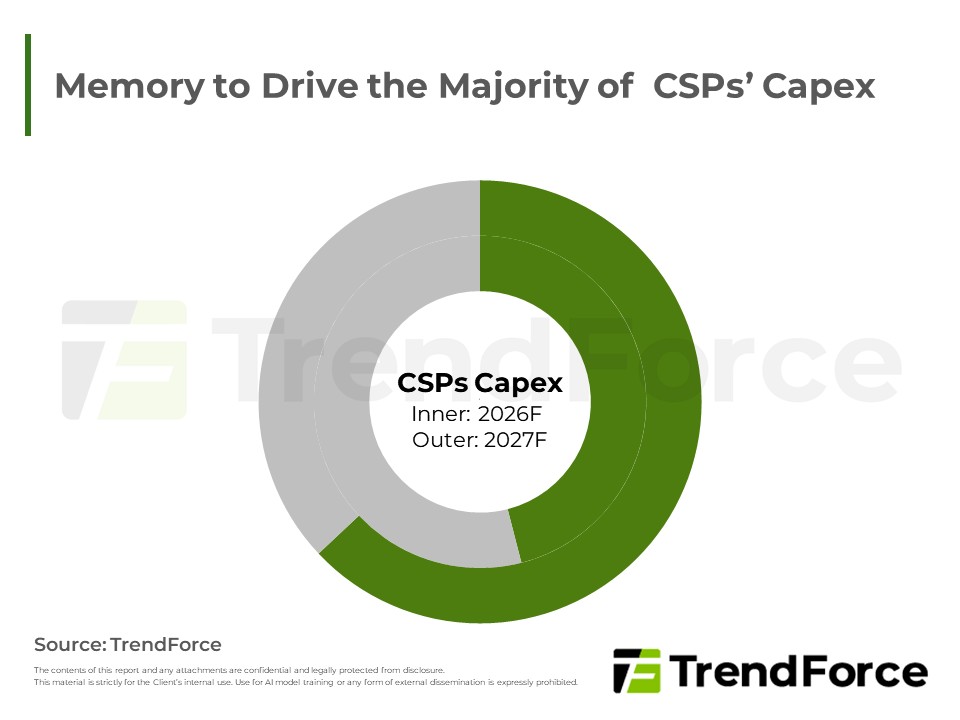
TrendForce has raised the capex forecast for major US and Chinese CSPs. With memory contract prices remaining elevated, memory spending is set to exceed half of total capex, while suppliers are priori...

For the price chart of global end prices of SSD, TrendForce segments product categories in accordance with capacity (from 120GB to 2048GB and above) and user interface (SATA3, PCIe 3.0/4.0/5.0).

TrendForce offers you a complete analysis on NAND Flash industry supply/demand sufficiency, cost analysis and price forecast.
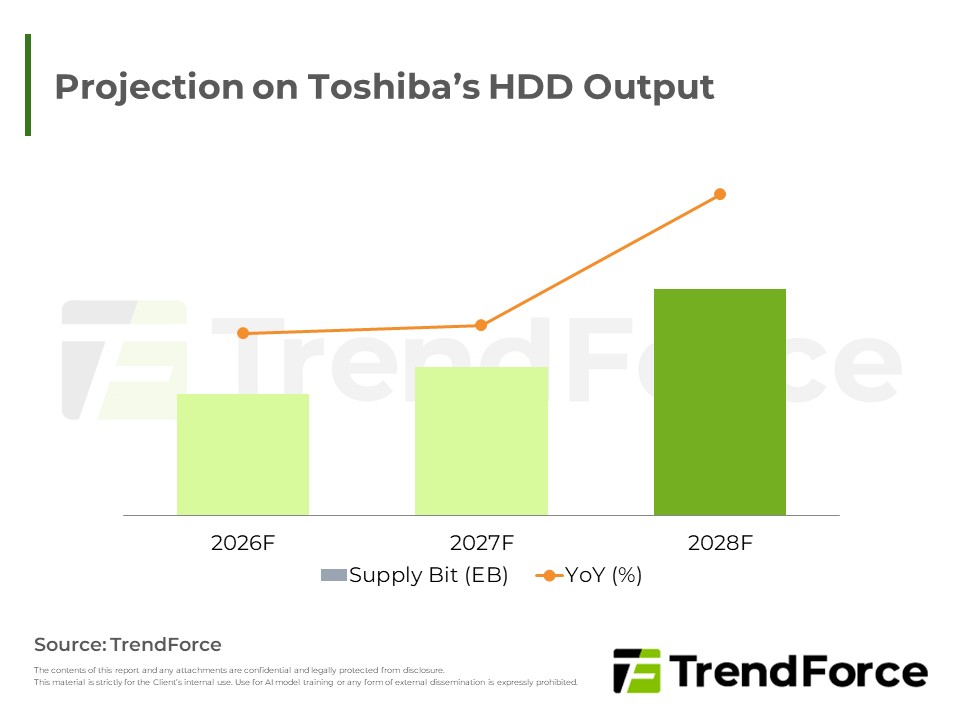
Toshiba is significantly expanding its HDD capacity in the Philippines, but given the lead time from investment to output, the benefits will materialize later, adding supply to the market without resh...

Micron's strong results and upbeat outlook show AI data centers, edge AI and physical AI driving high-capacity storage demand, with data center SSDs as NAND's core profit engine. Dis...
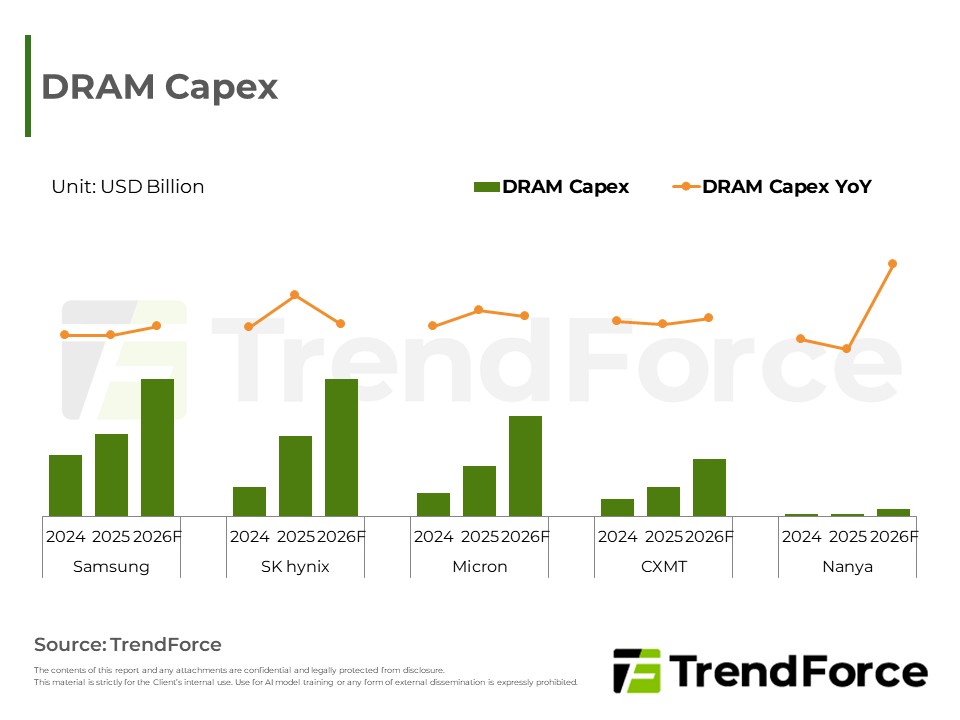
Robust AI demand has driven profitability in HBM and server products, squeezing consumer memory supply and sparking explosive growth in memory prices and industry revenue. DRAM vendors are substantial...
TrendForce combines its expertise in memory market and leverage it to provide a multi-faceted study of server market in this report. The content of it is as follows: 1. Server CPU Market: State of Co...
This report leverages TrendForce’s expertise in the memory industry, as well as extends its in-depth research and analysis on the automotive sector
The memory market is exhibiting a clear two-tier divergence. Strong demand for high-performance storage, driven by cloud and artificial intelligence applications, is keeping supplier inventories at lo...
Driven by weak consumer end-market demand, NAND Flash wafer prices have stagnated at high levels. Although enterprise demand remains strong due to AI, inventory continues to pile up on the consumer si...
As original manufacturers shift production capacity to high-layer 3D processes, niche NAND Flash prices remain hovering at high levels. Influenced by buyers' cost pressures and supply discrep...
CSP demand keeps 4Q26 DRAM and NAND prices rising, led by AI, while weak consumer demand narrows other gains.
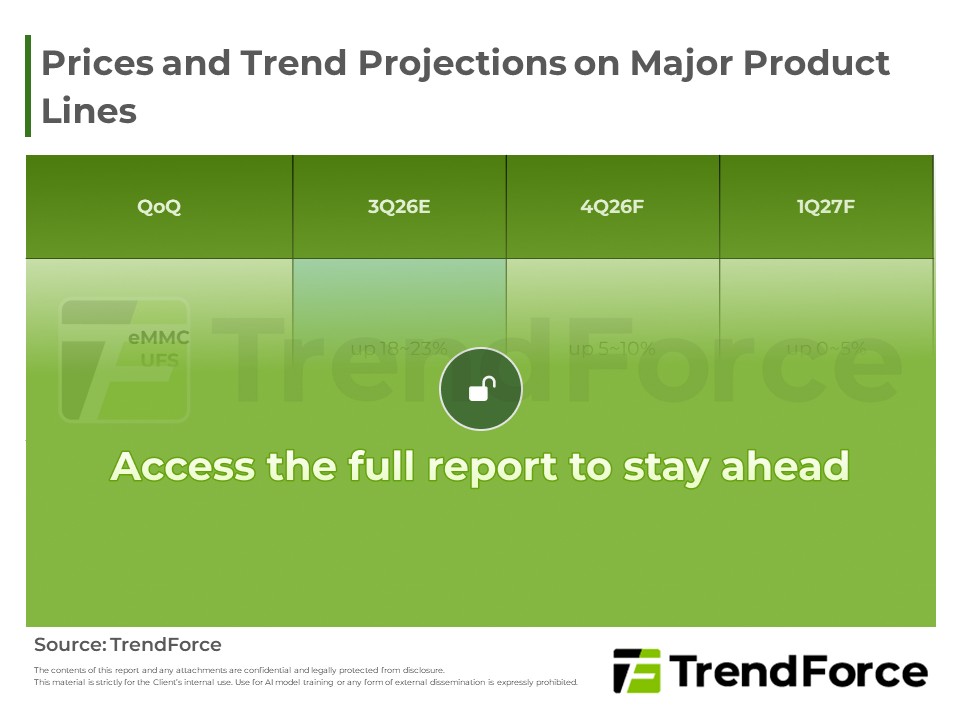
Driven by AGI and Agent AI, North American cloud providers' urgent orders for enterprise SSDs created a structural shortage in high-end storage. Suppliers prioritized capacity for high-margin pro...
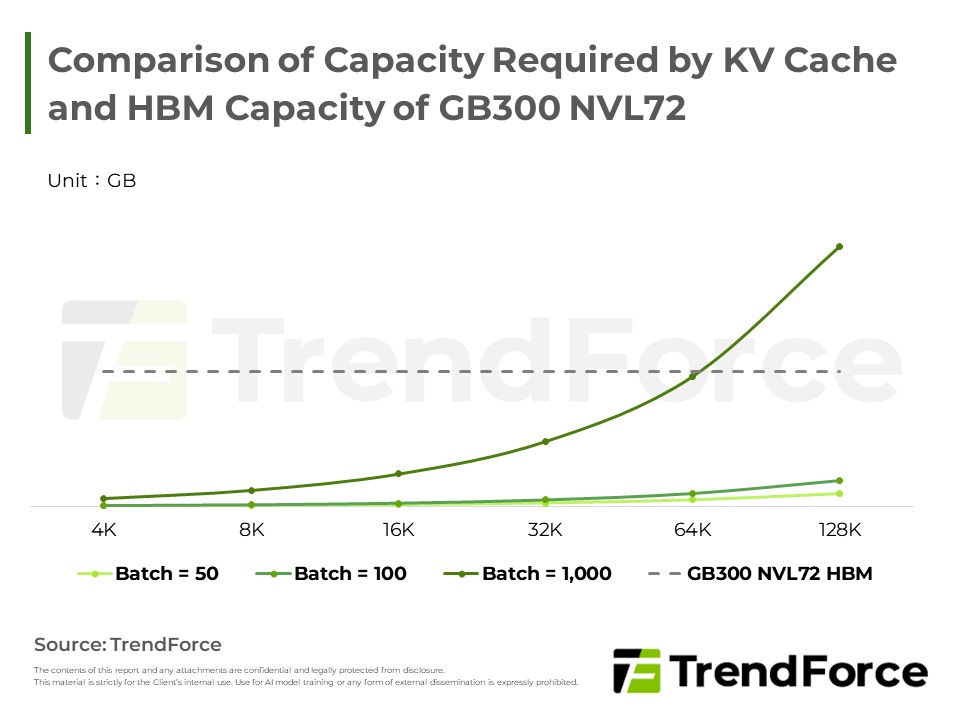
To address the surging KV cache demand driven by the development of agentic AI, cloud service providers are shifting their procurement toward high-performance QLC SSDs. By leveraging their high densit...
Besides the mainstream market segments, TrendForce also provides price and supply/demand analyses for SLC solutions that belong to the more niche area of the NAND Flash market.