CSP and Neocloud demand lifts the AI server outlook as NVIDIA shifts to VR200, AMD and ASICs gain, and cooling upgrades.
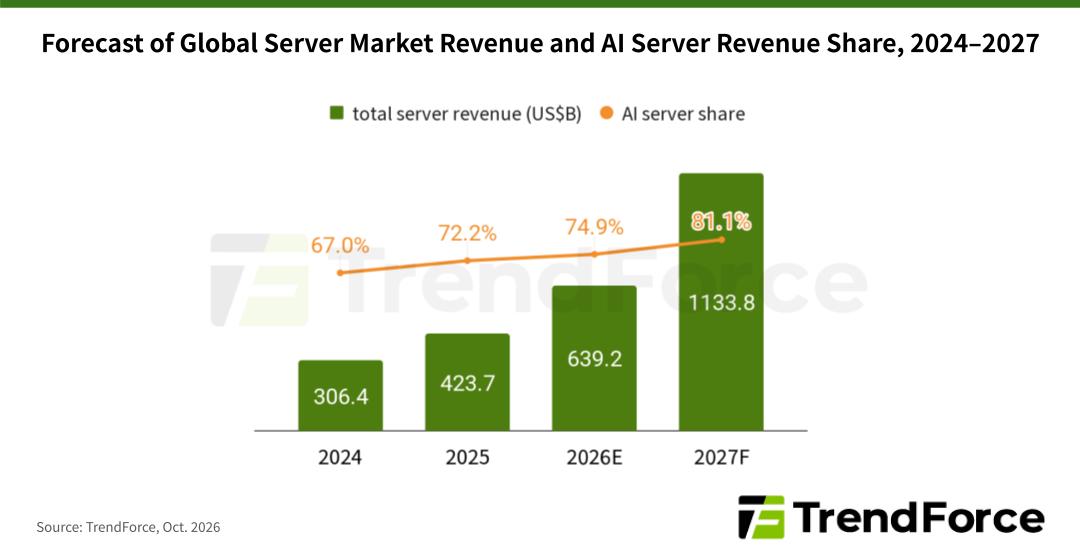
Hyperscaler Capex keeps rising on price hikes and shortages; pricier AI racks drive server value growth over volume.
US hyperscalers keep expanding, but midterm-driven backlash may raise costs and delay permits for later-stage projects.
AI chip and server growth accelerates in 2027 on rack-scale systems and ASICs, while HBM and CoWoS supply stays tight.
TrendForce combines its expertise in the Foundry/Server industry and leverages it with the supply chain to accurately estimate AI chip shipments, AI Server application ratios, AI major suppliers' analysis, and the adoption of AI memory.
TrendForce combines its expertise in memory market and leverage it to provide a multi-faceted study of server market in this report. The content of it is as follows:
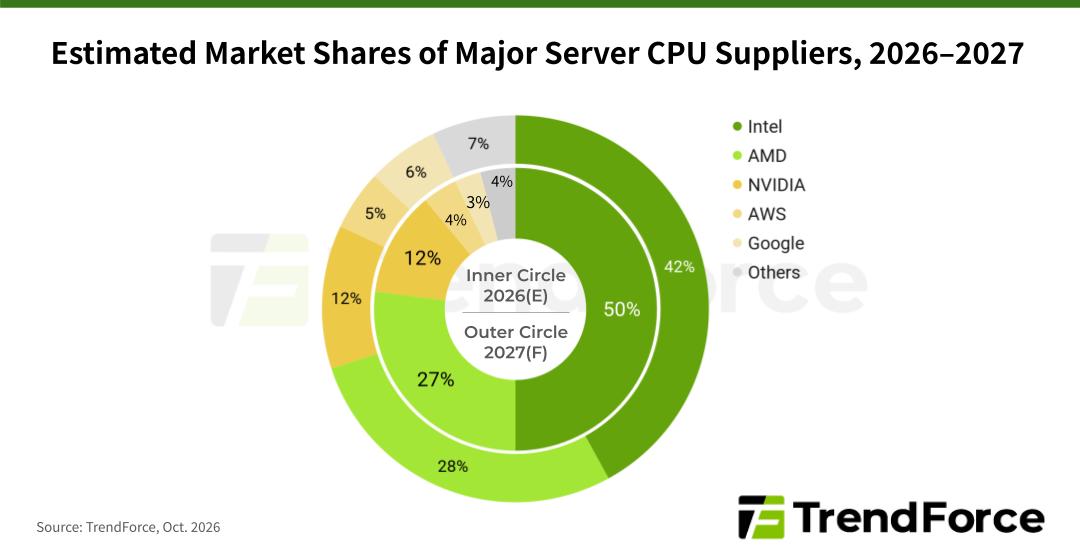
1. Server CPU Market: State of Competition and Market Shares
2. Server Procurement by Cloud Service Providers in North America and China
3. Projection on Shipments of Server Storage Products
4. Projection on Server Shipments for Current Year
5. Major ODM Partners of Critical Server Brands
6. Changes on Volumes in Server DRAM Procurement
7. Trends in SSD Procurement and Projections on Storage Form-Factors and Interfaces
8. Shares of Enterprise and Hyperscaler Servers in Memory Consumption.
Robust add-on demand from US cloud service providers is pushing up long-term agreement price bands and driving server memory contract prices steadily higher. Conversely, Chinese providers are pivoting to lower-capacity products due to liquidity constraints. Suppliers are flexibly reallocating capacity toward higher-priced server products. Coupled with raised price ceilings on select long-term agreements and premiums on add-on orders, fourth-quarter contract prices are projected to rise by over 10% quarter-over-quarter.
Surging AI server demand drives power semiconductor and thermal upgrades, with tight supply boosting extended orders, price hikes, and capacity expansion.
Amid tight supply and richer HBM4 mix, TrendForce sharply lifts its 2027 HBM price outlook as 8-Hi leads shipments.
NVIDIA shipments stay Blackwell-led as Rubin's ramp slips into next year on HBM4 snags, keeping HBM the key bottleneck.
Research Areas:
Industry News