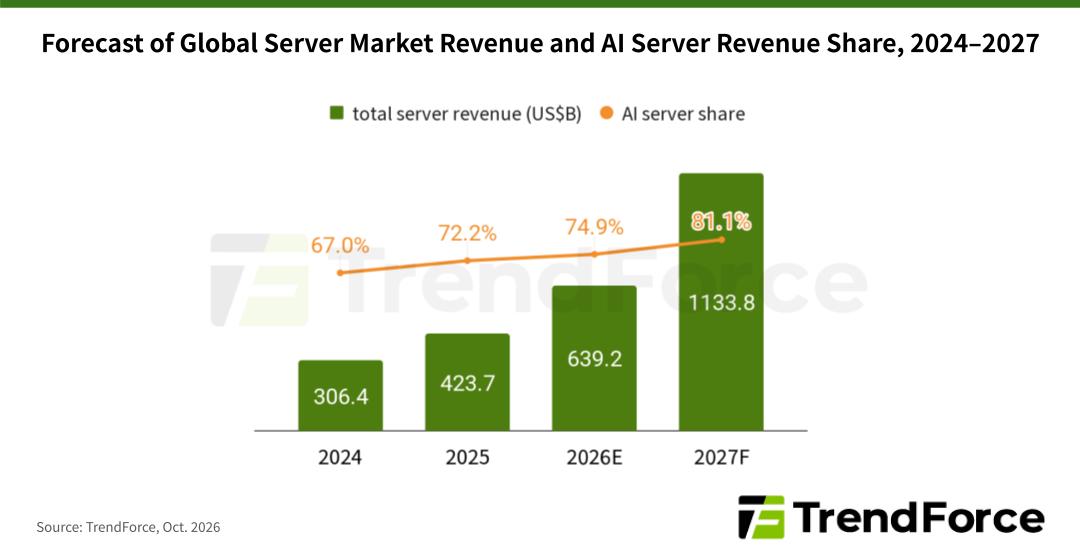
Hyperscale CSPs ramp capex, fueling strong AI server growth as ODMs expand GPU rack output and cooling tech advances.
HBM supply expands as shares shift; 2026 is a pricing pause, 2027 brings a sharp ASP surge as HBM4 rises.
Robust CSP capex drives AI server growth, led by NVIDIA racks, as ASICs, China's supply chain, and liquid cooling advance.
Leveraging TrendForce’s extensive research on the AI supply chain, this report expands its focus to high-growth cloud service providers (CSPs). It offers comprehensive medium-to-long-term forecasts for AI servers, global data center deployment, and critical AI infrastructure—including power, thermal management, and networking.
Server DRAM contract prices are trending upward. Supply shortages and HBM crowding effects strengthen vendor pricing power. High-capacity module premiums are narrowing due to stable yields and demand shifts. Despite temporarily rising inventory levels, long-term market tightness is expected to intensify as processor supply recovers.
TrendForce: NVIDIA still weighs Rubin Ultra HBM options as tight DRAM supply pushes suppliers toward much higher prices.
Grid bottlenecks drive AI data centers to BTM power. Next-gen AI liquid cooling boosts thermal content per rack.
Global server demand remains solid, sustaining stable Enterprise SSD orders. As suppliers boost production, improved supply has eased urgent order pressures and moderated quarterly contract price increases. Looking ahead, rising supply and delayed platform shipments will further cool price gains. Concurrently, the widening unit capacity price gap between high-density SSDs and HDDs is eroding total cost of ownership advantages, posing long-term growth challenges under strict enterprise cost controls.
Driven by strong demand from cloud service providers, the demand for HBM and server modules has surged. However, constrained by long equipment lead times and capacity reallocation, supply growth continues to lag behind. As traditional memory is severely squeezed, the market supply deficit remains difficult to resolve, keeping prices elevated. Consequently, capital expenditures and procurement strategies require continued close attention.
Global Capex rises on AI buildout as China speeds self-reliant chips, easing foreign hardware reliance.
Research Areas:
Industry News