[News] HBM4 Strategies Diverge: Samsung Reportedly Chases 80% 1c DRAM Yield While SK hynix Trims Shipments by 30%
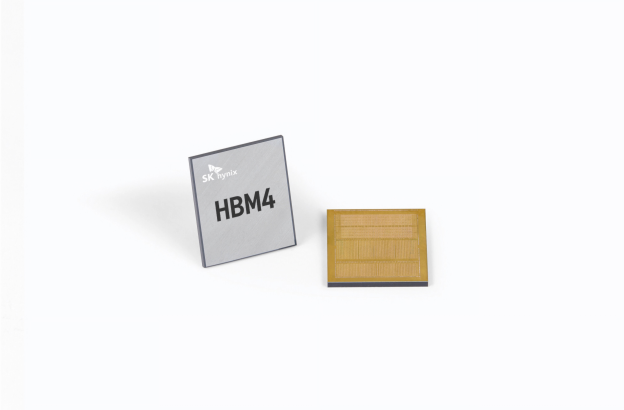
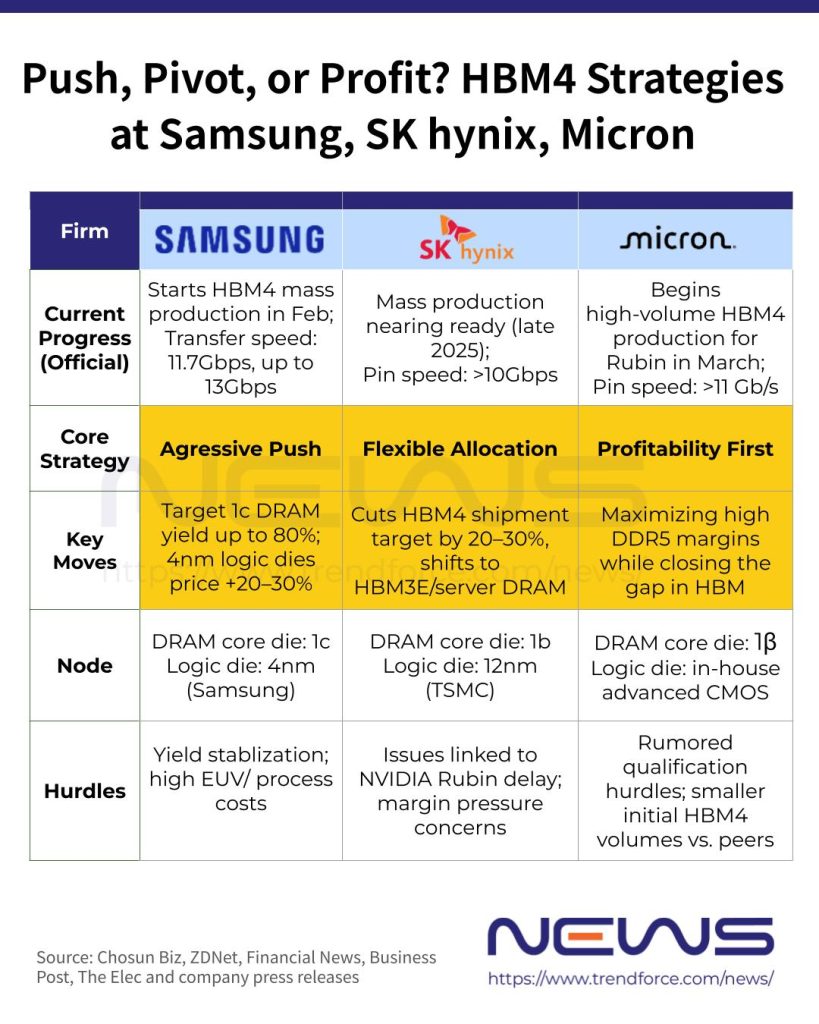
As memory giants enter the final stage of HBM4 ramp-up ahead of NVIDIA’s Rubin launch, they are taking diverging approaches. According to Chosun Biz, Samsung is pushing to lift 1c DRAM yields for HBM4 toward 80%, while ZDNet reports that SK hynix is set to cut HBM4 volumes this year by 20–30%.
Chosun Biz notes that Samsung’s yields for HBM4-bound DRAM are still estimated at below 60%, which prompts the company aims to lift yields toward near-mature levels in the second half of the year to strengthen its ability to serve key AI customers, including NVIDIA. The report adds that the threshold for mature mass-production yields is generally seen at around 80%.
However, Chosun Biz notes that despite using the same 1c process, HBM4 DRAM requires extra steps—stacking, advanced packaging, thermal control, and signal integrity tuning—making it far more complex than conventional DRAM. Sources also added that even if chip-level yields improve, overall yields can still drop during final HBM4 assembly.
Another factor driving Samsung’s push to improve HBM4 DRAM yields is process cost pressure. Chosun Biz reports the company aims to outpace SK hynix in HBM4 performance through its advanced DRAM technology, but its heavier reliance on EUV lithography—with more layers than rivals—adds process complexity and cost. Without mature yields, the cost burden is expected to remain high.
Notably, compared with HBM4-bound 1c DRAM, Samsung’s logic dies face relatively lighter cost pressure, supported by its 4nm process operating at higher utilization levels and recent price hikes. According to Financial News, the chip giant has reportedly raised prices for HBM4 logic dies by around 40–50% since early 2026.
SK hynix Cuts HBM4 Outlook on Rubin Delays
On the other hand, SK hynix, the current HBM leader, is set to cut HBM4 shipments by 20–30% from its original target, as NVIDIA’s Rubin rollout is delayed, ZDNet reports, adding that the reduced HBM4 volumes are expected to be offset by increased demand for the prior-generation HBM3E and server DRAM.
ZDNet points SK hynix’s adjustment to the fact that key components of the Rubin platform have yet to be fully optimized. Notably, NVIDIA has set a target for HBM4 data processing speeds at around 11Gbps—well above current industry standards, the report highlights.
TrendForce notes that Rubin’s share of NVIDIA’s high-end GPU shipments is expected to slip from 29% to 22% in 2026. Beyond the time needed for HBM4 validation, the platform still faces hurdles including a shift in network interconnects from CX8 to CX9, rising power consumption, and the need for more advanced liquid cooling optimization.
By contrast, Blackwell—powered by HBM3E—is set to gain momentum, with its shipment share projected to climb from 61% to 71%, according to TrendForce.
However, ZDNet notes that SK hynix’s reduced HBM4 volumes are being redirected to HBM3E and server DRAM such as LPDDR, suggesting total memory demand will hold up. Still, the impact on full-year earnings remains uncertain due to differing margin structures across products, the report adds.
On the other hand, Micron, which is advancing at a slower pace in HBM4 development, could see initial shipment volumes come under pressure due to ongoing qualification and quality approval hurdles, according to Business Post, citing analysts.
However, Micron CEO Sanjay Mehrotra, cited by The Elec, noted that non-HBM margins are currently higher than HBM in the March earnings call, suggesting DDR5 profitability now exceeds that of HBM—potentially making this shift less of a concern than it appears. The U.S. memory giant also projects an eye-catching gross margin of 81% in 3QFY26, up from a record 75% in the previous quarter.
Read more
- [News] Samsung Reportedly Lifts HBM4 Logic Die Prices by 40–50% Amid AI Boom; 4nm at Full Capacity
- [News] SK hynix Reportedly Weighs TSMC 3nm for HBM4E Logic Dies to Gain Edge over Samsung
(Photo credit: SK hynix)