[News] ASML Expects First High-NA EUV Memory, Logic Products Within Months Amid TSMC’s Cost-Driven Delay
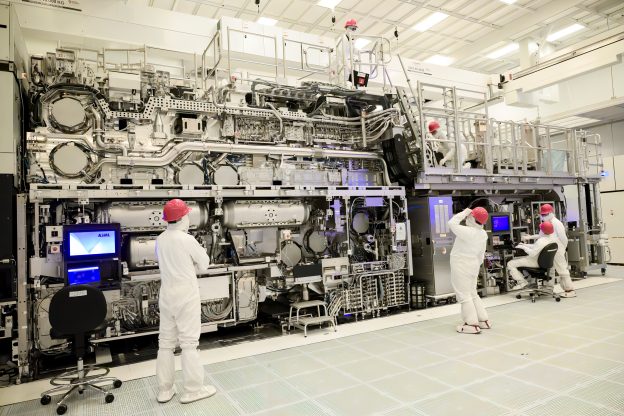
While TSMC recently revealed that its upcoming A13 and A12 processes, both targeted for 2029, are not expected to require High-NA EUV lithography, ASML says the first chips produced using the technology may arrive soon. According to Reuters, ASML CEO Christophe Fouquet said the company expects to see the first memory and logic products manufactured on High-NA EUV systems within the next few months.
As the report notes, TSMC said last month that High-NA EUV machines, which can cost up to US$400 million each, remain too expensive for use at this stage. Fouquet, however, expressed confidence in broader adoption, emphasizing that although the technology is costly and still requires qualification, it is expected to reduce patterning costs over time.
Intel and SK hynix Move Early on High-NA
Chipmakers are currently testing High-NA EUV machines, which the report says could enable features up to 66% smaller. Among them, Intel has reportedly been the most aggressive in preparing to adopt ASML’s High-NA tools. Intel announced in December 2025 that it had deployed the industry’s first High-NA lithography system, which will support development of its 14A process.
SK hynix has also indicated plans to use the new technology. According to ETNews, SK hynix is expected to utilize the equipment for development and mass production of next-generation DRAM.
Diverging High-NA Adoption Strategies
As for TSMC, Reuters notes that while the company has not ruled out High-NA EUV adoption, executive Kevin Zhang said it plans to continue using ASML’s current EUV systems for the next several chip generations. The strategy reflects TSMC’s focus on extracting further gains through innovative chip designs rather than relying solely on the ASML system.
Meanwhile, according to Global Economic News, Samsung Electronics is reportedly taking a pragmatic approach to High-NA EUV adoption, delaying implementation to around 2027 despite signing equipment purchase agreements. The strategy aims to ease margin pressure from costly tools, prioritize stabilization of its current 3nm GAA process. Samsung’s strategy is to maximize investment efficiency by bringing the equipment into full operation in time for its 1.4nm mass production launch, the report adds.
Global Economic News says the outcome of the High-NA EUV race is likely to depend on yield performance and cost structures over the next three years. The report views 2026 as a period for verifying initial yields, as the first High-NA products from Intel and SK hynix are shipped; 2027 as a test of mass production and depreciation costs; and 2028 as a turning point when cost advantages become clearer and the gap may widen between High-NA adopters and TSMC, which continues using 0.33 NA EUV multi-patterning.
Read more
- [News] TSMC Latest Roadmap: A12, A13 for 2029 Without High-NA EUV; A16 Volume Production Delayed to 2027
- [News] ASML’s High-NA EUV for 2027-28: Which Giants Are Betting Big—Intel, Samsung, SK hynix or TSMC?
(Photo credit: Intel)