

Memory Prices Soar; DRAM and NAND Flash to Account for 68% of Major CSP CapEx in 2027, Says TrendForce
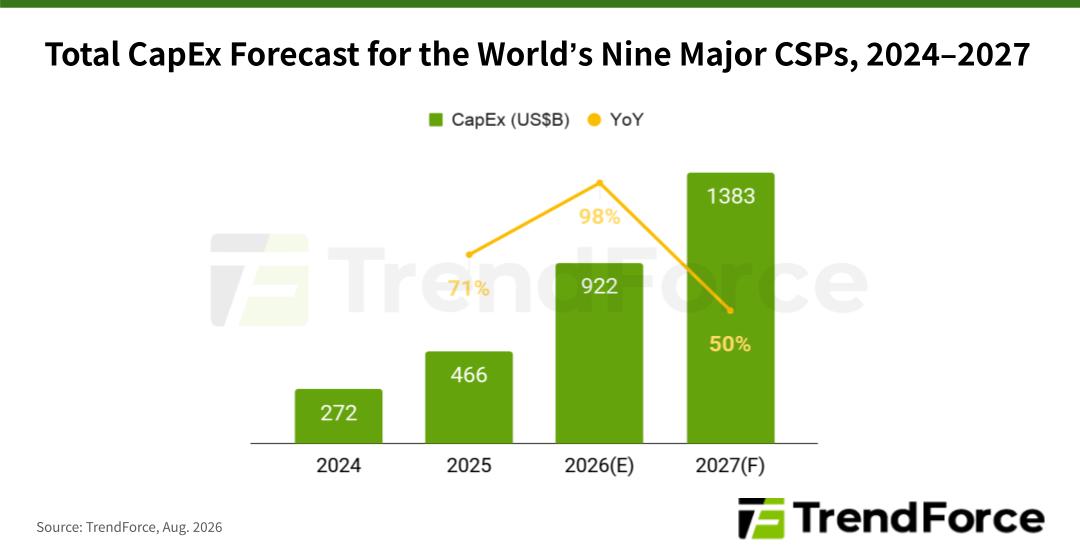
According to TrendForce’s latest memory industry research, major global cloud service providers (CSPs) are accelerating AI infrastructure investment, with total CapEx projected to surge 98% YoY in 2026 and rise another 50% in 2027. The rapid increase will be driven in part by soaring memory contract prices and robust procurement demand. TrendForce estimates that DRAM and NAND Flash combined will account for 47% of CSPs’ total CapEx in 2026, with their share rising further to 68% in 2027.
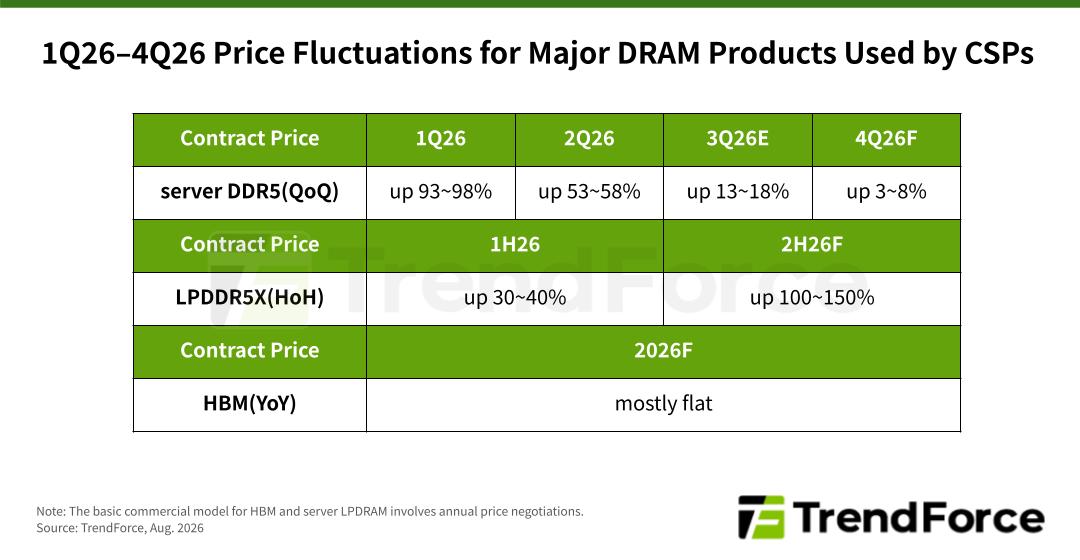
TrendForce observes that the sharp rise in memory contract prices since the second half of 2025 has significantly increased memory’s share of CSP spending. Server DRAM—a key procurement category for CSPs—saw contract prices rise by a cumulative 64% in 2H25, with a further jump of approximately 270% expected in 2026. Meanwhile, a similar trend is unfolding in NAND Flash, with enterprise SSD prices rising by around 35% in 2H25 and projected to surge by a cumulative 235% in 2026.
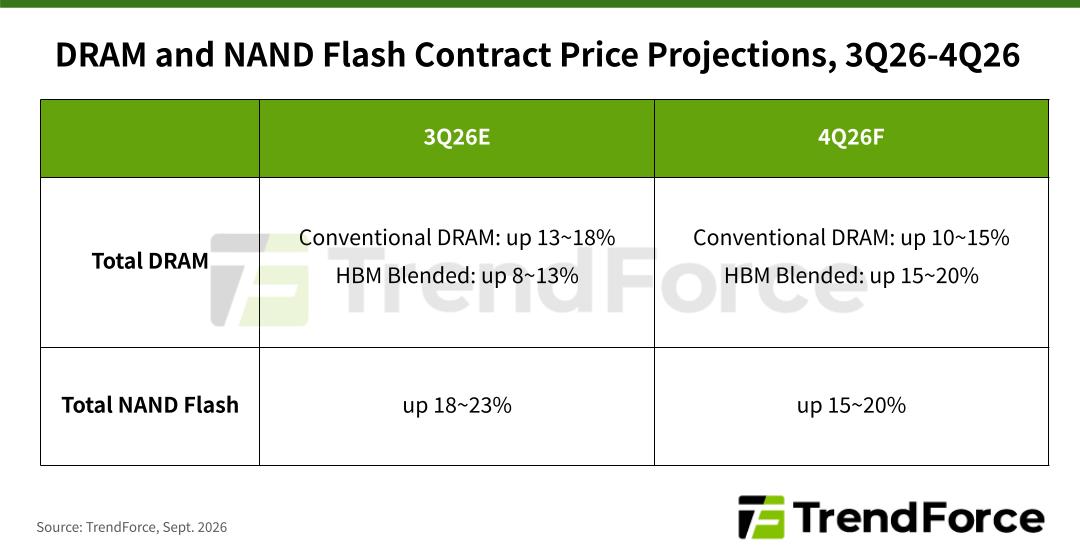
Some long-term agreements (LTAs) signed from 2Q26 onward have included price ceilings that could limit further increases. Nevertheless, HBM contract prices could still rise by 70–140% in 2027. TrendForce expects memory contract prices to remain broadly elevated in 2027, continuing to be an important factor driving up memory’s share of CSP CapEx.
On top of higher prices, rapidly growing demand for memory bits from CSPs is prompting suppliers to prioritize limited capacity for server applications. TrendForce estimates that HBM and RDIMM combined will account for 51% of DRAM bit supply in 2026. In 2027, process migrations and capacity ramp-ups at new fabs in the second half of the year are expected to drive a 27% increase in combined server DRAM and HBM bit supply.
TrendForce indicates that rising memory contract prices, particularly for HBM, combined with higher bit supply, will push memory’s share of CSP capex to 68% in 2027. This will have two major implications for the AI ecosystem.
First, elevated memory costs provide server and AI chip suppliers such as NVIDIA with greater justification for raising product prices. CSPs may subsequently need to increase capital expenditures further to maintain their targeted AI chip procurement volumes. Alternatively, CSPs could more aggressively optimize AI system memory architectures by reducing memory capacity per system, helping mitigate high DRAM and NAND Flash costs or limited supply allocations while still meeting AI chip and server shipment targets.
Such adjustments could take several forms, including, but not limited to, adjusting RDIMM configurations and the amount of HBM integrated into future AI chips, as well as exploring AI ASICs with the model architecture hardwired into the silicon.
For more on the latest technology industry news and trends, please visit News.