[News] If US Revokes Chip Tool Exemptions: Unpacking TSMC, Samsung, and SK hynix’s China Operations
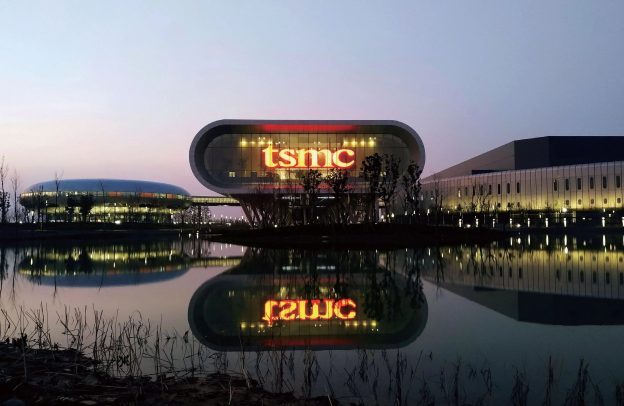
The U.S. Commerce Department is mulling to revoke licenses previously granted to major chipmakers like TSMC, Samsung, and SK hynix—a move that could create fresh obstacles for their operations in China, according to Reuters.
Citing the Wall Street Journal, Wccftech points out that Jeffrey Kessler, Under Secretary for Industry and Security, is pushing to end waivers that allow U.S. chip equipment makers to sell key tools to these companies’ Chinese plants. This could lead to tougher restrictions on their access to American manufacturing gear, the report adds.
According to Tom’s Hardware, the review targets special trade waivers—known as VEU authorizations—granted to non-Chinese chipmakers after the U.S. restricted exports of chipmaking tools to China in late 2022. These waivers let them import U.S. equipment for their China fabs without a license, as long as they avoided supplying China’s military or intelligence sectors, the report indicates.
The VEU streamlined the process for American chipmaking tool firms as well— including but not limited to Applied Materials, KLA, and Lam Research — to ship to their Chinese customers, as per Tom’s Hardware.
Notably, a White House official told Reuters this move is a precaution for a worst-case scenario in case the current trade truce with China unravels. Still, the Economic Daily News warns the approval process for these companies could shift from automatic clearance to lengthy case-by-case reviews, taking three to six months per application.
If the policy goes into effect, how would it impact chip giants like TSMC, Samsung, and SK hynix? Here’s a quick snapshot of their China-based production capacity and key process nodes, compiled by TrendForce:
TSMC Nanjing: Mature Node-Oriented
According to TSMC, China was its second-largest market in 2024, making up 11% of total revenue—well behind North America’s 70%.
In its 2024 annual report, TSMC said that is 12-inch fab in Nanjing operates under a permanent Validated End-User (VEU) authorization, allowing it to import eligible U.S. equipment without needing separate licenses. However, it also mentioned that there is no assurance that the VEU authorization TSMC obtained will not be terminated in the future.
Notably, TSMC’s Nanjing fab, which produces 16nm and 28nm chips, is its most profitable overseas plant, bringing in NT$69 billion in annual revenue and NT$26 billion in net profit, according to its 2024 report. Meanwhile, its 8-inch Shanghai fab runs older 1.3μm and 1.8μm nodes, making it less vulnerable to the proposed license revocations, as per the Economic Daily News.
Samsung Xi’an: Key NAND Manufacturing Hub
On the other hand, China is crucial to South Korean memory giants. In terms of Samsung, its Xi’an plant is a major hub for NAND production. According to TrendForce, around 30–35% of Samsung’s total NAND output is expected to come from China in 2025.
A February Business Korea report says Samsung is accelerating its NAND tech upgrades in China, pushing its Xi’an plant toward a cutting-edge 286-layer (V9) process to counter a market slowdown and rising competition from Chinese rivals. Since 2023, it has been shifting from its 128-layer (V6) NAND to the more advanced 236-layer (V8) at Xi’an, the report added.
Therefore, revoking exemptions for major makers like Samsung and switching to case-by-case reviews could block equipment imports needed for critical upgrades, according to the Economic Daily News.
SK hynix: High China Reliance for DRAM and NAND Output
Meanwhile, as per Business Korea, SK hynix’s footprint in China spans multiple sites: a DRAM factory in Wuxi, a packaging plant in Chongqing, and a NAND flash facility in Dalian, which it took over from Intel under the Solidigm brand.
TrendForce projects that by 2025, about 35–40% of SK hynix’s DRAM output will come from China. For SK hynix, China plays an even bigger role in NAND production, expected to account for 40–45% of its total NAND output in 2025, as noted by TrendForce.
According to the Economic Daily News, the U.S. policy of revoking key tool exemptions could make it more difficult for SK hynix’s Chinese fabs to import EUV lithography machines, potentially delaying their upgrade plans.
Read more
- [News] Trump Pushes to Scrap CHIPS Act, Jeopardizing TSMC Subsidies and Intel’s Ohio Plans
- [News] Trump Administration Reportedly Reconsiders CHIPS Act Subsidies, Touts TSMC as Model
(Photo credit: TSMC)
Please note that this article cites information from Reuters, Wall Street Journal, Wccftech, Tom’s Hardware, Economic Daily News, Business Korea, and TSMC.