





 Download Report
 Contact Us
Crossing AI Memory Wall: Storage Layer Reallocation and HBF Analysis

Last Modified
2026-04-23

Update Frequency
Not

Format
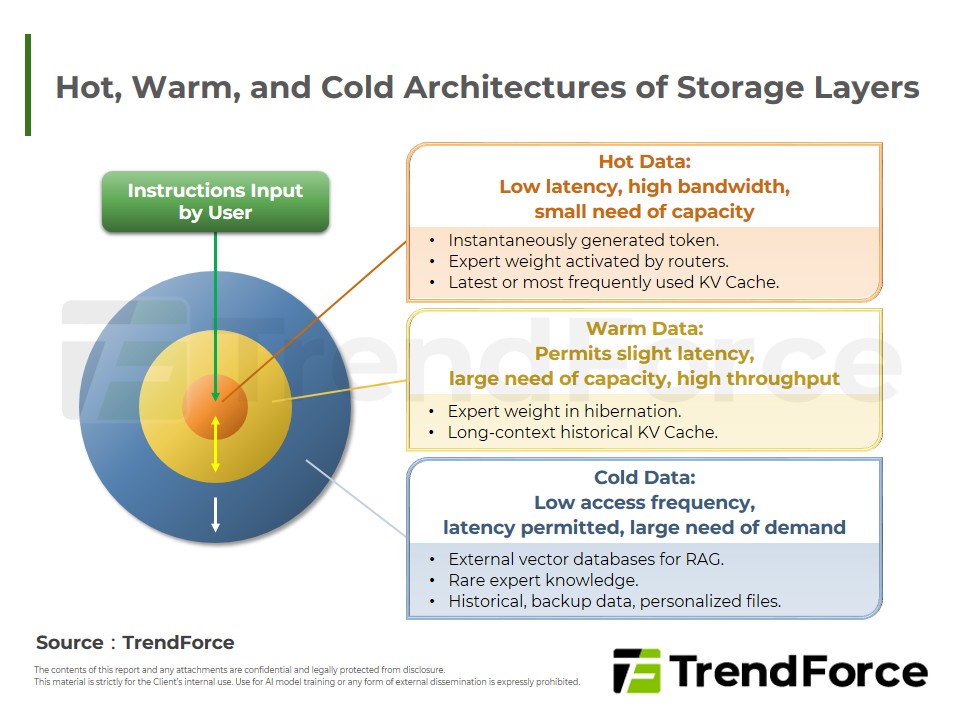
In AI inference, MoE architectures and long-context processing have sharply increased memory-capacity requirements for model weights and KV cache, shifting the bottleneck from insufficient compute to limited memory capacity. As warm data grows rapidly, this will drive a restructuring of the storage hierarchy, where HBM will handle hot data, while HBF will carry warm data to optimize cost–performance. However, commercialization of HBF still needs to overcome challenges in advanced packaging processes and the inherent characteristics of NAND flash.
Key Highlights
- Bottleneck: AI advancements shifted the bottleneck from compute power to memory capacity.
- Hierarchy: Surging warm data demands tiered storage: HBM for hot data and HBF for warm, maximizing cost-efficiency.
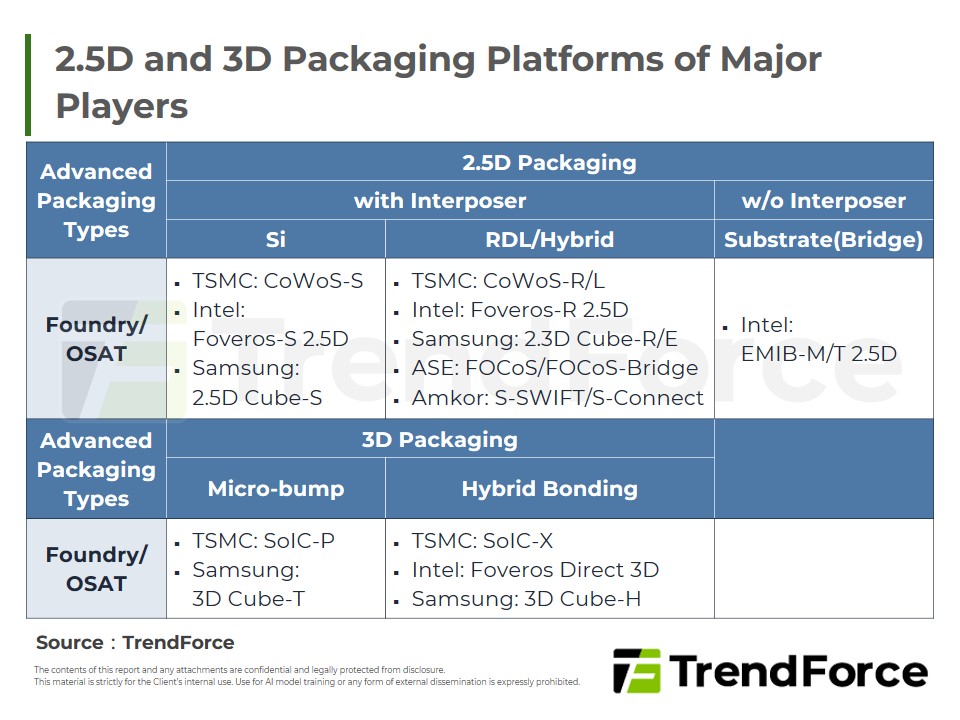
- HBF Hurdles: Commercialization requires overcoming advanced packaging and NAND flash limitations.
Table of Contents
- Development Bottlenecks of LLM: Impact on Computing Structures by Transformation of Model Architectures
- Figure 1: Features of MoE
- Figure 2: Deployment Strategies among AI Storage Vendors
- From Computing Bottlenecks to Restructuring of Storage Layers
- Figure 3: Hot, Warm, and Cold Architectures of Storage Layers
- Figure 4: “H³” Architecture
- Table 1: Comparison between HBM and HBF
- TRI’s View
<Total Pages: 13>

Spotlight Report
-

AI Wave & DRAM Deficits: 2027 Global DRAM Outlook
2026/07/28
Selected Topics
PDF
-

SLC NAND Price Surge: Global Capacity Gap & Substitution Wave in 2H 2026
2026/07/06
Selected Topics
PDF
-

Cascading Shortages in Consumer DRAM: How Capacity Pivots Fuel Legacy Node Adoption
2026/06/17
Selected Topics
PDF
-

AI Surge Drives NOR Flash Deficit: 2026 Industry Outlook
2026/09/10
Selected Topics
PDF
-

2027 NAND: Enterprise SSD Soars, Consumer Stalls
2026/09/16
Selected Topics
PDF
-

AI Servers Absorbing LPDRAM Capacity, Signaling Tight Supply as the New Norm
2026/06/05
Selected Topics
PDF
Selected TopicsRelated Reports


Download Report
2,500

Membership
- Selected Topics
- Selected Topics-182_Crossing Over AI Memory Wall: Reallocation of Storage Layers and Analysis on HBF
Spotlight Report
-
AI Wave & DRAM Deficits: 2027 Global DRAM Outlook
2026/07/28
Selected Topics
PDF
-
SLC NAND Price Surge: Global Capacity Gap & Substitution Wave in 2H 2026
2026/07/06
Selected Topics
PDF
-
Cascading Shortages in Consumer DRAM: How Capacity Pivots Fuel Legacy Node Adoption
2026/06/17
Selected Topics
PDF
-
AI Surge Drives NOR Flash Deficit: 2026 Industry Outlook
2026/09/10
Selected Topics
PDF
-
2027 NAND: Enterprise SSD Soars, Consumer Stalls
2026/09/16
Selected Topics
PDF
-
AI Servers Absorbing LPDRAM Capacity, Signaling Tight Supply as the New Norm
2026/06/05
Selected Topics
PDF