





 Download Report
 Contact Us
2026 T-Glass Supply Shortages: AI Rack Fiberglass Trends

Last Modified
2026-03-24

Update Frequency
Not

Format
NVIDIA once again showcased its Rubin-series chips and rack systems—scheduled for launch by the end of 2026—at GTC 2026 on March 16th. Compared to the previous generation, the Rubin series boasts significantly larger substrate sizes, higher layer counts, and increased rack board complexity.
Furthermore, the shift toward cableless design architectures is driving demand for components such as midplanes and orthogonal backplanes, while the introduction of the inference-focused Rubin LPX rack is further boosting demand for high-end glass fiber cloth.
However, the supply side is facing severe constraints. Nittobo, which controls approximately 90% of the global T-glass market and 60–70% of the NER-glass market, is not expected to bring new capacity online until mid-2027 at the earliest. This implies that supply gaps for critical materials will persist over the next year, with direct implications for lead times and cost trends across the AI server supply chain. This issue warrants close attention from all industry stakeholders.
This report provides an in-depth analysis of: (1) The technology background and development of glass fiber cloth; (2) AI-driven demand trends for glass fiber cloth; (3) Nittobo’s capacity bottlenecks and their impact on pricing.
The objective is to offer a comprehensive view of demand momentum, pricing trends, and competitive dynamics in the high-end fiberglass cloth market.
Key Highlights
- NVIDIA unveiled Rubin-series chips and racks at GTC, set for late-year launch, featuring expanded substrate sizes, elevated layer counts, and heightened rack board complexity over prior generations.
- Transition to cableless architectures heightens demand for midplanes and orthogonal backplanes, while the inference-oriented Rubin LPX rack amplifies needs for premium glass fiber cloth.
- Supply challenges persist as a dominant player in T-glass and NER-glass markets delays new capacity until mid-next year or later, leading to ongoing material shortages, extended lead times, and rising costs in AI server chains.
- Report examines glass fiber cloth's technological evolution, AI-fueled demand patterns, capacity constraints from the key supplier, and their effects on pricing, aiming for insights into market demand, trends, and competition.
Table of Contents
- Glass Fiber Cloth: Background and Development
- Figure 1: Glass Fiber Cloth
- Figure 2: CCL Material Structure
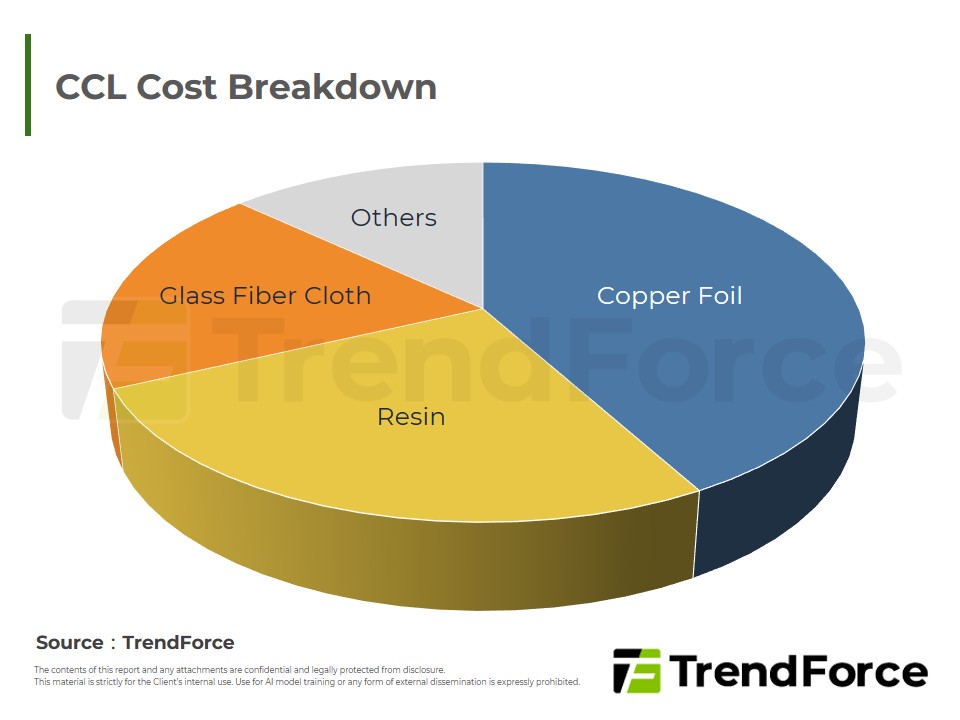
- Figure 3: CCL Cost Breakdown
- Table 1: CCL: Supplier Product Line Comparison
- Table 2: Specifications of Glass Fiber Cloth by Grade
- AI-Driven Demand for Glass Fiber Cloth
- Figure 4: AI Server Shipment Forecast by Type, 2024–2026
- Figure 5: Changes in the Substrate Area and Number of Layers of NVIDIA GPUs Across Generations
- Table 3: Evolution of AI Chip Substrate Specifications (2024–2027)
- Table 4: Evolution of CCL and Glass Fiber Cloth Specifications for AI Servers, 2024–2027
- Figure 6: NVIDIA Cableless Compute Tray
- Figure 7: NVIDIA Kyber Midplane and Backplane
- Figure 8: NVIDIA Rubin Series Midplane and Backplane Location Diagram
- Figure 9: Groq 3 LPX Rack Architecture
- Nittobo’s Capacity Constraints and Impact on Pricing
- Table 5: A Comparison of High-End Glass Fiber Cloth Supplier Product Lines
- Figure 10: Nittobo Production Schedule
- Figure 11: Nittobo T-Glass and Downstream Substrate Price Trends (1Q25–3Q26)
- Figure 12: Quarterly Revenue Mix Changes of Taiwan Glass (2024–2025)
- TRI’s View
<Total Pages: 17>

Spotlight Report
-

Cascading Shortages in Consumer DRAM: How Capacity Pivots Fuel Legacy Node Adoption
2026/06/17
Selected Topics
PDF
-

AI Wave & DRAM Deficits: 2027 Global DRAM Outlook
2026/07/28
Selected Topics
PDF
-

SLC NAND Price Surge: Global Capacity Gap & Substitution Wave in 2H 2026
2026/07/06
Selected Topics
PDF
-

AI Servers Absorbing LPDRAM Capacity, Signaling Tight Supply as the New Norm
2026/06/05
Selected Topics
PDF
-

AI Surge Drives NOR Flash Deficit: 2026 Industry Outlook
2026/09/10
Selected Topics
PDF
-

iPhone 18: Modest Hardware Gains, Pricing and AI Drive Sales
2026/09/02
Selected Topics
PDF
Selected TopicsRelated Reports


Download Report
2,500

Membership
- Selected Topics
- Selected Topics-180_AI Racks Intensify T-Glass and Low-Dk2 Shortages: Supply Chain and Pricing Dynamics of Glass Fiber Cloth
Spotlight Report
-
Cascading Shortages in Consumer DRAM: How Capacity Pivots Fuel Legacy Node Adoption
2026/06/17
Selected Topics
PDF
-
AI Wave & DRAM Deficits: 2027 Global DRAM Outlook
2026/07/28
Selected Topics
PDF
-
SLC NAND Price Surge: Global Capacity Gap & Substitution Wave in 2H 2026
2026/07/06
Selected Topics
PDF
-
AI Servers Absorbing LPDRAM Capacity, Signaling Tight Supply as the New Norm
2026/06/05
Selected Topics
PDF
-
AI Surge Drives NOR Flash Deficit: 2026 Industry Outlook
2026/09/10
Selected Topics
PDF
-
iPhone 18: Modest Hardware Gains, Pricing and AI Drive Sales
2026/09/02
Selected Topics
PDF