Driven by constrained capacity, niche NAND Flash supply shortages persist. SLC maintains moderate gains supported by rigid demand, though growth has slowed. MLC prices remain nearly flat as buyer cost limits are reached, entering a consolidation phase. Going forward, SLC will rise moderately while MLC stabilizes.
High prices of prime wafers are squeezing profits for module makers. Coupled with sluggish end-user demand, manufacturers are shifting to purchase downgraded materials to supply secondary markets and reduce costs—a move original suppliers welcome to clear inventory. The overall market is fluctuating at high levels. Aside from slight price increases in specific specs driven by supply constraints or rebound adjustments in high-capacity products, most items remain stable as buyers and sellers continue their price tug-of-war.
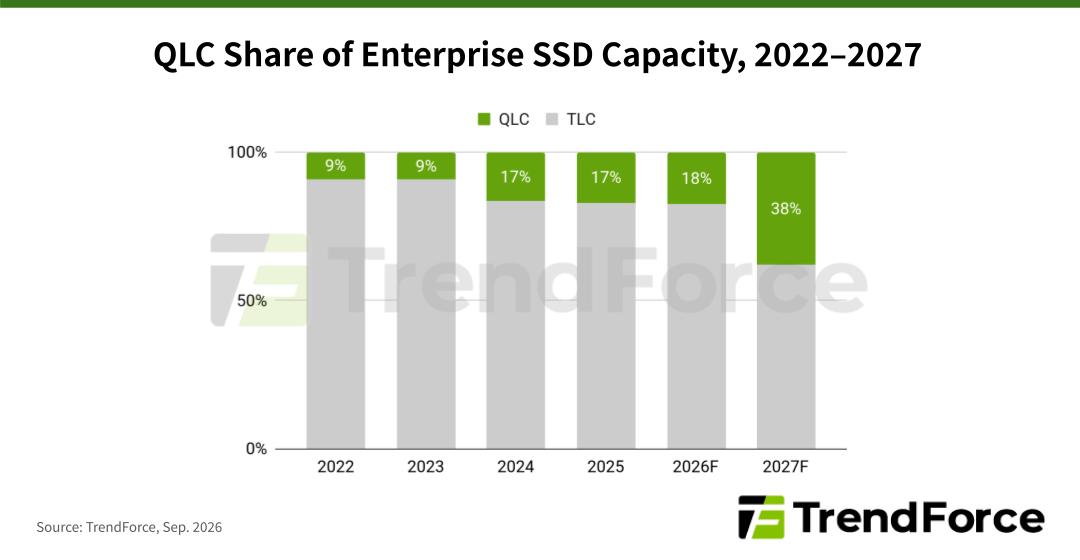
As NAND suppliers shifted capacity and compressed the consumer market, manufacturers fully expanded high-margin enterprise SSDs. Driven by generative AI and cloud infrastructure expansion, both shipment volumes and prices rose, pushing revenue to record highs. The top five giants are actively positioning in next-gen interfaces, high-layer stacking, and SLC/HBF technologies to build long-term competitive advantages.
NAND Flash capital expenditure is accelerating, yet manufacturers remain disciplined regarding capacity expansion. Supply growth is primarily driven by cleanroom filling at existing facilities and process technology transitions, yielding limited greenfield capacity. Overall facility expansion remains significantly smaller than that of DRAM, with substantial capacity additions deferred to later stages. Consequently, industry supply elasticity hinges heavily on technological upgrades rather than physical site expansions.
Driven by AI demand, server contract prices were secured ahead of schedule, though slow inventory digestion on the consumer side has kept negotiations at a standstill; meanwhile, the spot market continues to consolidate due to weak end-user demand. Over the long term, major manufacturers are ending their capital expenditure cutbacks and resuming expansion plans. By advancing process technologies, raising the proportion of high-capacity products, and sequentially bringing new fab capacity online, suppliers are going all out to support the massive demand for AI storage.
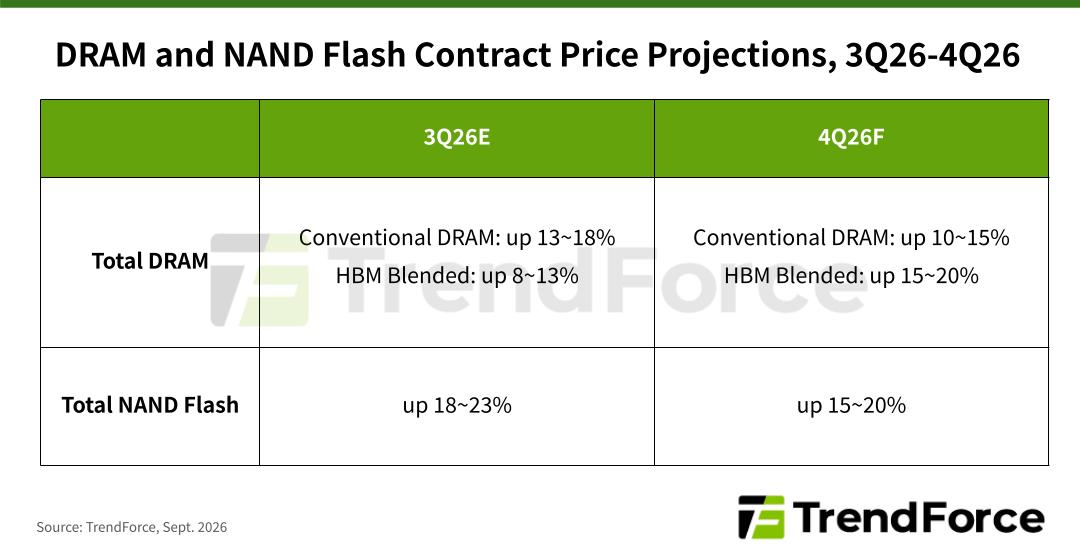
Driven by surge in AI server demand, enterprise SSD shortages have catapulted average selling prices and gross margins to record highs, pushing the sector into a supercycle. Despite weakening consumer end-market demand and constrained capacity expansion caused by capital expenditure shifting toward DRAM/ HBM, supply imbalances are expected to sustain price momentum into the next quarter while accelerating high-capacity storage adoption.
2026-2030 Global and Chinese NAND Flash Market Data
The explosion of agentic AI services has driven server demand, pushing memory prices and revenues to a peak. Subsequently, end-user consumer electronics were suppressed by high costs, plunging the market into oversupply and price adjustments. As humanoid robots and autonomous driving become widespread, edge storage is unlocking a new wave of prosperity while accelerating Chinese manufacturers' expansion in domestic substitution and global strategy.
AI demand boosts DRAM/NAND logic. Contract market sees high visibility via agreements, though downstream demand weakens. FMS showcases standard transitions where high-density flash addresses memory-wall challenges as near-compute cache for AI. HBF adoption hinges on major chipmakers' ecosystem integration.
Growth in client SSD contract prices has slowed sharply under multiple market pressures. Surging costs from other component shortages and excess system inventory forced buyers into cautious procurement. Meanwhile, suppliers held prices firm by shifting capacity toward enterprise SSDs. This stalemate is expected to keep contract prices plateauing at elevated levels moving forward.
Research Areas:
Industry News