[News] NVIDIA’s Reported 15% Server Hike Boosts Samsung, SK hynix, With HBM Prices Potentially Up 50%+ in 2027
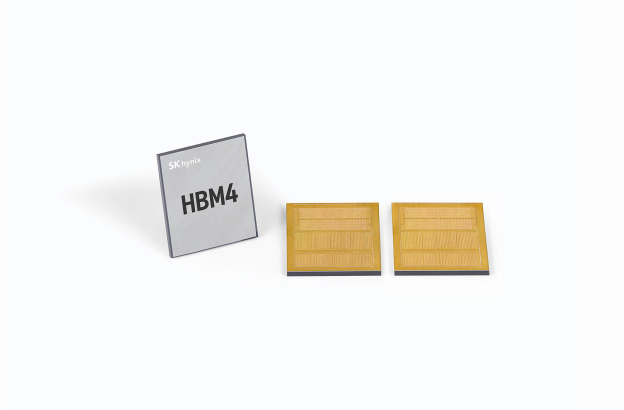
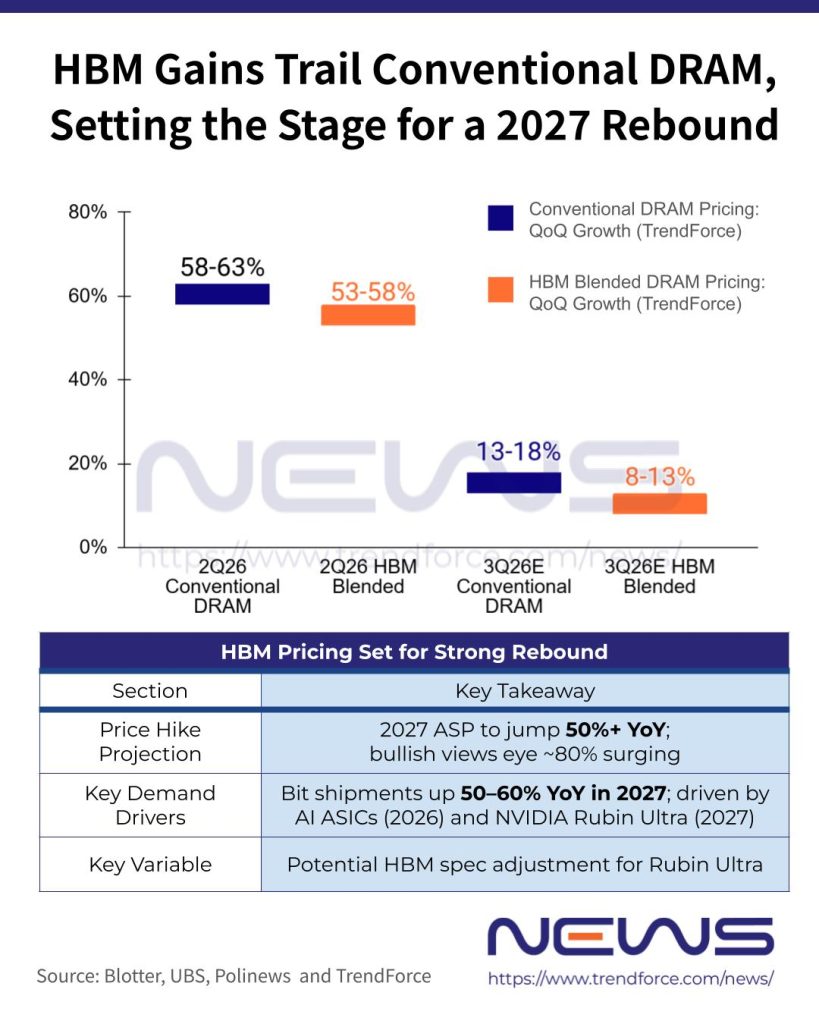
NVIDIA is reportedly planning to raise prices for Vera Rubin and Grace Blackwell servers by more than 15% in early 2027, according to Bloomberg. The move could give major memory suppliers additional leverage in HBM pricing negotiations, with analysts cited by Bloter expecting HBM contract prices to rise by more than 50% next year from 2026 levels, potentially benefiting Samsung Electronics and SK hynix.
The pricing momentum is expected to span the full HBM lineup, from HBM3e to HBM4 and HBM4e, Bloter suggests. UBS, cited by the report, offers an even more bullish outlook, saying HBM4 and HBM4e pricing is proving much stronger than initially expected and projecting 2027 HBM average selling prices (ASPs) to rise by about 79% from this year.
NVIDIA’s Price Hikes Open More Room for HBM Pricing
As noted by EBN, NVIDIA’s price hike plans suggest the tech giant has not fully absorbed the higher costs itself, as it appears to have opted to pass the mounting burden of higher memory prices on to major customers such as Microsoft, Google and Oracle.
The move could strengthen the hand of major HBM suppliers. Fubon Research, cited by Bloter, estimates that even if the cost of HBM4 used in Rubin systems nearly doubles from HBM3e, NVIDIA could still maintain a gross margin of around 75%–80% by raising system prices accordingly. That leaves NVIDIA with considerable room to absorb further HBM cost increases, potentially easing resistance to higher HBM prices, Bloter notes.
DRAM Profitability Flip Sets the Stage for HBM Price Surge
As noted by Bloter, the sharp rise in commodity DRAM prices is emerging as another key catalyst for higher HBM pricing. According to the report, Some DDR5 prices have nearly quadrupled over the past year, while HBM profitability is now estimated to trail DDR5 by roughly 40 percentage points.
The shift stems partly from their different pricing models. HBM prices are typically locked in through annual contracts, leaving them slower to reflect market swings. After DDR5 prices surged in the second half of last year, wafer-level revenue and profitability for 64GB RDIMMs surpassed HBM in the first quarter of this year, the report adds.
At the same time, HBM’s lower production efficiency further strengthens the case for higher pricing. Allocating more production capacity to HBM generates a relatively smaller increase in actual output, meaning memory makers give up more profitable commodity DRAM capacity in the process. Customers seeking additional HBM supply, therefore, may need to offer prices high enough to offset the profitability gap, the report suggests.
Memory Supply Shapes NVIDIA’s HBM Choices
While higher memory costs are giving suppliers greater pricing leverage, supply constraints are forcing NVIDIA to weigh another trade-off: HBM configuration.
Polinews, citing TrendForce, reports that NVIDIA is considering multiple HBM configurations for its Rubin Ultra platform from the third quarter, including 8-Hi HBM4e, 12-Hi HBM4 and 8-Hi HBM4, alongside the originally planned 12-Hi HBM4e. The shift reflects concerns over tight DRAM supply through 2027, as well as uncertainty surrounding the qualification and yield ramp of 12-Hi HBM4e, the report notes.
The supply squeeze is also extending beyond HBM into server DRAM, adding another layer of cost pressure across the AI infrastructure stack. Polinews reports that as AI server deployments accelerate, server makers will need to secure not only GPUs and HBM but also increasing volumes of server DRAM, while data center operators face higher overall system costs. The widening memory crunch could therefore become a key factor not only in NVIDIA’s product configurations, but also in the cost and scale of future AI infrastructure deployments.
Read more
- [News] Samsung, SK hynix’s HBM4 Push Puts HBM, General Memory Pricing in the Spotlight for 2H Earnings
- [News] Samsung’s HBM4 Yield Reportedly Hits 80% as HBM Race Heats Up, SK hynix Labor Talks Add a Twist
(Photo credit: SK hynix)