[News] Samsung’s HBM4 Yield Reportedly Hits 80% as HBM Race Heats Up, SK hynix Labor Talks Add a Twist
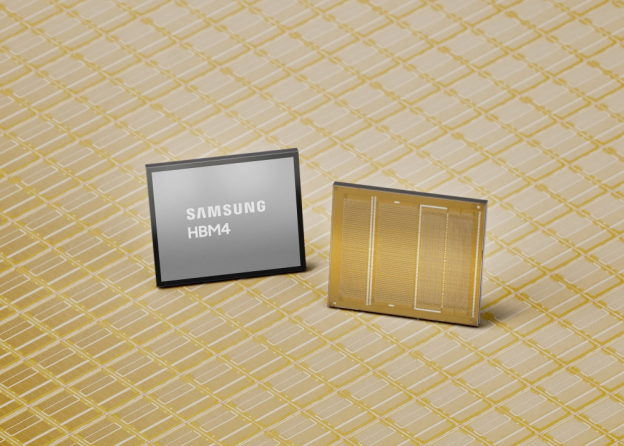
As growth in general-purpose DRAM prices is expected to moderate, the memory race is shifting toward next-generation HBM, with the three major memory makers stepping up their efforts. According to Seoul Economic Daily, Samsung’s HBM4 yield has climbed to 80% from below 60% when mass production began in February, highlighting rapid process improvements amid tight HBM supply.
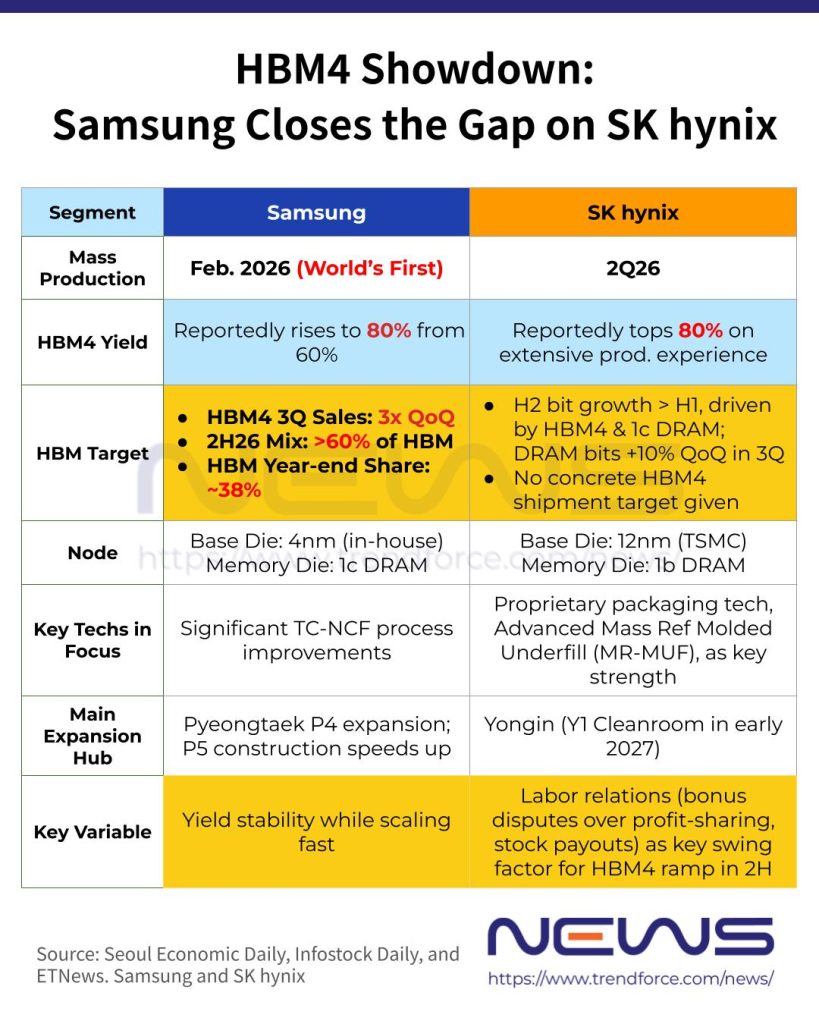
Citing an industry source, the report notes that Samsung initially set an 80% yield target for the end of 2026, but process improvements have outpaced expectations.
Infostock Daily suggests that Samsung has made notable progress in the thermal compression non-conductive film (TC-NCF) process, long regarded as a weak point in its HBM production. ETNews, meanwhile, points to another key driver: the underlying 1c DRAM used in HBM4. Samsung had already pushed 1c DRAM yields above 80% early this year, establishing a stable production base that has helped lift HBM4 yields, the report adds.
Against this backdrop, Seoul Economic Daily reports that Samsung plans to more than triple HBM4 revenue in the third quarter, with HBM4 expected to account for more than 60% of total HBM sales in 2H26. Samsung is also targeting an HBM market share of around 38% by year-end, roughly matching its share of the broader DRAM market, as HBM4 yields stabilize, the report adds.
Samsung’s increased HBM4 supply could also accelerate production of NVIDIA’s next-generation AI accelerator, “Vera Rubin.” As noted by Seoul Economic Daily, major customers such as NVIDIA would benefit from sourcing HBM from multiple suppliers rather than relying heavily on a single vendor.
The ramp-up is also reflected in TrendForce’s June forecast, which sees Samsung’s 2026 HBM4 market share rising sharply from its previous estimate, driven by its lead in customer qualification and higher projected shipments. SK hynix, meanwhile, is expected to see its share trimmed amid qualification delays and capacity shifts, while Micron’s share is likely to remain relatively stable given its limited HBM4 exposure.
Looking beyond market share, TrendForce expects HBM suppliers to retain pricing power through 2027 as supply remains constrained, with significant price increases already anticipated across the industry. HBM bit shipments are projected to grow 50%–60% year over year in 2027, but that increase is still expected to fall short of demand growth, keeping the market tight.
Strong HBM4 Yield Supports SK hynix Ramp-up, Labor Talks in Focus
On the other hand, Infostock Daily notes that industry insiders estimate SK hynix’s HBM4 yield has already reached the 80% range. The company’s long track record of mass-producing HBM across generations, combined with its proprietary Advanced Mass Ref Molded Underfill (MR-MUF) packaging technology, is expected to support a smooth production ramp in the second half.
As reported by ETNews, SK hynix is currently discussing orders for the second half of the year with multiple HBM process-equipment suppliers, as it gears up for additional equipment orders to increase its HBM4 production capacity.
The main variable for the ramp-up could now be labor relations rather than production readiness, as Infostock Daily notes that SK hynix management and labor failed to reach an agreement on bonus payments during the fifth round of the 2026 wage and collective bargaining talks.
The key sticking point, according to the report, is the company’s profit-sharing (PS) scheme. In exchange for scrapping the previous cap of 1,000% of base salary, the two sides had agreed to allocate 10% of the previous year’s annual operating profit to the PS pool. Under the proposed system, 80% of each employee’s calculated bonus would be paid in the same year, with the remaining 20% deferred over two years. The arrangement would remain in place for the next decade.
The union, however, is pushing back against management’s latest proposal to pay more than half of this year’s PS in treasury shares and impose a lock-up period on their sale, the report suggests. As noted by the report, with Samsung Electronics accelerating its push to close the gap by stabilizing yields while expanding production capacity, a prolonged labor dispute—or any escalation into industrial action—could put increasing pressure on SK hynix.
Read more
- [News] Samsung Foundry Eyes 2H26 Full Utilization as HBM4 Base Dies and U.S. Orders Fuel Turnaround Hopes
- [News] Samsung, SK hynix Reportedly Reconsider Hybrid Bonding Timeline; 16-High HBM4E May Be Earliest Adoption
(Photo credit: Samsung)