[News] Samsung Foundry Reportedly in Talks with AMD for 2028 CPU Production as BYD, Google Consider Its Services
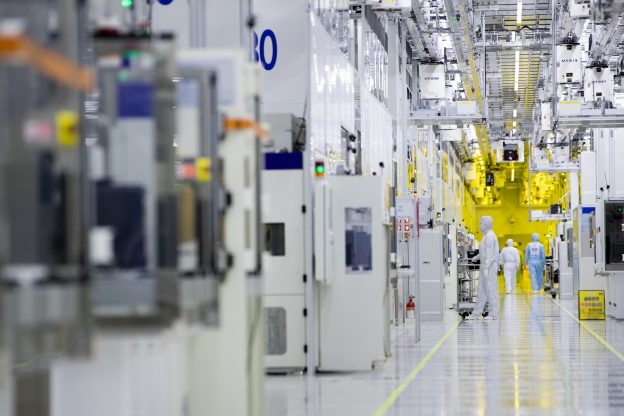
Samsung Foundry may be attracting a growing number of customers as supply constraints at TSMC persist. According to Nikkei, companies including BYD, Google, AMD, and Tesla are increasingly turning to Samsung Electronics for contract chip manufacturing services. The report notes that Samsung still trails TSMC in manufacturing yields, but its available capacity has made it an increasingly attractive alternative.
Most notably, sources cited by Nikkei report that AMD is in discussions with Samsung to manufacture certain future CPUs beginning in 2028.
Samsung may also be gaining traction with hyperscale customers. Nikkei reports that Google is evaluating Samsung as a manufacturing partner for its next-generation Axion processors, expected around 2028. In addition, according to Business Korea, citing The Information, Google is also considering Samsung Foundry to manufacture key components for its 10th-generation Tensor Processing Unit (TPU). Reuters says Google is developing the “Icefish” TPU with MediaTek, with mass production potentially beginning as early as 2028.
One area where Samsung is reportedly seeing increased interest is automotive semiconductors. According to Seoul Economic Daily, Samsung is in talks with several major Chinese automakers, including BYD, to manufacture autonomous driving SoCs using its 2nm and 4nm nodes. Another report from Seoul Economic Daily also notes that Samsung is in talks with NVIDIA to manufacture the Drive AGX Thor autonomous driving chip using its advanced process.
Other major chipmakers are also expanding their use of Samsung Foundry. According to Nikkei, Tesla’s upcoming AI6 chip will be produced at Samsung’s Texas facility. The report also notes that Samsung currently manufactures Nvidia’s Groq LPUs, while Nvidia has yet to decide whether future generations of the chips will be sourced from Samsung or TSMC.
Customer Momentum Builds, Though Challenges Persist
That said, several factors could influence how these discussions ultimately develop. As Newspim notes, Samsung Electronics’ ability to improve 2nm yields and manufacturing stability will be critical. The report also notes that for Google’s 10th-generation TPU, TSMC is still expected to manufacture the main compute die, while Samsung appears focused on supporting chips and advanced packaging.
Beyond Samsung’s execution capabilities, customers must also weigh the costs and complexity of diversifying production across multiple foundries. Nikkei notes that adopting a multi-foundry strategy for advanced chips requires significant investment. Chip designs must be tailored to different manufacturing processes, while R&D efforts and supply-chain coordination become more complex. Given the additional engineering and labor costs involved, such an approach is generally practical only for well-funded chip developers.
Read more
- [News] Samsung Reportedly in Talks for Google 2nm TPU I/O Die Order; 2028 Mass Production Eyed
- [News] Samsung Foundry Reportedly in Talks With Chinese Carmakers Like BYD for 2nm, 4nm Autonomous Driving SoCs
- [News] Samsung, NVIDIA Deepen Ties as Talks Reportedly Expand to HBM5 Next Year and Next-Gen Groq Chips
(Photo credit: Samsung)