[News] Record-Low Memory Stock Could Signal Supercycle Ahead, Likely Peaking by 2027
With top memory makers reportedly raising prices amid tight supply, The Chosun Daily, citing TrendForce, highlights that by the end of Q3 2025, global DRAM inventories averaged just 3.3 weeks—matching the lows of 2018 and signaling a supercycle in the memory market could be on the way.
The report further notes that current DRAM inventories, as per data from TrendForce, mirror the 3–4 week lows seen seven years ago. Even with buyers holding around 10 weeks of stock, demand remains strong, the report adds.
Looking beyond the current tight supply, SeDaily notes that memory semiconductors typically follow a 3–4 year boom-and-bust cycle. While the industry reached a record peak in 2018–2019, experts cited in the report say the current cycle is being dramatically reshaped and amplified by the AI boom. The Chosun Daily, referencing Morgan Stanley, predicts the peak of this cycle will arrive in 2027, with the surge expected to last more than a year.
As DRAM inventories hit record lows, prices are surging. TrendForce notes that the three major DRAM suppliers are prioritizing advanced process capacity for high-end server DRAM and HBM, limiting supply for PC, mobile, and consumer segments. As a result, conventional DRAM prices are projected to rise 8–13% quarter-on-quarter in 4Q25, with increases reaching 13–18% when HBM is included.
Meanwhile, NAND Flash contract prices across all categories are also expected to climb, with an average gain of 5–10% in 4Q25, TrendForce adds.
What’s Behind the AI-Driven Memory Crunch?
According to The Chosun Daily, the recent surge in demand is being driven by AI. HBM, built by stacking and bundling DRAM like high-rise apartments, has led memory makers such as Samsung Electronics to repurpose DRAM production lines, cutting overall DRAM output, the report notes. At the same time, large-scale data centers constructed between 2017 and 2018 are now due for server replacements, further boosting demand for general-purpose DRAM, the report adds.
SeDaily, on the other hand, reports that traditional hyperscalers—including Amazon, Microsoft, and Google Cloud—alongside AI powerhouses like OpenAI and Meta, are pouring massive investments into new AI data centers. Unlike previous cycles, these facilities are now driving memory demand, emerging as the main force behind the market surge, the report adds.
The report adds that the NAND flash market is facing similar pressure, as surging demand to replace or supplement traditional hard disk drives (HDDs) with enterprise solid-state drives (eSSDs) for AI data processing has intensified NAND supply shortages.
However, as demand heats up, The Chosun Daily points to tight supply, noting that memory makers are holding off on rapid production increases and sticking to long-term investment plans. An industry source cited in the report adds that with uncertainties such as Trump-era tariffs—and the recent entry of Chinese firms CXMT and YMTC into the HBM market—expanding DRAM output indefinitely is becoming increasingly difficult.
Price Hikes Brewing
Thus, in line with this trend, memory giants are preparing additional price hikes amid a shortage fueled by the AI boom. Following Samsung and Micron, SK hynix—while holding off on a formal announcement—is reportedly negotiating with customers under a policy of adjusting prices according to market conditions, according to SeDaily and Business Korea.
The reports note that Samsung informed major customers that Q4 contract prices for DRAM products, including LPDDR4X and LPDDR5/5X, are expected to rise 15%–30%. For NAND products, eMMC and UFS contract prices are projected to increase 5%–10%, according to SeDaily and Business Korea.
Meanwhile, after pausing quotes for about a week, industry sources reportedly indicated that Micron has informed its channels that prices for all storage products could jump 20–30%, according to market chatter.
Read more
- [News] SK hynix Reportedly Negotiates Price Adjustments with Customers Following Micron, Samsung
- [News] Samsung Reportedly Plans Q4 Memory Price Hikes: DRAM Up 30%, NAND Up 10%
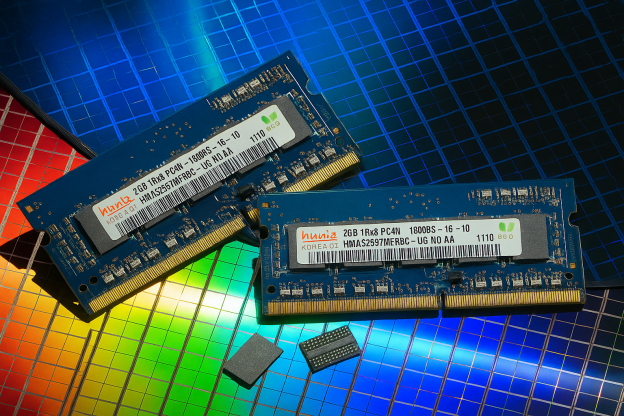
(Photo credit: SK hynix)
Please note that this article cites information from The Chosun Daily, SeDaily and Business Korea.