[News] 7.1 Kumamoto Earthquake: TSMC Confirms JASM Safe; TEL Halts Plants as Chip Supply Chain Assesses Impact
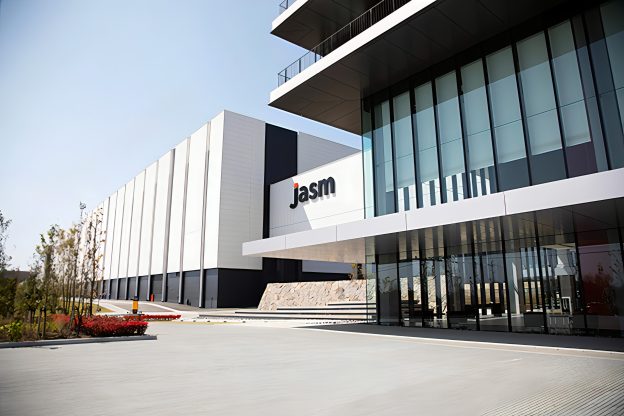
A powerful earthquake in Japan’s Kumamoto Prefecture has raised concerns over potential disruptions to the country’s semiconductor supply chain. According to UDN News, TSMC said structural inspections confirmed no damage affecting the safety of buildings at its JASM fab in Kumamoto, and the facility is gradually resuming operations. Detailed inspections and impact assessments remain ongoing. The company added that construction at the JASM expansion site was unaffected, although some work has been temporarily suspended as a precaution due to the risk of aftershocks.
TSMC said the JASM fab recorded a maximum seismic intensity of 5. To ensure employee safety, the company activated its internal emergency procedures and evacuated personnel immediately after the earthquake.
Institutional investors cited by the report said TSMC’s Kumamoto fab accounts for less than 3% of the company’s total production capacity and therefore expect the earthquake to have only a limited impact on operations. TSMC’s Japan operations currently consist solely of its first Kumamoto fab, which has monthly capacity of 20,000 wafers for 28nm, 22nm, 16nm, and 12nm processes. Meanwhile, the report indicates that TSMC’s second Kumamoto fab, which is scheduled to begin 3nm mass production in the second half of 2028, should have sufficient time to repair any potential structural damage, limiting the impact on its long-term production plans.
The report also points out that Kumamoto is home to a large concentration of semiconductor suppliers, including materials, equipment, and component manufacturers. Even if wafer fabs avoid major damage, disruptions to transportation, power supply, or logistics could still result in short-term supply chain delays.
Equipment and Materials Suppliers Respond
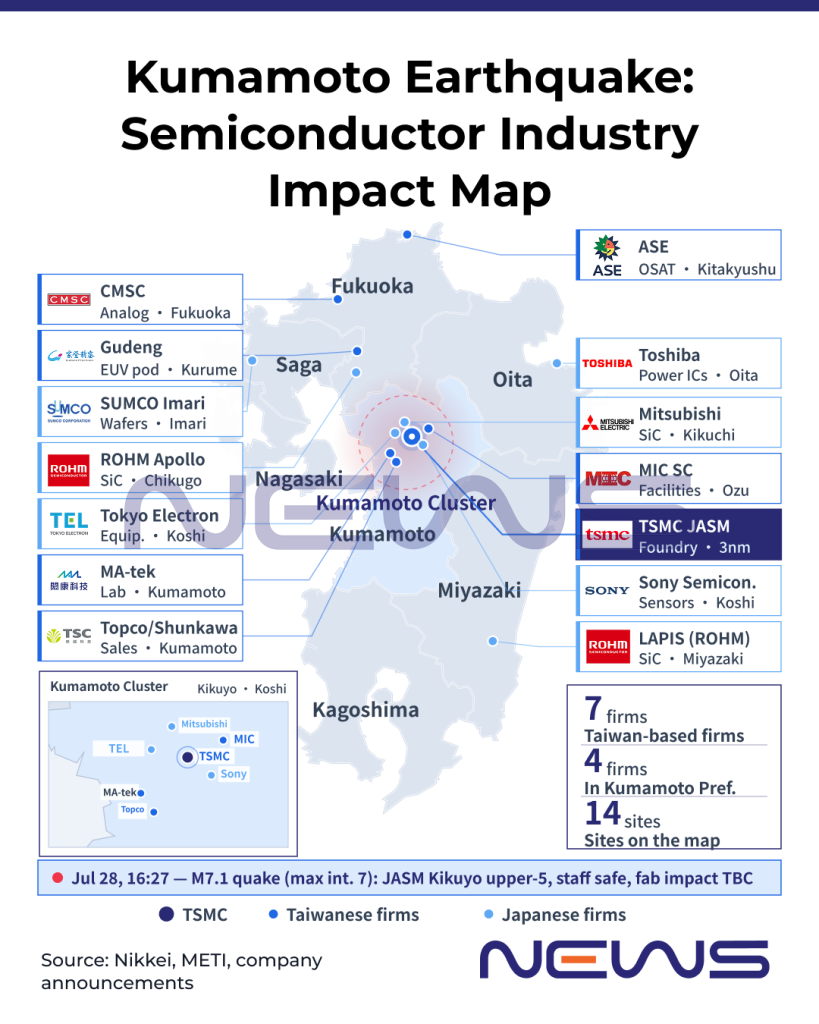
Regarding other semiconductor-related companies operating in the region, Tokyo Electron Kyushu, a subsidiary of Tokyo Electron that manufactures coater-developers for photoresist application and wafer cleaning equipment, will suspend operations at both of its Kumamoto facilities on the 29th for safety inspections. No major damage to buildings or equipment has been confirmed, Nikkei reports.
Horiba, the world’s leading supplier of flow control equipment for gases and liquids used in semiconductor manufacturing, said there had been “no significant human or material damage” at its Aso Plant following the earthquake, but has not yet decided whether operations will resume on the 29th, Sankei Shimbun reports.
Among materials suppliers, Fujifilm has evacuated all employees from its semiconductor and display materials plant in Kikuyo. No damage to the facility or injuries to employees have been confirmed, Nikkei adds.
Manufacturers Assess Earthquake Impact
Other chipmakers are also assessing the impact. Mitsubishi Electric is conducting emergency checks for injuries and assessing operations at its power semiconductor plants in Koshi and Kikuchi, Yomiuri Shimbun reports. Sony Group is also evaluating its semiconductor manufacturing site in Kikuyo, while Renesas Electronics is assessing conditions at its Kawashiri plant in Kumamoto City and Nishiki plant in Nishiki, both of which manufacture semiconductor-related products.
Beyond the semiconductor sector, Honda’s Kumamoto plant suspended production after sprinklers were activated during the earthquake, causing water leaks and localized flooding. No injuries have been reported. The plant will remain closed until the morning of the 29th, with operations expected to resume in the afternoon depending on the results of damage inspections, according to Nikkei.
Read more
- [News] TSMC’s Kumamoto 3nm Upgrade Highlights Overseas Output Reportedly Hitting 20% by 2028
- [News] Top Five Japanese Chip Toolmakers Reportedly See 10% China Sales Drop in FY25, Led by Front-End Weakness
(Photo credit: TSMC)