[News] U.S. Unveils Bans Targeting Chinese Robots, Power Inverters; Unitree, Sungrow Poised to Be Hit
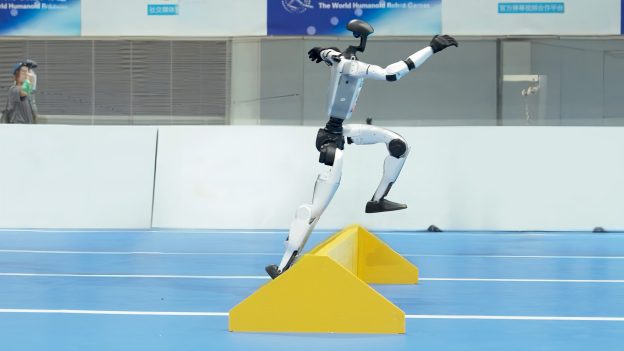
The U.S. is expanding its efforts to restrict Chinese technology in critical infrastructure. According to Reuters, the U.S. Federal Communications Commission (FCC) on July 28 unveiled bans targeting Chinese humanoid and quadruped robots, as well as connected power inverters used to link renewable energy sources and battery storage systems to power grids and data center equipment.
Reuters notes that the measures took effect immediately upon publication but apply only to new robot and inverter models that have not yet been released. However, the FCC retains the authority to revoke authorizations for products already approved for sale in the U.S.
The restrictions are intended to prevent China from establishing a dominant position in emerging technologies critical to U.S. AI infrastructure while avoiding a repeat of the rare earths scenario, in which Beijing leveraged its control over key technology inputs for geopolitical advantage, the report adds.
Meanwhile, sources say the FCC is expected to exempt many non-Chinese suppliers from the restrictions, consistent with its approach in recent bans on foreign drones and routers.
China’s Humanoid Robotics Advantage
The robot ban is expected to affect Unitree, a global leader in humanoid robotics, Reuters notes. The company is one of three Chinese firms dominating the fast-growing industry and was recently added to the Pentagon’s list of companies alleged to have ties to China’s military—a designation widely viewed as a precursor to tougher U.S. restrictions.
Notably, Unitree recently partnered with NVIDIA to integrate the AI chipmaker’s latest Blackwell platform into the brains of its robots. Nvidia has said the robots’ data will remain in the U.S. and that Unitree’s largest customers are U.S. academic and research institutions, the report adds.
The restrictions come as China continues to strengthen its long-term position in humanoid robotics, driven by a rapidly expanding supply chain and a low-cost, high-volume manufacturing model. According to TrendForce on Substack, China’s humanoid robot development follows a model similar to that of the early electric vehicle industry: building a complete supply chain, reducing costs rapidly, and achieving economies of scale through high shipment volumes. This enables core components such as servo motors, reducers, and lithium batteries to be localized quickly, lowering costs and significantly shortening development cycles.
TrendForce notes in an April press release that China’s humanoid robot vendors are rapidly defining commercial use cases and expanding production, with annual output projected to increase by up to 94% in 2026.
China’s Dominance in the Power Inverter Market
In the power inverter market, Reuters notes that China is the world’s largest producer, led by Sungrow Power Supply and Huawei, the latter already subject to extensive U.S. sanctions. The report adds that Chinese suppliers have steadily expanded their share of the Western inverter market through aggressive price competition.
The country’s strong position in the global inverter market is also reflected in U.S. import patterns. Around one-third of the inverters imported into the U.S. in 2024 came directly from China, according to data from the U.S.-China Economic and Security Review Commission, as cited by South China Morning Post.
Read more
- Humanoid Robots Part 1: The US-China Divide and Who Controls the Supply Chain
- Rising Demand for Caregiving and Emotional Support to Drive Humanoid Companion Robot Market to US$1.1 Billion by 2030, Says TrendForce
(Photo credit: Unitree on X)