[News] Top Five Japanese Chip Toolmakers Reportedly See 10% China Sales Drop in FY25, Led by Front-End Weakness
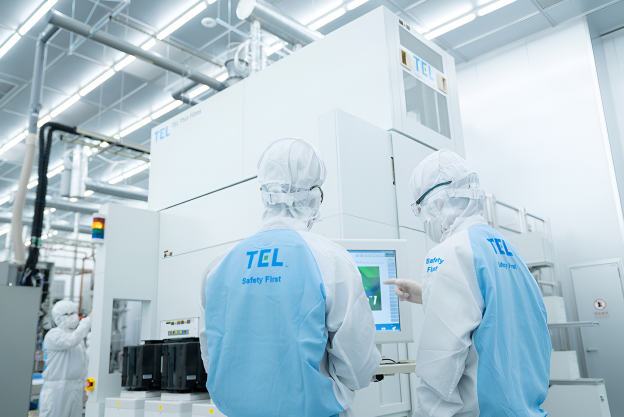
While China remains far from accessing ASML’s most advanced lithography systems, it is steadily strengthening its position in domestically used semiconductor tools. According to Nikkei, Japan is already feeling the impact, with its top five chipmaking equipment manufacturers posting a 10% decline in combined sales to China for the fiscal year ended March 31—marking the first-ever drop.
According to Nikkei, the five leading players—Tokyo Electron, Advantest, Screen Holdings, Disco Corporation, and Kokusai Electric—reported combined China sales of ¥1.47 trillion ($9.11 billion), down 12% from fiscal 2024.
Nikkei further highlights that the decline was particularly pronounced in front-end semiconductor tools used for wafer circuit formation. In this segment, combined China sales for Tokyo Electron, Screen Holdings, and Kokusai Electric fell nearly 20% year-on-year, the report notes.
Back-end equipment, however, continues to show resilience, with assembly and packaging-related tools supporting growth for Japanese suppliers. As Nikkei points out, Advantest, a major inspection equipment maker, posted roughly 20% sales growth last fiscal year, while Disco Corporation recorded an increase of nearly 10%.
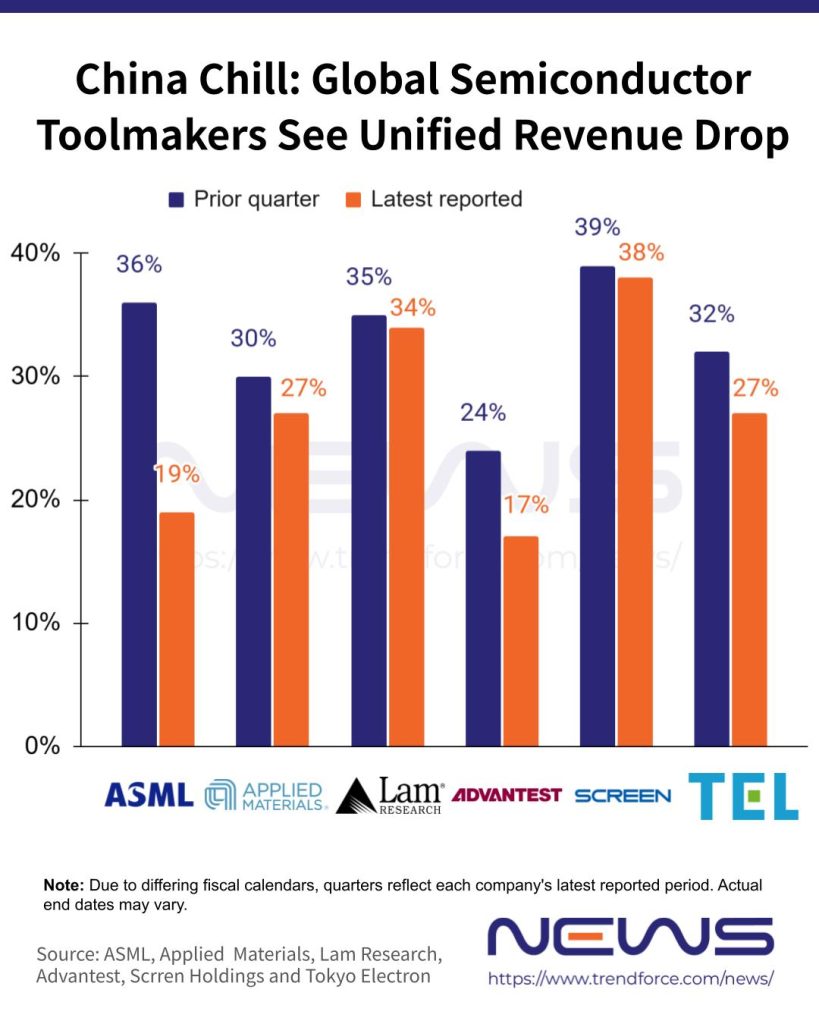
Meanwhile, Chinese players are gaining share not only at the expense of Japanese firms, but also from European and U.S. rivals. As noted by the report, ASML saw its China sales share fall to 19% in the first quarter of 2026, down 8 percentage points year on year.
China’s Semiconductor Localization Push
A previous Newswitch report provides additional context on China’s push for semiconductor self-sufficiency. As noted by the report, as the world’s largest semiconductor market, China remains a key force in the global chip industry, with semiconductor manufacturers now required to source more than 50% of equipment domestically when ramping up new production lines. The localization target is expected to rise further to around 70% for mature processes by 2027.
Against this backdrop, Nikkei reports that key domestic equipment players, including Naura Technology Group and Advanced Micro-Fabrication Equipment—backed by municipal governments in Beijing and Shanghai respectively—are steadily upgrading their technological capabilities.
According to Newswitch, for lithography equipment, Shanghai Micro Electronics Equipment Group (SMEE) has already entered verification for 28-nanometer ArF immersion tools. In etching, NAURA has begun mass production of 28nm equipment, while AMEC has started verification of 14nm tools at SMIC, the report noted.
On the other hand, Huawei, according to Nikkei, has emerged as a central force in China’s semiconductor push, driving R&D efforts by dispatching engineers to equipment makers such as Naura and SiCarrier Technologies.
Read more
- [News] Tokyo Electron Reportedly Raises FY26 CapEx 48% to Record High, Bets on DRAM Etching Demand
- [News] Tokyo Electron Sees AI-Driven Sales Hitting 40% by FY2026, Offsetting China Slowdown
(Photo credit: Tokyo Electron)