Popular Keywords



About TrendForce News
TrendForce News operates independently from our research team, curating key semiconductor and tech updates to support timely, informed decisions.
[News] Out with the Old: Memory Giants Map Their 2025-26 Exit Strategy amid Supply Crunch
Amid tightening memory supply, the industry is shifting focus to high-margin, cutting-edge products catering to hyperscalers. Legacy, consumer-oriented memory is gradually reaching end-of-life, with 2026 poised as a watershed year for key players. Here’s a look at how Samsung, SK hynix, and Micron are gradually exiting the traditional memory market and pivoting toward major tech giants like NVIDIA and Google.
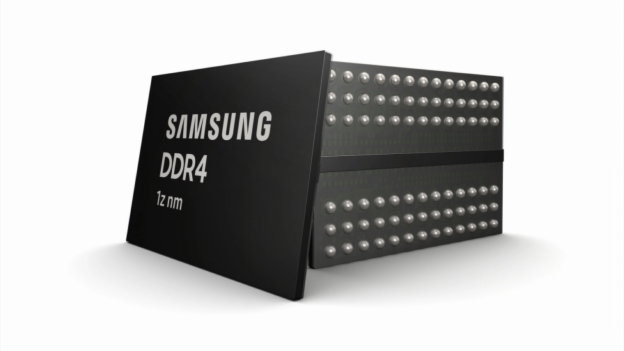
Samsung: Saying Goodbye to DDR4 and 2D MLC NAND
Despite market chatter suggesting memory leaders might postpone DDR4’s exit amid soaring prices, TrendForce notes that Samsung is sticking firmly to its end-of-life plan. As a result, DDR4 supply is set to drop sharply in 2026, pushing per-gigabit prices to record highs.
At the same time, the company is moving away from legacy NAND products. South Korean outlets, including The Elec, reported in mid-2025 that Samsung plans to exit MLC NAND Flash production. TrendForce notes that Samsung—once the largest supplier—will phase out MLC NAND products, with final shipments expected in June 2026.
While other major players including Kioxia, SK hynix, and Micron, have limited their MLC production primarily to meet existing customer demand as well, TrendForce suggests that the worldwide MLC NAND Flash capacity is expected to decrease by 41.7% YOY in 2026.
As reported by gamegpu, MLC NAND production is often considered no longer economically viable, with demand narrowing to specialized segments. Thus, companies like LG Display are already seeking alternatives for the MLC used in OLED panels, the report notes, adding that the market is shifting toward TLC and QLC.
SK hynix: DDR4 Out, Consumer Memory Intact
Like Samsung, SK hynix has signaled plans to phase out DDR4 by 2026. Maeil Business Newspaper noted in September 2025, however, that both companies made tactical adjustments amid a rebound in DDR4 prices, with SK hynix temporarily boosting output at its China-based Wuxi plant, which is heavily equipped with legacy production lines.
More recently, ETnews reports this month that SK hynix has completed a major upgrade at the Wuxi fab, transitioning the facility from the 1z process to the more advanced 1a node. The site now produces roughly 180,000 to 190,000 12-inch wafers per month, with around 90% of capacity running on 1a, the report adds. The move underscores SK hynix’s longer-term strategy to move away from legacy DRAM products such as DDR4 and refocus on more advanced memory nodes.
On the other hand, despite recent market rumors suggesting SK hynix might exit the consumer memory segment, Wccftech reports that a company spokesperson dismissed the speculation, emphasizing that the business remains fully intact.
Micron: Scales Back Consumer Memory and China Operations
Among the top three memory firms, Micron would be the most conservative on the consumer memory market, announcing several business withdrawals in the second half of 2025.
In August, the company launched a new round of layoffs in China, cutting hundreds of jobs as part of a global retreat from the struggling mobile NAND segment, the South China Morning Post reported. A company representative cited by the report added that Micron would discontinue development of new mobile NAND products worldwide due to the segment’s weak financial performance.
According to ESM China, the adjustment primarily affected its domestic embedded teams as well as R&D, testing, and FAE/AE support functions in China.
Shortly after, in October, Micron pulled back from China’s server chip market, Reuters reported, following a 2023 ban that blocked its products from critical infrastructure and hindered recovery. However, the report suggested the company will continue supplying two Chinese clients with major data centers outside the mainland, including laptop maker Lenovo.
The latest blow came in December, when Micron announced it would exit the consumer memory market, winding down its Crucial brand to focus supply on its largest strategic customers in fast-growing markets. As Tom’s Hardware reports, the move—following the company’s fiscal second quarter ending in late February 2026—signals a shift in production and investment toward enterprise-grade DRAM and SSDs to meet rising AI demand.
With 2026 marking a watershed moment, memory makers are clearly prioritizing profitability over breadth. The shift toward enterprise-grade, AI-focused products will redefine competitive dynamics—leaving consumer and industrial segments to navigate tighter supply and rising costs.

Read more
- [News] Memory Giants’ HBM Focus Could Limit DRAM Growth Through 2026; Taiwan Firms Boost DDR4
- [Insights] Memory Spot Price Update: DDR4 Spot Prices Climb as Samsung Holds EOL Line
(Photo credit: Samsung)
Please note that this article cites information from The Elec, gamegpu, Maeil Business Newspaper, ETnews, Wccftech, the South China Morning Post, ESM China, Reuters, Tom’s Hardware and Micron.