[News] AI Agents Enter Chipmaking: SK hynix Tests Back-End Deployment; Samsung Cuts SoC Verification to 2 Days
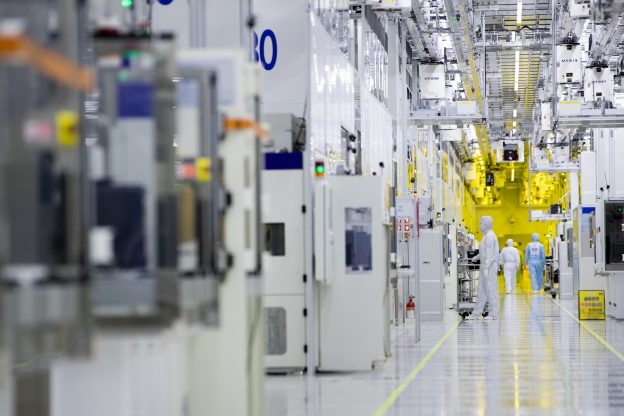
Samsung and SK hynix are accelerating the adoption of artificial intelligence (AI) agents in semiconductor manufacturing equipment. According to The Elec, SK hynix has begun a phased deployment of AI agents across its back-end production lines in Cheongju, though the specific equipment involved has not been disclosed. The company is evaluating equipment performance as well as the effectiveness and reliability of AI agent functions in production environments, with testing expected to conclude by year-end. SK hynix ultimately aims to establish autonomous semiconductor manufacturing facilities by 2030.
SK hynix has reportedly tied the KPIs of employees responsible for equipment qualification to the successful validation and deployment of AI software. AI-driven improvements in production yield are also reflected in their performance evaluations.
As the report indicates, SK hynix Executive Vice President Do Seung-yong stressed the growing importance of AI-driven manufacturing, noting that surging memory demand cannot be addressed through fab expansion alone. AI can enable more sophisticated decision-making across quality, cost, and production speed than conventional rule-based automation.
SK hynix is also expanding the infrastructure needed to support these efforts. According to another report from The Elec, sources say the company will install 250 AI servers equipped with 2,000 NVIDIA Blackwell GPUs at its Cheongju campus, marking its first direct deployment of a standalone AI system at a production site. The infrastructure will support factory digital twins and internal AI agents as semiconductor manufacturing moves toward AI-operated fabs.
Samsung Deepens AI Integration Across Its Chip Business
Samsung Electronics is also accelerating AI adoption across its semiconductor manufacturing operations to improve production efficiency. Sources cited by The Elec say the company is requiring equipment suppliers to include AI agents as standard features in newly ordered systems. The report adds that Samsung’s focus on reducing process time could also drive the integration of high-performance GPUs into manufacturing equipment, potentially increasing equipment costs.
Notably, according to Chosun Ilbo, Samsung Electronics is seeing significant efficiency gains from AI across semiconductor design and verification. Around three months after introducing Anthropic’s Claude Code to software development staff, customer-specific SoC verification that was expected to take more than a month was completed in just two days. In another case, a second-year engineer reportedly completed a month-long development task in a single day.
AI adoption is also expanding across Samsung’s Device Solutions (DS) division. The Chosun Ilbo report notes that AI has cut design time for some analog and logic semiconductors by around 50%, while the Memory Business Division has reduced the time needed to readjust process design kits (PDKs) for process changes by more than 95%. The industry sees these gains as a way for Samsung to offset its relatively limited design workforce: its System LSI division is estimated to have around 6,000 employees, compared with Qualcomm’s roughly 52,000 company-wide workforce as of September last year.
Read more
- [News] Samsung’s HBM4 Yield Reportedly Hits 80% as HBM Race Heats Up, SK hynix Labor Talks Add a Twist
- [News] SK hynix Posts Record 2Q Results but Misses Estimates Reportedly Due to Conservative Pricing; Completes 10 LTAs
(Photo credit: Samsung)