[News] Memory Makers Reportedly Tap Substrate Suppliers for DDR6 Prototypes; Commercialization May Start 2028–29
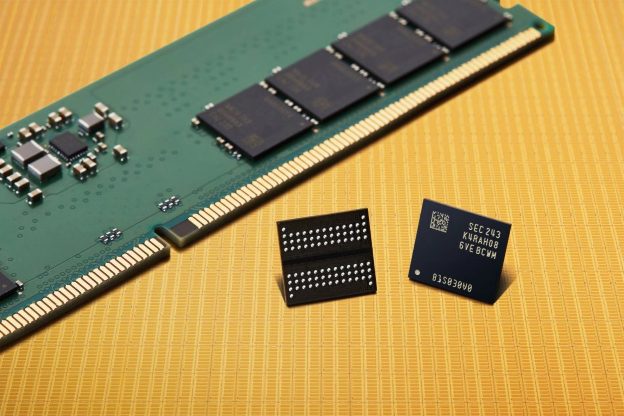
Global memory vendors are stepping up efforts to develop DDR6. According to The Elec, citing sources, leading players including Samsung Electronics, SK hynix, and Micron have recently asked substrate suppliers to initiate early-stage DDR6 development. Key design details have been shared, enabling substrate makers to start work with memory thickness, stack-up, and routing in mind. Early prototypes are already being produced and tested.
Memory makers and substrate suppliers typically begin collaboration more than two years ahead of a product launch, and sources indicate that initial DDR6 development has recently begun.
However, large-scale production remains some distance away. According to the report, industry estimates suggest DDR6 is unlikely to be commercialized before 2028 to 2029, with volume production expected to ramp only once end-market demand becomes clearer.
DDR6 Development Accelerates Amid AI-Driven Demand
Memory makers are accelerating efforts to shape the DDR6 standard, according to The Elec, which notes that specifications have yet to be finalized by JEDEC. If their proprietary designs are adopted, they could optimize performance while gaining early development experience, which may also help speed up yield stabilization. DDR6 is a next-generation standard expected to deliver more than twice the data transfer speed of DDR5, which tops out at 8.4 Gbps, the report adds.
As highlighted in a report by TechPowerUp last year, DDR6 is expected to debut at 8,800 MT/s, with a roadmap to reach 17,600 MT/s, nearly doubling DDR5’s current ceiling. This gain is driven by its 4×24-bit sub-channel architecture, which introduces new signal integrity challenges and differs from DDR5’s 2×32-bit design. The report adds that to overcome the limits of traditional DIMM form factors at higher speeds, the industry is turning to CAMM2 technology, with servers likely to lead adoption and high-end notebooks expected to follow as production ramps.
Read more
- [News] SK hynix Unveils 2029–2031 Roadmap Featuring HBM5, GDDR7-Next, and 400+ Layer NAND
- [News] DDR6 Set for 2027 Mass Adoption as Memory Giants Reportedly Finalize Prototype Designs
(Photo credit: Samsung)