[News] While DDR5 Margins Reportedly Surpass HBM: What’s Next for Memory Giants?
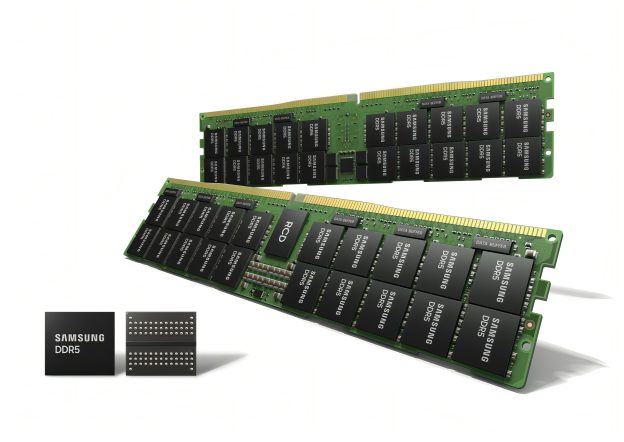
After Micron stunned the market with soaring margins—projected to reach 81% in 3QFY26, up from a record 75% in the previous quarter—the industry is keen to understand the drivers behind. One of the main reasons, undoubtedly, would be the price surge for conventional memory.
According to The Elec and Investing.com, Micron CEO Sanjay Mehrotra noted that “non-HBM margins are currently higher than HBM.” As The Elec suggests, this implied that DDR5 profitability now exceeds that of HBM, highlighting a shift in margin dynamics.
This margin trend is not unique to Micron. According to an earlier report from News 1, SK Group Chairman Chey Tae-won recently noted that HBM carries margins around 60%, while standard memory chips reach roughly 80%, underscoring a broader industry pattern.
Why DRAM Prices Are Surging—and the Risks Ahead
The reason conventional DRAM prices are soaring is straightforward: As explained by The Elec, HBM, which stacks multiple DRAM dies with advanced packaging, is more complex and costly to produce, while tight memory supply—further tightened by NVIDIA and hyperscalers’ HBM orders—has driven conventional DRAM prices higher amid limited availability.
But every record margin tells two stories. The same supply squeeze padding profit margins is also sending conventional memory prices to levels that may invite longer-term risks—and News1 warns that if South Korean chipmakers maintain high-price strategies, Chinese rivals could capitalize with aggressive pricing and expand their market share.
News 1 adds that while South Korean firms still lead the HBM market by an estimated three years, some demand could shift to Chinese products if mainstream memory prices continue to climb. The report suggests that Apple is said to be considering sourcing Chinese memory for its next iPhone series as part of supply chain diversification.
Memory Giants Navigating the Price Surge
Memory giants, while reaping the fruit of soaring memory prices, are also trying to gain more control on prices. Alphabiz, citing SK Chairman Chey Tae-won, reports that SK hynix CEO Kwak No-jung is expected to soon reveal plans to stabilize DRAM prices—a signal that the industry is aware the current pricing environment may not be sustainable.
Before SK hynix, Samsung has reportedly been making its move. EBN reports the company is negotiating with major tech firms on deals likely tying fixed volumes to market-linked pricing.
The report suggests that under this model, customers would prepay Samsung for agreed volumes over three to five years, with any unused volumes deducted from the advance payment. Prices, however, would remain linked to spot market levels, rising or falling if spot prices move beyond a certain range, according to EBN.
While Samsung’s framework is relatively transparent, the specifics of Micron’s SCAs remain confidential. What is clear is that Micron has signed its first five-year SCA with a large customer, with the firm emphasizing “robust terms for both sides” and commitments designed to span across different points in the industry cycle. Unlike Samsung’s model, which is primarily a volume and pricing arrangement, Micron’s SCAs appear to extend into R&D collaboration and joint roadmap planning—suggesting a deeper strategic integration with customers, according to Micron’s earnings call transcript.
The Elec further observes that Micron is steering clear of short-term tactics that adjust production solely based on unit price or profitability for each customer and product. Instead, the company focuses on boosting market share by supplying complete memory sets required for AI servers. As AI servers now demand both HBM and DDR5, limiting shipments to only the most profitable products could delay customers’ deployments—and ultimately weigh on Micron’s own performance, the report adds.
The Race to Lock In Before the Tide Turns
For now, the margin bonanza shows little sign of fading. With meaningful new DRAM capacity unlikely to come online until 2027 at the earliest, the supply constraints underpinning today’s elevated prices seem to be staying for some time.
Yet the critical question is how much of this windfall the industry can preserve once that capacity arrives. The long-term agreements and SCAs being negotiated today are, in part, a race to lock in favorable terms before the supply balance shifts.
All eyes are now on SK hynix. While CEO Kwak No-jung could soon be unveiling plans to stabilize DRAM prices, the industry is waiting to see whether the market leader will take a more interventionist approach—and whether that approach can meaningfully smooth the volatility.
Read more
- [News] Samsung Reportedly Eyes Long-Term Memory Deals with Google, Microsoft; May Include $10B+ Prepayments
- [News] Micron Ramps FY26 Capex to $25B, Signs First 5-Year Customer Deal
(Photo credit: Samsung)