[News] SK Hynix Commits Additional USD 15 Billion, Escalating Fab Expansion Race among Memory Giants
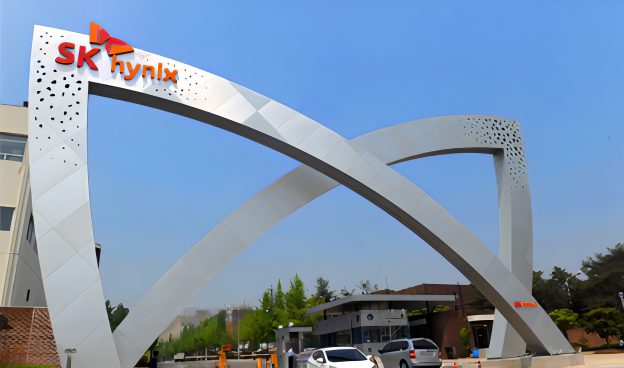
On February 25, global memory leader SK hynix announced that its board of directors has approved an additional investment of approx. KRW 21.6 trillion (~ USD 15 billion) for its first semiconductor fabrication plant by the end of December 2030.
The funds will be used to finalize construction of the main fab structure and deploy core production facilities, further expanding advanced-node wafer capacity to meet surging global demand driven by AI and high-performance computing (HPC) applications.
The investment will primarily support completion of the main building and the construction of five additional cleanrooms—Phases 2 through 6. Upon completion, the site will comprise two main buildings and six cleanroom facilities.
The company also disclosed that the launch of the first cleanroom has been brought forward from May 2027 to February 2027.
Following this latest capital injection, cumulative investment in SK hynix’s first fab in Yongin has reached KRW 31 trillion (approx. USD 21.5 billion). This figure includes the KRW 9.4 trillion initial infrastructure commitment announced in July 2024, which focused on foundational construction and supporting facilities.
Currently, SK Hynix is accelerating its transition toward AI-tailored memory solutions. On the front end, the Yongin cluster is positioned for high-volume production of the 1c DRAM process to secure scale and cost competitiveness. On the back end, collaboration with TSMC is advancing products such as HBM4 toward a more “memory foundry–like” manufacturing model. Through a tiered production network spanning Icheon, Cheongju, and Yongin, the company aims to reinforce its competitive moat in high-end memory.
A New Round of Strategic Fab Expansion Among the Big Three
As structural demand for high-bandwidth memory (HBM) accelerates alongside AI workloads, Samsung Electronics, SK Hynix, and Micron Technology have all entered a new large-scale capital expenditure cycle in 2026. A comparison of their fab construction strategies reveals distinctly different capacity allocation paths.
Samsung Electronics: An Integrated Production Model in Pyeongtaek
Samsung is advancing construction of its P4 and P5 facilities at the Pyeongtaek campus in Korea. Unlike SK Hynix’s memory-focused strategy, Samsung integrates memory manufacturing and logic foundry operations within the same industrial complex.
This layout is designed to leverage vertical integration advantages in 2.5D packaging, enabling a closed-loop process—from HBM fabrication to system-level packaging—within a single campus. While Samsung maintains the largest overall capacity footprint, its need to balance memory and logic foundry resources presents challenges in rapidly reallocating dedicated HBM production lines.
SK hynix: Specialized Capacity Expansion in Yongin
The Yongin cluster, now receiving additional funding, was optimized from inception for next-generation DRAM processes. Compared with Samsung’s integrated model, the first Yongin fab has a clearly defined objective: deploy large-scale EUV production lines and dedicated HBM backend facilities backed by the KRW 21.6 trillion investment.
Its key advantage lies in concentrating advanced production within a highly focused single-site base, thereby safeguarding delivery share in the premium memory segment.
Micron Technology: Multi-Regional Capacity Diversification
Micron has adopted a geographically diversified strategy distinct from its Korean peers. Supported by government incentive programs, the company is simultaneously advancing new fab construction in Clay, New York, and Boise, Idaho.
Micron give priority to establish cross-regional advanced-node supply capabilities and mitigate single-region supply chain risks. Although the company remains competitive in HBM3e energy efficiency, its longer construction timelines relative to SK hynix’s Yongin project suggest that its global capacity base will remain in ramp-up mode through 2027.
Conclusion
A comparison of capacity expansion strategies among leading memory vendors underscores a shift in industry investment logic. In the past, manufacturers adjusted output primarily in response to price cycles. Today, the model is evolving toward a demand-driven, pre-allocated capacity framework.
Industry observers note that SK hynix’s long-term investment commitment through 2030—alongside parallel expansion by Samsung and Micron—effectively represents a contest for supply share between 2027 and 2030.
Against a backdrop of sustained growth in AI server demand, the one that first completes core fab construction and enters equipment commissioning is likely to gain the upper hand in future contract negotiations.
(Photo credit: SK hynix)