[News] Intel Reportedly Hints at Memory Reentry, Eyes CPU-Memory Stacking as XBM Patent Emerges
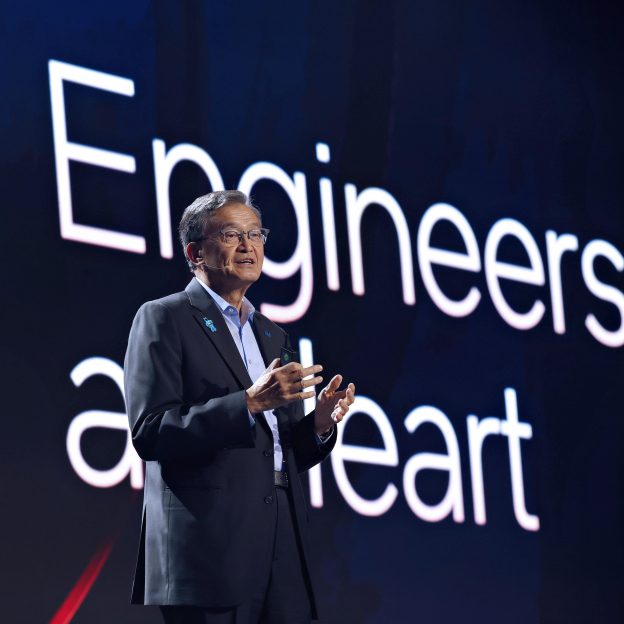
Intel CEO Lip-Bu Tan has hinted at a potential return to the memory market as AI reshapes memory’s strategic importance. According to Tom’s Hardware, Tan said he had previously avoided investing in memory because of its commodity nature, but now believes the industry is ripe for innovation as new technologies emerge. Tan identified new memory architectures as one of his pet projects and highlighted the recruitment of former SK hynix CEO Seok-Hee Lee. While he did not disclose specific plans, Tan suggested that stacking memory directly on top of a CPU could “make a lot of sense,” offering an early indication of the architectures Intel may be exploring.
Notably, MoneyToday reports that Intel’s recently disclosed XBM patent aligns with this direction. XBM is designed to eliminate the silicon interposer used in conventional High Bandwidth Memory (HBM), instead leveraging Universal Chiplet Interconnect Express (UCIe). While still at the patent stage, the concept has drawn attention for its potential to address growing memory bottlenecks and packaging costs associated with AI computing. As previously reported by Wccftech, XBM is expected to target commercialization after 2030.
According to TrendForce, Intel’s interposer-less XBM technology aims to enable direct 3D stacking of memory onto CPUs, potentially improving latency and power efficiency while differentiating both Intel’s chip designs and Intel Foundry’s advanced packaging services.
However, TrendForce notes that placing DRAM directly on high-power logic introduces significant thermal and yield challenges. To avoid repeating the challenges faced by proprietary memory technologies such as Optane, Intel will need to drive broad ecosystem standardization, balance in-house manufacturing with external partner supply, and demonstrate clear commercial advantages over existing solutions.
In addition to XBM, Business Post notes that Intel is developing Z-Angle Memory (ZAM), a low-power stacked DRAM architecture designed as an alternative to HBM. Comprising eight DRAM dies and a logic controller, ZAM aims to reduce power consumption, heat, and cost compared with HBM. Intel has also formed Saimemory, a joint venture with Japan’s SoftBank, to support the effort.
Intel’s Memory Return Remains Uncertain
Whether Intel’s renewed interest in memory will translate into a broader return to memory manufacturing remains uncertain. Tom’s Hardware notes that reentering the market would require significant capital for at least one fab, competitive manufacturing technologies, and substantial time, raising questions over whether Intel would prioritize memory over its core product and foundry businesses. ZDNet adds that Tan’s remarks should not be interpreted as signaling a return to Intel’s traditional general-purpose DRAM business, but rather as an indication of its growing focus on next-generation memory technologies.
Moreover, Business Post notes that NVIDIA controls over 80% of the AI accelerator market, with its hardware and software ecosystem already built around HBM, making a full replacement difficult. Even if Intel commercializes Z-Angle Memory, it may instead complement HBM in custom or inference-focused AI chips. The report also notes speculation that Intel could produce next-generation memory at Elon Musk-led Terafab, an integrated chip, memory, and advanced packaging hub expected to begin operations as early as 2028.
Read more
- [News] Intel Patent Reveals XBM Matching HBM4 Footprint Without Interposers; Commercialization Seen After 2030
- [News] SK hynix Reportedly Eyed as Potential Partner to Operate Intel’s Ohio Fab After Denying Acquisition Plans
(Photo credit: Intel)