[News] Samsung Electro-Mechanics Reportedly to Form Glass Core JV with Sumitomo Unit, Targeting 2H27 Production
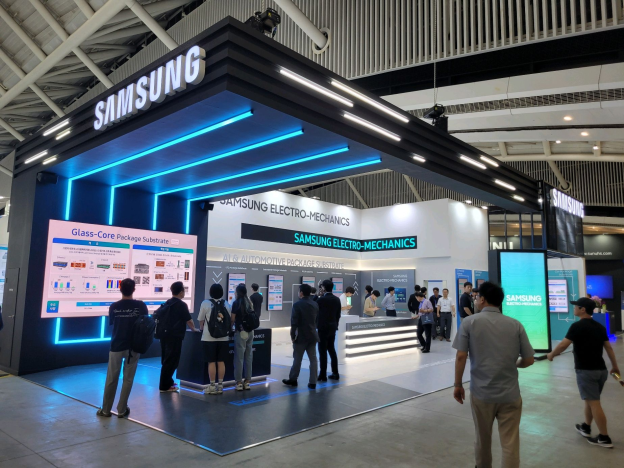
While Samsung Electro-Mechanics already operates a glass substrate pilot line at its Sejong plant, the company has taken another key step toward scaling up production. According to IT! Chosun, it has signed a definitive agreement with Dongwoo Fine-Chem, a subsidiary of Japan’s Sumitomo Chemical Group, to establish a joint venture producing “glass core” for next-generation substrates.
As highlighted by IT!Chosun, the two parties will proceed with the necessary procedures to formally establish the entity within the year, with full-scale operations scheduled to begin in the second half of 2027. The JV’s headquarters and production base, meanwhile, will reportedly be located within Dongwoo Fine-Chem’s Pyeongtaek plant in Gyeonggi Province.
According to the report, the new JV will be tentatively named “GlaSSEM,” with a total capital investment of approximately KRW 480 billion. Samsung Electro-Mechanics will hold a 66% stake, while Dongwoo Fine-Chem will own the remaining 34%.
The move, the report explains, reflects Samsung Electro-Mechanics’ strategy to accelerate the commercialization of glass substrates by combining its semiconductor substrate design capabilities with Sumitomo Chemical Group’s materials technology and Dongwoo Fine-Chem’s manufacturing infrastructure.
TSMC Pushes Glass Substrate Momentum
Samsung Electro-Mechanics’ latest move is being viewed as timely, coming just as TSMC unveiled tangible progress in its glass substrate roadmap in June. According to TechNews and analyst Ming-Chi Kuo, at JPCA Show 2026 in Japan, TSMC presented its “glass substrate for CoWoS” roadmap to supply chain partners, while also confirming collaboration with Japan’s Ibiden and Taiwan-based Innolux on the development of glass core substrates.
TechNews adds that TSMC’s first disclosed test data shows that glass substrates deliver a 16% improvement in coplanarity (COP), a 19% reduction in effective coefficient of thermal expansion (CTE), and a 31% increase in effective modulus. In terms of power integrity, resistance drops by 27% and inductance by 42%, which translates into significantly reduced thermal deformation and mechanical stress in large AI chips, the report notes.
Despite these advances, industry analysts cited by Chosun Biz cautioned that key manufacturing hurdles remain: for instance, Through-glass via (TGV) technology—critical for enabling vertical electrical connections in insulating glass substrates—has yet to be fully stabilized.
Notably, according to TrendForce, 2026 is expected to serve as a key validation year for equipment and materials suppliers, as TSMC moves toward CoPoS pilot production targeted for 2027, followed by mass production in the second half of 2028. Beyond CoPoS, TSMC’s next major push is expected to shift toward glass core substrates, with commercial-scale adoption likely emerging after 2030, TrendForce suggests.
Read more
- [News] Glass Substrates Eye 2027 Launch, Scale Toward 2030 as CoWoS Costs Rise and Hyperscaler Demand Grows
- [News] YC Chem Reportedly First to Supply Glass Substrate Photoresists; Customer Eyes Year-End Mass Production
(Photo credit: Samsung Electro-Mechanics)