[News] China’s Chip Material Suppliers Challenge Japanese Dominance; Guangyuan Invests US$1B in T-Glass
China is stepping up its semiconductor materials ambitions, challenging a market long dominated by Japanese companies. According to Nikkei, Chinese manufacturers are accelerating investment and production of advanced materials as Beijing pushes for greater semiconductor self-sufficiency.
Glass Cloth
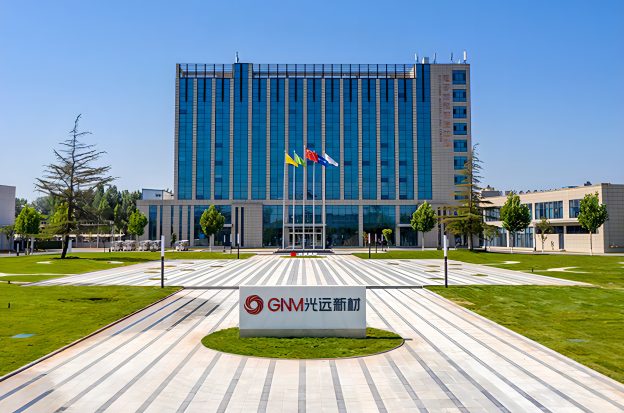
Glass cloth maker Guangyuan New Material has recently begun shipping T-glass products used in AI semiconductor packaging, with customers including Japan’s Panasonic Holdings and Resonac Holdings, the report says. T-glass resists thermal expansion and warping caused by the heat generated during high-speed, high-capacity AI data processing. Nikkei also highlights that Guangyuan New Material was the first company in China to develop low-dielectric glass cloth for AI servers and 5G base stations, while Japan’s Nittobo has long dominated the global T-glass market.
To meet growing demand, Guangyuan New Material plans to increase production and sales to 1 million meters per month. The company invested US$1 billion in a factory in Henan Province to boost T-glass and low-dielectric glass cloth output, with the facility coming online in phases since last year, according to the report. Separately, according to 21jingji, Guangyuan New Material officially resumed its IPO application on China’s ChiNext board in July 2026, three years after its previous attempt.
Copper-Clad Laminates
Chinese suppliers are also expanding production capacity in copper-clad laminates. Shengyi Technology, China’s largest producer of copper-clad laminates for printed circuit boards, is investing about 5.2 billion yuan in a new factory in Guangdong Province, Nikkei reports. The facility will produce high-performance materials for AI servers, electric vehicles, and other new energy vehicles—markets where Taiwanese and Japanese companies hold strong positions. The first phase is scheduled to begin operations in 2028, followed by a second phase in 2032.
The company is also investing 1.4 billion yuan in its first overseas factory in Thailand to serve customers across Southeast Asia, Europe, and the U.S., the Nikkei report adds. Beyond its capacity expansion, according to 21jingji, Shengyi Technology’s M9-grade copper-clad laminate has been certified for NVIDIA’s Rubin and GB300 platforms.
Sputtering Targets & Photoresists
Turning to sputtering targets, Nikkei reports that Konfoong Materials, China’s leading producer of sputtering targets used to form thin films on semiconductor wafers, will invest 350 million yuan over the next two years to build a factory in South Korea, supplying customers including SK hynix and Samsung Electronics.
According to EastMoney.com, the company has also achieved a breakthrough in high-purity 300mm silicon targets for advanced memory and begun volume shipments. The report notes that the product category has long been dominated by Japan’s JX Advanced Materials and Honeywell, with Japanese and U.S. suppliers holding more than 80% of the global high-end market.
In the photoresist sector, Nikkei notes that Japanese companies including Tokyo Ohka Kogyo and JSR hold about 80% of the global market. China is also building up its domestic photoresist industry. According to ijiwei, Chinese photoresist supplier Red Avenue New Material Group filed for a Hong Kong Stock Exchange listing in February 2026. The report highlights that it ranked first among Chinese suppliers by revenue in both the semiconductor photoresist and TFT array photoresist markets during the first nine months of 2025.
Read more
- [News] Nittobo Reportedly Plans 2028 Next-Gen T-Glass; Customers May Include NVIDIA, Apple, and Others
- [News] China Pushes Advanced Photoresist as Xuzhou B&C Targets KrF and ArF; Mass Production in 5 Years
(Photo credit: Guangyuan New Material)