Popular Keywords



About TrendForce News
TrendForce News operates independently from our research team, curating key semiconductor and tech updates to support timely, informed decisions.
[News] Sony, Microsoft Reportedly Weigh Delaying Next-Gen Game Consoles Beyond 2028 Amid Memory Price Surge
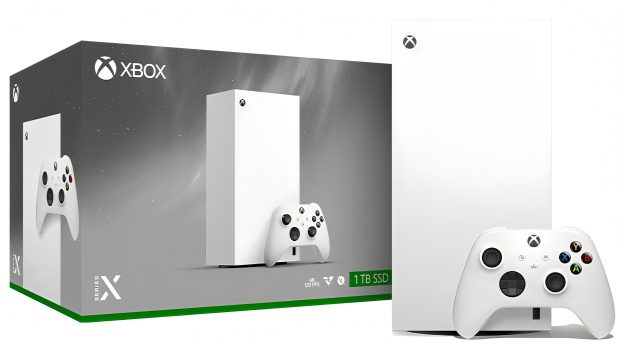
Memory prices are climbing, reportedly affecting the product planning of major game console makers. According to ITHome, citing Insider Gaming, sources say console manufacturers Sony and Microsoft are weighing whether to delay the next generation of consoles beyond their originally targeted 2027–2028 launch window. Even if the next-generation consoles are ultimately released, the report adds that their launch prices could be significantly higher than those of previous generations.
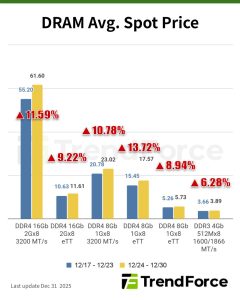
RAM prices have surged by several hundred percent in recent months amid booming AI demand. The report notes that console makers are considering delaying next-generation launches in hopes that memory manufacturers will have time to expand capacity, which could help ease RAM prices.
Beyond the potential impact on next-generation launches, the report indicates that rising memory costs could also lead to further price increases for current-generation consoles as early as 2026. As noted by Forbes, Sony has raised console prices once, while Microsoft has most recently increased the price of models such as the 2TB Xbox Series X to as much as $800—a move that, together with earlier price hikes, has contributed to a sharp drop in Xbox hardware sales.
Rising Memory Costs Weigh on Game Console Outlook
TrendForce notes that the rapid rise in memory prices is weighing on a range of consumer devices, including game consoles. As a result, TrendForce has revised its 2026 forecast for global game console shipments downward, widening the expected year-over-year decline from 3.5% to 4.4%.
According to TrendForce, Sony and Microsoft expect memory costs to account for more than 35% of total bill-of-materials (BOM) costs by 2026. This dynamic complicates the industry’s traditional mid-cycle price-cut strategy, particularly in the years following a console’s launch, and could result in price increases in some regions to offset rising costs.
In addition, TrendForce indicates that the launch price of the Switch 2, at US$450, is higher than that of its predecessor due to a doubling of memory capacity and higher overall component costs. Memory modules for the Switch 2 are projected to make up 21–23% of total hardware costs in 2026, a factor that significantly compresses profit margins and limits Nintendo’s flexibility for future price reductions.
Read more
- Memory Price Surge Squeezes Game Console Margins; 2026 Shipment Forecast Revised Downward, Says TrendForce
- Memory Price Surge to Persist in 1Q26; Smartphone and Notebook Brands Begin Raising Prices and Downgrading Specs, Says TrendForce
(Photo credit: Microsoft)
Please note that this article cites information from ITHome, Insider Gaming and Forbes.