Popular Keywords



About TrendForce News
TrendForce News operates independently from our research team, curating key semiconductor and tech updates to support timely, informed decisions.
[News] HBM4E Seen Hitting 40% of 2027 Market; Samsung, SK hynix Reportedly Aim for 1H26 Completion
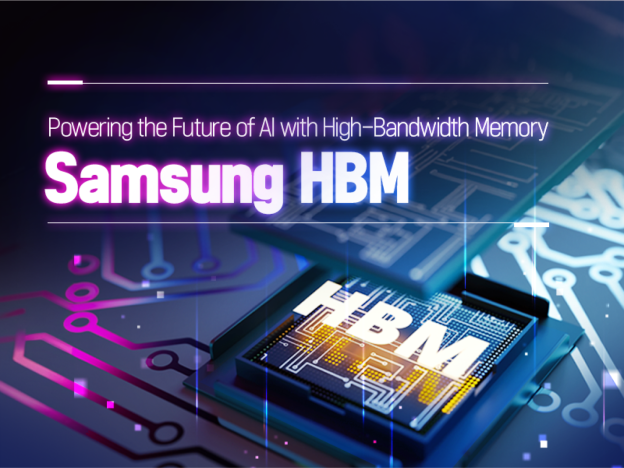
As HBM4 heads toward mass production in 2026, industry players are beginning to look ahead to HBM4E as the next stage of development. According to Chosun Biz, citing industry sources, with HBM4E the market is expected to move beyond standardized, mass-produced products toward more customized solutions in which core components are tailored to individual customer needs. The report notes that this transition could become an important element in how leading memory makers compete.
As highlighted in the report, Samsung Electronics and SK hynix are targeting completion of HBM4E development as early as the first half of 2026. With AI accelerators featuring HBM4E planned for launch in 2027, development timelines are being accelerated so that quality verification can be completed in the second half of 2026.
HBM4E and the Shift Toward Customer-Driven Memory Design
For HBM4E, the report highlights that memory giants such as Samsung and SK hynix are preparing for a new phase of customized HBM products, where the “logic die” is designed and manufactured to meet specific customer requirements.
The report also notes that companies moving into customized memory will need strong design capabilities and access to advanced foundry processes to respond quickly to customer demands. Samsung Electronics has already begun building expertise by applying its own foundry process to the logic die starting with HBM4, an effort that might be a foundation for the company’s advantage.
Sources cited in the report say that while expectations remain high for SK hynix to keep its lead through the HBM4E generation, thanks to its strong partnership with NVIDIA, the competitive landscape could still shift. As global big-tech companies develop their own AI accelerators and expand demand for customized HBM products, Samsung Electronics — backed by its foundry capabilities — may gain an edge, potentially altering market dynamics.
Meanwhile, according to Investing.com, Micron CEO Sanjay Mehrotra said the company’s HBM4E, slated for 2027, will come in both standard and customized versions and is being developed in partnership with TSMC. Chosun Biz also notes that while SK hynix has relied on TSMC for HBM4, Micron has chosen to produce both its DRAM and base dies in-house.
Citing analysts, Chosun Biz says HBM4E is expected to become the dominant product in the HBM market within two years. It estimates that HBM demand will grow 77% year over year in 2026 and 68% in 2027, with HBM4E accounting for about 40% of total HBM demand in 2027.
Read more
- [News] SK hynix Unveils 2029–2031 Roadmap Featuring HBM5, GDDR7-Next, and 400+ Layer NAND
- [News] Micron Counters HBM4 Speed Doubts with 11+ Gbps, Custom HBM4E Due 2027 with Higher Margins
(Photo credit: Samsung)
Please note that this article cites information from Chosun Biz and Investing.com.