[News] SK hynix 1c DRAM Reportedly to Overtake 1b as Main Process in 1Q27 as It Prepares for HBM4E
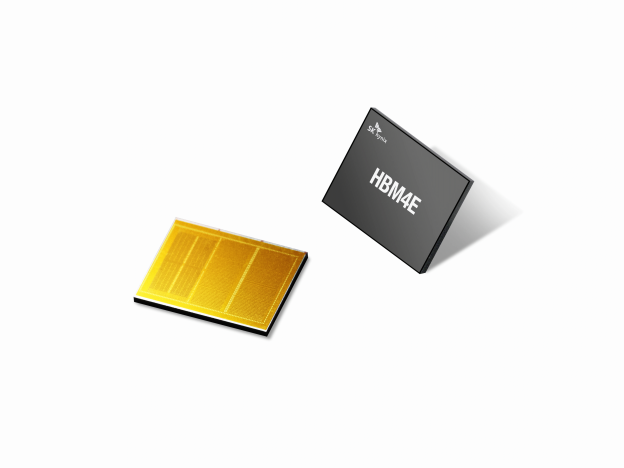
As demand grows for high-value memory used in servers and AI, SK hynix is accelerating its shift to more advanced DRAM. According to Chosun Biz, SK hynix is rapidly expanding production of its sixth-generation 10nm-class (1c) DRAM, which is set to become the core memory die for its next-generation HBM4E. The transition comes as SK hynix prepares HBM4E for mass production in 2027. According to Yonhap News, the company said in July that it had already provided HBM4E samples to customers as development moves forward.
Sources cited by Chosun Biz say 1c DRAM accounted for around 10% of SK hynix’s production in 1Q26 and 13% in 2Q26, compared with roughly 16% at Samsung and 19% at Micron. SK hynix’s share is projected to climb to around 24% in 3Q26 and 34% in 4Q26, surpassing Samsung’s roughly 31%, before reaching 35% in 1Q27. At that point, 1c is expected to overtake 1b, at around 33%, for the first time and become SK hynix’s main DRAM process.
SK hynix also said during its 2Q26 earnings call that shipments of 1c DRAM began ramping up during the quarter. Looking to the second half, the company expects stronger bit growth as HBM4 volumes increase. Shipments of 1c-based general-purpose DRAM are also expected to expand, Chosun Biz adds.
Samsung and SK hynix, meanwhile, are taking different approaches to HBM4. As Chosun Biz notes, Samsung adopted 1c DRAM for HBM4, targeting speeds of around 11.7Gbps, while SK hynix has prioritized mass-production stability with proven 1b DRAM and MR-MUF packaging. SK hynix is maintaining its HBM4 volume lead with this approach, while Samsung is seeking to gain share through stronger performance, the report adds.
1c Shift Could Boost Productivity and Cost Efficiency
SK hynix’s accelerated shift to 1c is expected to bring benefits beyond process scaling, particularly in cost and productivity. By increasing the number of bits produced per wafer, the newer process could improve cost competitiveness and help support DRAM profitability from the second half onward. Still, an industry official cited by Chosun Biz cautioned that the transition will only be meaningful if mass-production yields improve and customer qualification schedules keep pace.
Competition Extends to 1d DRAM
Looking further ahead, competition is already extending to seventh-generation 10nm-class (1d) DRAM. According to The Bell, Samsung reportedly aims to complete 1d development in September and begin preparations for mass production in December. SK hynix, meanwhile, is said to be targeting development completion in December and mass-production preparations in June 2027, putting it six months behind Samsung. The report adds that Samsung could begin initial mass production around the end of 2027, while SK hynix’s later schedule could push its production start further out. Samsung plans to use 1d DRAM in HBM5E, which is expected to launch around 2030, while SK hynix has yet to disclose its 1d application plans.
Read more
- [News] SK hynix Reportedly Weighs Intel for HBM4E Base Dies amid TSMC Cost Pressure and Supply Diversification
- [News] Samsung Reportedly Eyes 2nm Base Die for HBM5, 1d DRAM HBM5E; HBM4 to Exceed 50% of Output
(Photo credit: SK hynix)