[News] Micron Reportedly to Add 60K HBM Wafers/M, Reaching 100K by Year-End to Narrow Gap With Rivals
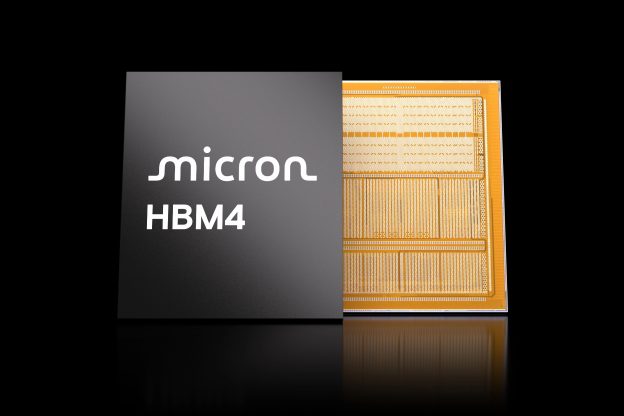
As Samsung races to ramp HBM4 and narrow the gap with SK hynix, Micron is also turning to HBM as a new growth engine beyond surging conventional DRAM prices. According to ETNews, the U.S. memory giant is stepping up its HBM expansion, with capacity expected to increase by as much as 60K wafers/month, driven by a stronger focus on 12-Hi HBM4 supply.
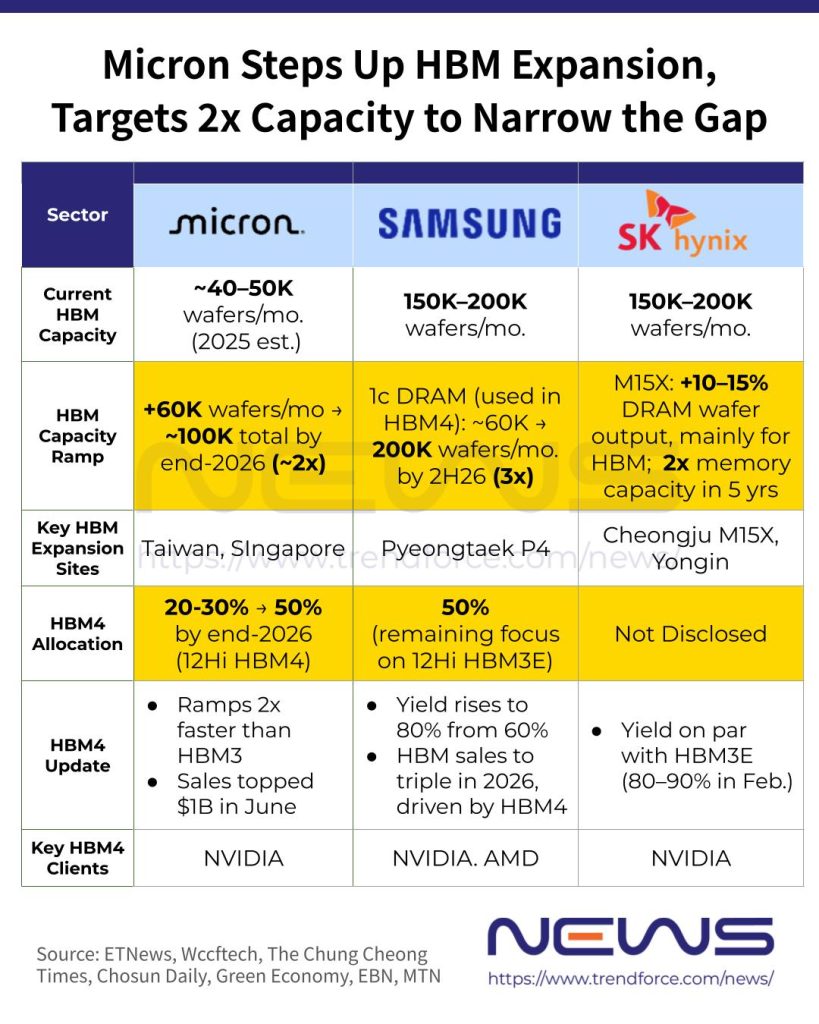
Citing industry sources, ETNews estimates Micron’s HBM capacity was around 40K–50K wafers/month last year, while another source familiar with the matter expects Micron’s total HBM capacity to reach around 100K wafers/month by year-end.
12-Hi HBM4 Set to Surge
Notably, 12-Hi HBM4, used in NVIDIA’s latest Vera Rubin AI accelerator, is set to take a much larger share of Micron’s HBM output as the company shifts beyond its current 12-Hi HBM3E-heavy mix. ETNews estimates 12-Hi HBM4 accounted for 20%–30% of output early this year, with its share potentially reaching 50% by year-end.
Micron’s aggressive capacity expansion is also backed by a faster-than-expected HBM4 production ramp. As previously reported by Wccftech, the company said HBM4 production is scaling up twice as fast as HBM3, reflecting strong AI-driven demand. Looking ahead, Micron expects to begin ramping next-generation HBM4E in 2027, with initial samples built on DRAM modules using its 1-gamma process node, the report adds.
Micron’s HBM expansion is significant, although its Korean rivals continue to operate at a much larger scale. Industry estimates cited by ETNews put Samsung and SK hynix’s HBM capacity at roughly 150K–200K wafers per month each, around three to four times Micron’s current level.
Micron’s HBM expansion could become increasingly relevant as NVIDIA looks to diversify its HBM configurations for future products. According to ZDNet, Samsung and SK hynix plan to gradually increase 8-Hi HBM4 shipments to NVIDIA in the second half of this year, shifting away from 12-Hi products as NVIDIA expands its HBM mix. The shift reflects NVIDIA’s focus on balancing thermal management with supply-chain stability by securing multiple HBM configurations, ZDNet suggests.
Samsung Also Steps up HBM4 Push
Still, as the HBM4 race heats up, Samsung, trying to close the gap with SK hynix, is also expected to devote a significant portion of the HBM capacity to the new generation. According to Chosun Daily, Samsung Electronics is set to dedicate half of its HBM production capacity to HBM4, ramping up output after its first HBM4 shipments in February as it seeks to regain market share.
According to semiconductor industry sources cited by the report, Samsung is currently processing around 150,000 DRAM wafers per month for HBM, with roughly 75,000 wafers going to HBM4. The remaining capacity is reportedly focused on 12-Hi HBM3E.
Meanwhile, Samsung is also making headway on HBM4 yields, further supporting its production ramp. According to Green Economy, Samsung’s HBM4 yield has reportedly climbed to nearly 80%, up sharply from around 60% just six months ago.
Read more
- [News] Micron Meets Less Than Half of Data Center Demand as Customers Rush to Secure Memory at “Very High” Prices
- [News] Micron Flags HBM4E as Start of Custom HBM Era; HBM Market Could Tilt Toward Dual-or-Single Suppliers
(Photo credit: Micron)