[News] Micron’s Sanand Assembly & Test Plant Gets Boost With 12-Hour Shifts, First in Gujarat
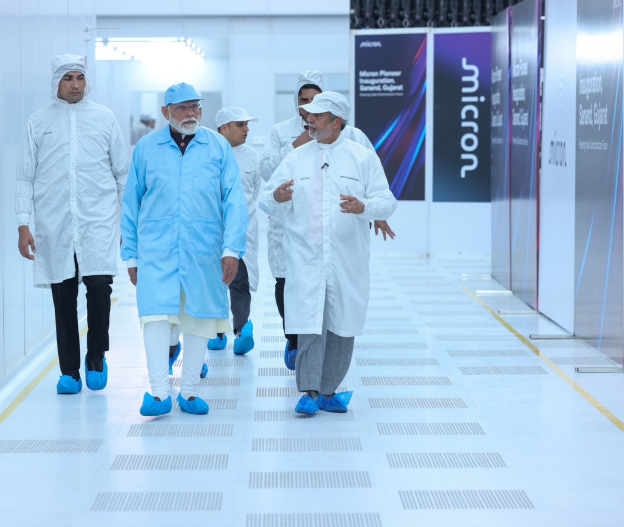
As Micron said it can currently meet only about 50% of demand from data-center customers, according to CNBC, the memory giant has received a boost from the Indian government to ramp up output. The Gujarat government has approved Micron’s Sanand facility to operate 12-hour shifts—the first approval of its kind in the state, according to local media outlet Desh Gujarat.
Though the statutory weekly working limit remains capped at 48 hours, the new measure could help Micron accelerate output at Sanand by enabling longer, more continuous operation of its highly automated assembly and test lines. As The New Indian Express notes, 12-hour shifts can reduce handovers and cleanroom entries while keeping costly equipment running for longer, supporting more continuous production.
Such arrangements are already found in semiconductor manufacturing operations worldwide, especially at plants built to support 24-hour production, the report adds.
Micron Sanand: A Strategic Production Hub
As highlighted by Desh Gujarat, the first phase of Micron’s Sanand facility will span more than 500,000 square feet of cleanroom space, including one of the world’s largest single-floor semiconductor assembly and test cleanrooms. According to the report, the site is slated to assemble and test tens of millions of chips in 2026, with annual production capacity expected to ramp up to hundreds of millions of chips from 2027.
At full capacity, the Sanand facility could contribute up to 10% of Micron’s global output, supplying both domestic and international markets, according to Business Standard.
According to India’s Press Information Bureau (PIB), Micron’s Sanand site, officially opened in early 2026, will support the assembly and testing of both DRAM and NAND products, serving customers across domestic and international markets. The facility is expected to reach a production capacity of around 14 million units per week, per the PIB press release.
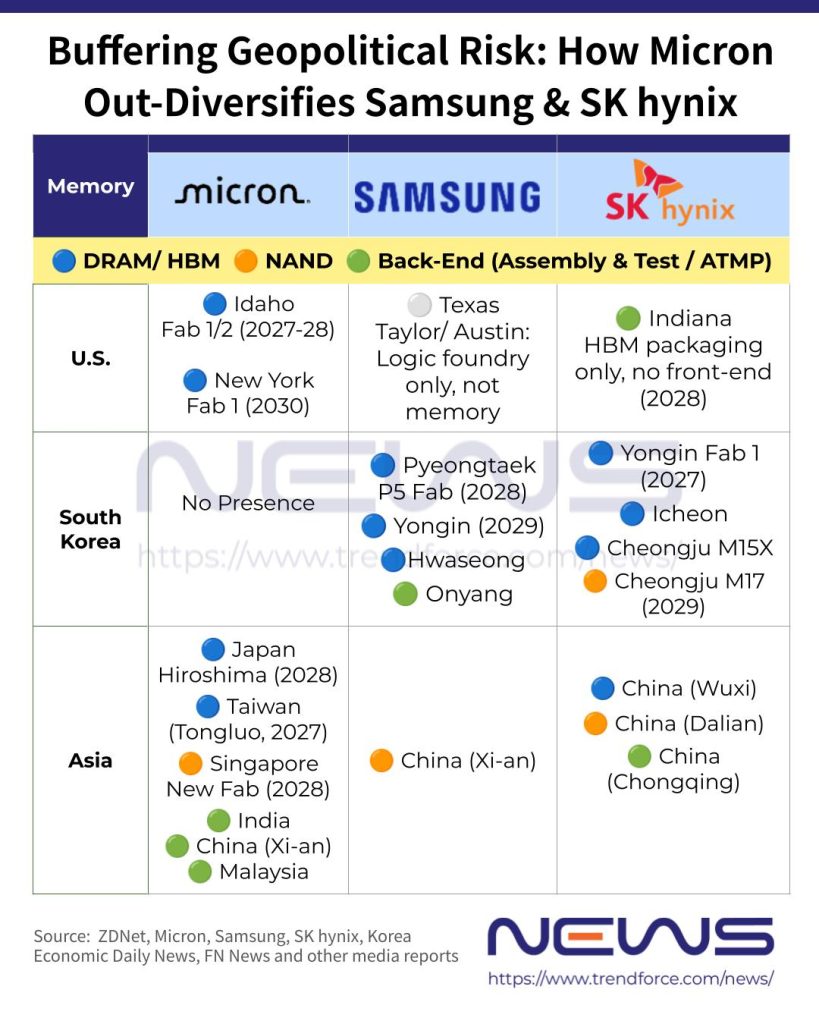
On the other hand, Simply Wall St also highlights the site’s strategic importance, noting that the the US$2.75 billion investment in India is closely aligned with Micron’s strategy to meet AI-driven demand for DRAM, NAND and high-bandwidth memory while reducing its reliance on any single country.
By turning wafers produced in the US, Japan and other locations into finished products closer to key Asian customers, Micron is diversifying its assembly and test footprint—an increasingly important buffer against supply-chain disruptions and tighter export controls, the report adds.
Micron Deepens Its U.S. Push
Meanwhile, Micron is deepening its U.S. footprint as AI-driven demand continues to surge. Last week, the company unveiled Micron Research Labs, a premier long-term research hub headquartered in Boise and backed by a planned $10 billion investment over the next decade.
Micron plans to break ground on the facility in 2027, with space for hundreds of researchers as well as international conferences, workshops and other collaborative activities, according to Reuters.
Read more
- [News] Musk Says Micron Is “Making Room” for Tesla in the Years to Come, Hinting at Long-Term Memory Supply
- [News] Micron Meets Less Than Half of Data Center Demand as Customers Rush to Secure Memory at “Very High” Prices
(Photo credit: Narendra Modi’s X)