[News] “Compute Metals” Skyrocket in Price

The rapid acceleration of AI compute infrastructure is reshaping the global supply-and-demand landscape for non-ferrous metals.
On July 29, the China Nonferrous Metals Industry Association released its latest data, showing that in the first half of this year, the output of ten non-ferrous metals tracked by the National Bureau of Statistics reached 41.513 million metric tons, up 3.3% YoY. Total profits of above-designated-size non-ferrous enterprises surged by 94.0% to CNY 418.39 billion, making profitability growth in the sector among the highest across the industrial sector.
Within this impressive performance, demand for “compute metals” saw an extraordinary surge. Driven by AI compute infrastructure build-outs, prices for non-ferrous metals—including copper, aluminum, tin, tantalum, and indium—rose significantly. Over the past six months, tin prices jumped by 40%, tantalum skyrocketed by 158%, and indium climbed by 60%.
Copper: Core Material for Compute Connectivity; Global Data Center Consumption to Hit 740,000 Tons by 2026
China is the world’s largest producer and consumer of copper products, accounting for over half of global copper consumption. In recent years, the rapid expansion and robust demand of emerging sectors such as AI and new energy have kept copper inventory levels generally low, providing further support for sustained high prices.
A copper manufacturer in Ningbo, Zhejiang, told CCTV Finance reporters in May that orders have exceeded supply this year as domestic intelligent computing centers accelerate deployment. Industry data projects that global copper consumption in data centers will reach 740,000 metric tons in 2026 and is forecasted to hit 1.3 million metric tons by 2028.
Tin: AI Servers and Advanced Packaging Drive Primary Demand; Industry Pivots to Recycling
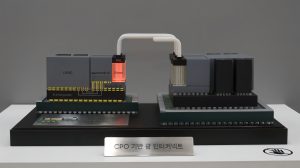
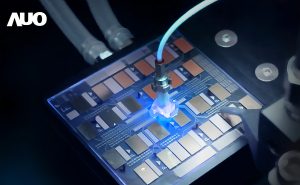
Thanks to its excellent electrical conductivity, low melting point, and high soldering stability, tin has become a vital foundational material in advanced semiconductor packaging. As computing power increases and chiplet stacking grows denser, tin consumption rises proportionally—earning it the nickname “compute metal.”
Historically, tin applications were concentrated in traditional consumer electronics and tinplate. Today, AI servers, optical transceivers, and advanced semiconductor packaging have emerged as the primary growth drivers for tin demand.
Industry research indicates that an individual AI server consumes more than three times the amount of tin used in a traditional server. Products in these high-end, emerging tracks possess higher added value, granting them greater tolerance for higher raw material prices.
Currently, leading Chinese tin enterprises have established closed-loop supply chains covering mining, smelting, processing, scrap recovery, and recycling. Through key technological breakthroughs, these companies are improving recovery rates from waste printed circuit boards, tin dross, and tailings, continuously increasing the proportion of secondary tin supply.
Experts: Short-Term Supply-Demand Dynamics Intact, But Price Volatility Risks Remain
In an interview with CCTV Finance, Duan Shaofu, Deputy Secretary-General of the China Nonferrous Metals Industry Association, stated that the industry generally agrees the fundamental short-term supply and demand dynamic for “compute metals” remains unchanged, providing strong support for price baselines.
However, macroeconomic factors currently exert valuation pressure, geopolitical uncertainties persist, and market sentiment remains highly sensitive, making price volatility a risk that cannot be ignored.
Duan suggested that the industry should respond across three strategic fronts:
- Enhancing product quality to meet market requirements.
- Strengthening supply-and-demand integration between upstream and downstream players.
- Diversifying resource supply channels to ensure raw material security.
(Photo credit: Google)