[News] TSMC’s 1.4nm Fab Ahead of Schedule; First Building Expected Before Apr. 2027, Mass Production Seen by Mid-2028
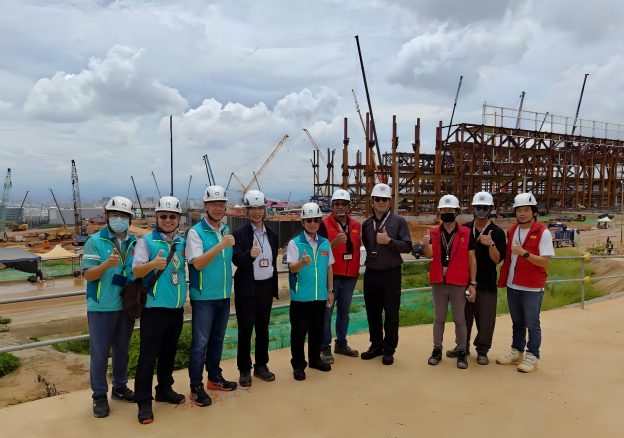
TSMC has been pushing ahead with its next-generation manufacturing expansion. According to Commercial Times, Central Taiwan Science Park Administration Director Hsu Mao-hsin said on July 29 that construction of the company’s 1.4nm fab at the site is ahead of schedule, with the first fab building expected to be completed before April 2027. Supply chain sources say that if construction continues at its current pace, pilot production could begin as early as the start of 3Q27. If equipment installation and production line qualification proceed smoothly, the fab could enter mass production by mid-2028.
Based on this estimate, mass production could begin earlier than previously reported. For reference, a May report by Economic Daily News said TSMC was targeting 1.4nm pilot production as early as 3Q27, with mass production planned for 2H28.
Commercial Times also provides an update on construction progress at the site. The report indicates that contracts for the fab buildings at TSMC’s Central Taiwan Science Park expansion area have been awarded in stages, while foundation piling has been largely completed. Construction has since advanced to the central utility plant (CUP) and office buildings. The first two of the four planned fabs have entered the steel structure phase, leaving the overall project significantly ahead of schedule.
The Commercial Times report adds that as the 1.4nm fab takes shape, TSMC is expected to further strengthen its advanced process footprint in Central Taiwan, driving continued investment by semiconductor equipment suppliers, facility engineering firms, cleanroom providers, and related supply chain companies in the region. To support the accelerated construction schedule, TSMC has also introduced AI-powered image recognition and intelligent safety inspection systems, together with early warning mechanisms and protective measures to mitigate heat-related hazards and construction risks.
The Race to 1.4nm Intensifies
As noted by Tom’s Hardware, TSMC said during its latest earnings call that its A14 (1.4nm-class) process has made rapid progress over the past three months and is well ahead of N2 at the same stage of development. The company added that A14 development remains on track, with internal product-like vehicle validation demonstrating transistor performance approaching 90% of target and nearly 90% yield for a 256Mb SRAM, while customer interest and engagement remain strong across both smartphone and AI/HPC applications.
Other leading foundries are also advancing their next-generation process roadmaps. According to Tom’s Hardware, Intel said during its latest earnings call that it plans to begin high-volume manufacturing using its 14A (1.4nm-class) process in 2028, in line with TSMC’s roadmap for its A14 process. CEO Lip-Bu Tan said the company remains on track for 14A risk production of its internal products in the second half of 2027 and that it decided to fully commit to a high-volume ramp in 2028.
Meanwhile, as Intel and TSMC both target 1.4nm-class mass production around 2028–2029, Samsung is re-entering the race after reportedly delaying its roadmap. According to The Bell, the company has resumed efforts to commercialize its 1.4nm (SF1.4) foundry process, with mass production now slated for 2029, placing it slightly behind its leading rivals.
Read more
- [News] TSMC Scales 2nm Capacity as Samsung Wins Major AI Chip Deal with Broadcom
- [News] Samsung Reportedly Restarts 1.4nm Push, Targets 2029 Mass Production to Close Gap with TSMC, Intel
(Photo credit: Central Taiwan Science Park)