[News] Vera Rubin Buildout: NVIDIA Reportedly Pushes TSMC Above 20% Revenue Share, Power, Cooling Suppliers Benefit
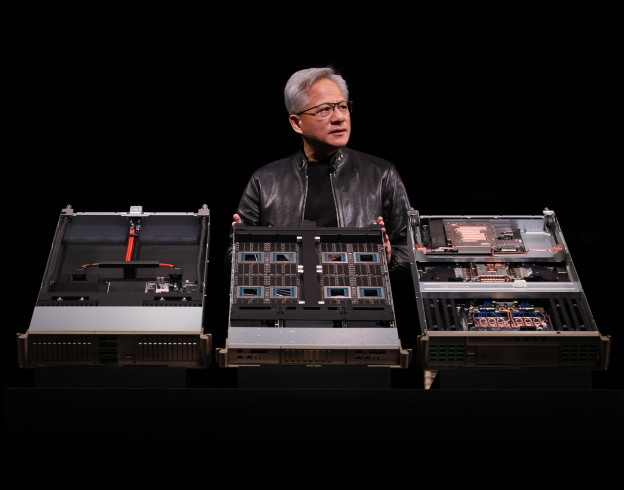
As NVIDIA’s GTC Taipei is set to kick off soon, market attention is turning to the rollout of its next-generation AI platform Vera Rubin, which is expected to enter mass production and begin shipments in the second half of the year, as highlighted by Commercial Times.
Earlier, Liberty Times reported that NVIDIA CEO Jensen Huang had already signaled a major ramp-up, saying Taiwan will be “very busy” in the second half of 2026, with next year set to be “beyond imagination” in terms of workload. The key question now: who stands to benefit the most from this next wave?
Notably, Economic Daily News reports that after becoming TSMC’s largest customer in 2025, NVIDIA is expected to account for over 20% of TSMC’s revenue in 2026, while Commercial Times notes that beyond key manufacturing partners such as TSMC and ASE, power management and liquid-cooling suppliers are emerging as early beneficiaries of the AI buildout.
NVIDIA Overtakes TSMC Revenue Mix
Commercial Times reports that though TSMC does not disclose order trends for individual customers, Huang revealed during a podcast interview with Global Semiconductor Alliance (GSA) co-founder and CEO Jodi Shelton that NVIDIA had become TSMC’s largest customer.
Citing TSMC’s 2025 annual report, Commercial Times notes that only two customers accounted for more than 10% of the foundry’s revenue: Customer B contributed 22% of revenue in 2024, but its share declined to 17% last year, while Customer A’s contribution surged from 12% to 19% over the same period, making it TSMC’s largest customer. Market observers, according to Commercial Times, widely believe Customer A is NVIDIA, while Customer B is Apple.
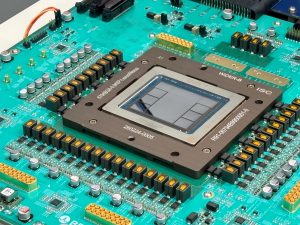
While Blackwell continues to drive strong demand for TSMC’s 4nm capacity, Wccftech, citing Economic Daily News, reports that TSMC began volume production of NVIDIA’s Vera Rubin chips earlier this year on its 3nm node. Major manufacturing partners including Foxconn, Quanta, and Wistron are expected to ramp deployments in the second half of the year, with mass shipments projected to start as early as Q3 2026 as the platform scales into full production, the report adds.
Higher Rack Value Drives Power & Cooling Gains
On the other hand, Commercial Times highlights that multiple component segments are set to benefit from rising value content as Vera Rubin’s rack-level pricing is expected to see a notable uplift. Institutional analysts cited by the report estimate that the Vera Rubin rack’s unit price may reach around US$7.8 million per rack—substantially higher than GB300.
According to the report, power modules could see an estimated 32% increase in value, while cooling system content is projected to rise around 12%, positioning both as key winners across the AI infrastructure supply chain. Taiwanese suppliers including Delta Electronics, Lite-On Technology, Auras Technology, and Asia Vital Components are expected to be among the primary beneficiaries, the report adds.
Commercial Times reports that the Rubin platform is expected to adopt a 110kW power architecture, while some CSPs are already evaluating HVDC solutions and gradually shifting toward 800VDC systems. Meanwhile, stricter power reliability requirements are accelerating the adoption of battery backup units (BBUs), driving sustained demand growth for power-related components, as per the report.
In terms of cooling system shift, the report notes that compared with the Blackwell generation, the Vera Rubin platform is expected to further expand liquid-cooling coverage beyond GPU compute modules to include networking components such as switches. It will also increase the use of manifolds, quick disconnects, CDUs (coolant distribution units), and rack-level liquid-cooling modules, driving continued value uplift in per-rack thermal systems, the report says.
Read more
- [News] NVIDIA Jensen Huang Calls Huawei’s Tau Scaling Law a Breakthrough, But Sees No Challenge to TSMC
- [News] TSMC Targets 2H26 COUPE on Substrate; NVIDIA Could Eye Long-Term Substrate Deals Amid CPO Push
(Photo credit: NVIDIA)