About TrendForce News

TrendForce News operates independently from our research team, curating key semiconductor and tech updates to support timely, informed decisions.

[News] Samsung 2nm Yields Reportedly at ~55%, Below Mass Production Threshold; Qualcomm May Opt for TSMC

2026-04-14 Semiconductors editor

Samsung’s 2nm yield challenges are resurfacing. According to Busan Ilbo, sources indicate that Samsung Foundry’s 2nm yields remain in the mid-50% range, falling short of the roughly 60% threshold typically required for stable mass production. After backend processing, effective yields are expected to decline to around 40%. While Samsung has technically entered the 2nm node, industry observers say current yield levels remain insufficient to attract major global tech customers. In contrast, rival TSMC is reportedly achieving a more stable yield range of 60–70% at 2nm, the report adds.

As noted in the report, industry observers view the process as still in a “halfway stage.” With nearly half of wafer input lost to defects, it falls short on both cost competitiveness and delivery stability. Given that a single advanced-node wafer can cost tens of millions of won, even a 1% change in yield can translate into annual operating profit differences ranging from hundreds of billions to trillions of won, posing a significant obstacle to improving the profitability of Samsung’s foundry business.

Customer Traction Remains Limited

On the customer side, Busan Ilbo indicates that Samsung has secured some internal volume and a limited number of external clients, but has yet to win major customers such as Apple, NVIDIA, and AMD. Notably, according to Global Economic, citing sources, while there had been expectations that Qualcomm might engage Samsung, the company has instead selected TSMC’s 2nm (N2P) process for full production of its next-generation flagship Snapdragon 8 Elite 6th Gen.

Still, this does not signal a complete break with Samsung. Global Economic notes that Qualcomm may continue engaging with Samsung to diversify supply, reduce reliance on TSMC, and retain pricing leverage, with Samsung currently supplying 2nm-based Snapdragon prototypes for performance validation. Industry observers also suggest a dual-sourcing strategy remains possible, with Samsung Foundry potentially used for mid- to lower-tier chips rather than flagship models.

Meanwhile, Samsung has secured an order from Tesla for its next-generation autonomous driving chips, AI5 and AI6. Busan Ilbo notes that yield levels at ramp will be a key factor in determining both profitability and supply reliability.

Apart from Tesla, Samsung Foundry has also reportedly secured a new domestic customer. According to The Korean Herald, DeepX has unveiled a physical AI full-stack strategy integrating its proprietary chip technology, hardware platform, and software ecosystem. The company disclosed plans to build next-generation AI infrastructure by mass-producing its DX-M2 chip—based on Samsung Foundry’s 2nm process—in 2027.

Read more

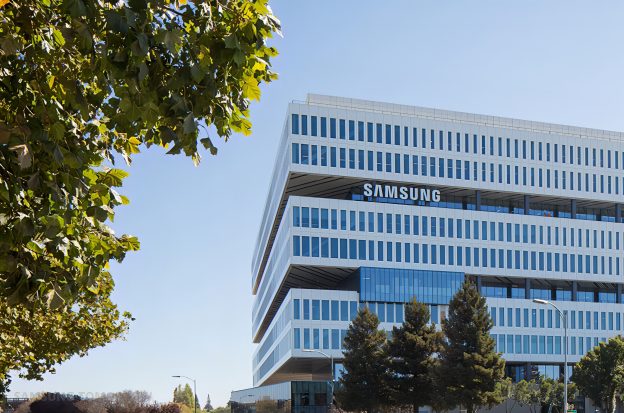
(Photo credit: Samsung)

Please note that this article cites information from Busan IlboGlobal Economic, and The Korean Herald.

Get in touch with us