[News] ASML Reportedly Demonstrates EUV Light Source That Could Lift Chip Output 50% by 2030
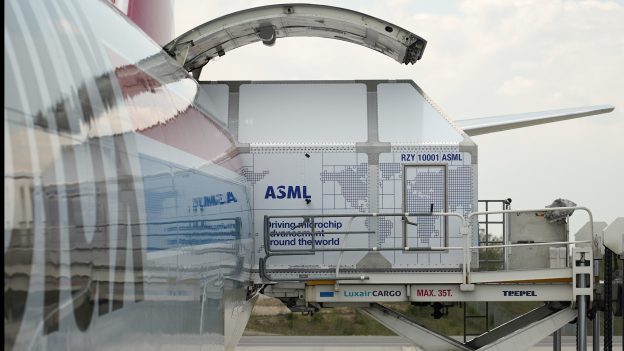
ASML has unveiled a new advancement in its EUV technology that could significantly increase chip output. According to Reuters, researchers at the Dutch company have developed a way to enhance the power of EUV light source, potentially enabling up to 50% more chip production by the end of the decade.
Teun van Gogh, executive vice president overseeing ASML’s NXE line of EUV systems, said customers are expected to process around 330 silicon wafers per hour on each machine by the end of the decade, compared with roughly 220 wafers per hour today, as noted by the report.
As the report highlights, the company’s researchers have identified a method to raise the EUV light source output to 1,000 watts, up from the current 600 watts. The effort is part of ASML’s push to deliver EUV light with the optimal power and characteristics needed to support high-volume chip manufacturing.
The main benefit, the report adds, is that higher power enables more chips to be produced per hour, which in turn helps reduce the cost per chip. To illustrate how this works, the report explains that chip patterns are created much like developing a photograph: EUV light is projected onto a silicon wafer coated with a light-sensitive material known as photoresist. A stronger EUV light source shortens the required exposure time, allowing chipmakers to increase throughput.
How ASML Boosted EUV Power to 1,000 Watts
The key breakthrough, as the report explains, involves doubling the number of tin droplets to about 100,000 per second and converting them into plasma using two smaller laser bursts, rather than the single shaping burst deployed in current systems.
To generate light at a wavelength of 13.5 nanometers, ASML’s machine propels a stream of molten tin droplets through a chamber, where a powerful carbon dioxide laser heats them into plasma, as noted by the report. The droplets reach temperatures hotter than the surface of the sun, emitting EUV light in the process, the report states. That light is then captured by precision optical systems supplied by Germany’s Carl Zeiss AG and routed back into the machine to pattern chips.
Still, a key constraint is how ASML plans to integrate the upgraded EUV light source across fabs. According to Wccftech, the company offers “Productivity Enhancement Packages” (PEPs) that let customers upgrade tools without replacing entire systems. However, thermal limits in older NXE:3400C/D models eventually required adding a 1,000W light source, suggesting the latest approach will focus on existing NXE:3800E systems and the upcoming High-NA EXE:5000/5200 platforms.
Looking ahead, ASML believes the methods used to achieve the 1,000-watt milestone will support further performance improvements in the years ahead. Reuters also notes that at least two U.S. startups, Substrate and xLight, have raised hundreds of millions of dollars to develop American alternatives to ASML’s technology. Against this backdrop, ASML’s latest advance aims to widen its lead by strengthening what is considered the most technically challenging component of EUV systems.
Read more
- [News] ASML’s High-NA EUV for 2027-28: Which Giants Are Betting Big—Intel, Samsung, SK hynix or TSMC?
- [News] China Reportedly Builds EUV Prototype Using Older ASML Components, Eyes 2028 Chipmaking
(Photo credit: ASML)