[News] SMIC Said to Test Chinese-Made DUV Lithography Tool from SiCarrier Affiliate Amid AI Chip Push
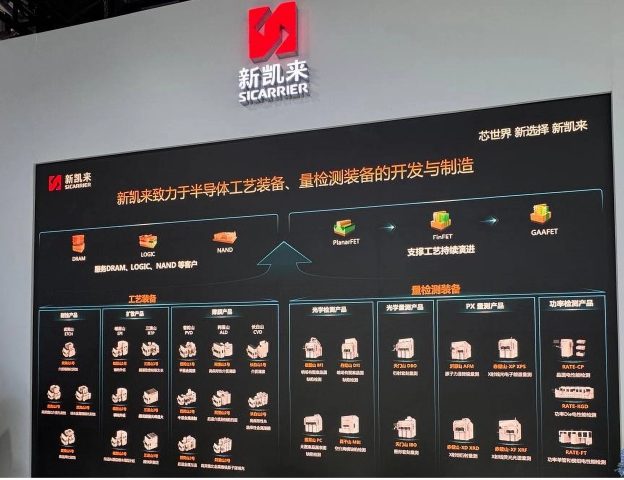
As China pushes through semiconductor independence by ramping up domestic AI chips to counter NVIDIA, the country is reportedly taking another major step toward self-reliance as SMIC is said to be testing a deep-ultraviolet (DUV) lithography machine developed by local start-up Yuliangsheng, as revealed by Financial Times.
Shenzhen-based SiCarrier, reportedly linked to Huawei, is listed as a Yuliangsheng shareholder and is investing in EUV lithography development, though sources say the effort is still in its early stages, the report suggests.
SiCarrier usually names its equipment after China’s iconic mountains, including Wuyi for etching machines and Emei for epitaxial products, TechPowerUp reported. Interestingly enough, Financial Times discloses that this latest EUV initiative, according to people familiar with the matter, carries the ambitious internal code name “Mount Everest.”
Sources say the machines SMIC is testing use immersion technology similar to ASML’s systems, the report suggests.
As ASML is barred from selling EUV equipment to China, the report says that Chinese chipmakers continue to rely on ASML’s DUV tools—most acquired before U.S.-led export controls or bought second-hand from other countries—to produce the nation’s most advanced processors, including Huawei’s Ascend series.
Hurdles Ahead
However, Financial Times also highlights the hurdles facing China’s DUV push. While most components in Yuliangsheng’s machines are made domestically, some are still imported, though the company is working to localize all parts, as noted by the report.
On the other hand, early results from SMIC’s trials are reportedly promising, but it remains unclear if—or when—the machines can be scaled for mass production, according to Financial Times. New DUV tools typically require at least a year of repeated adjustments to achieve the stability and yields needed for production, the report suggests.
Regarding applicable processes, the report notes that SMIC’s Chinese-made 28-nanometre (nm) DUV lithography machine is aimed at producing chips in the 7nm generation using multi-patterning techniques. Sources reportedly note that while these machines could potentially produce 5nm chips, yields would be lower, keeping more advanced processors out of reach.
If successful, the domestically made chipmaking tool could give China a major boost in its chip ambitions. Financial Times previously reported that China plans to triple its AI processor output next year, with one fab for Huawei’s AI chips set to start production by year-end and two more plants expected in 2026.
Read more
- [News] China Reportedly to Triple AI Chip Output Next Year With Fabs Serving Huawei, Cutting NVIDIA Reliance
- [News] Huawei’s 5nm Kunpeng 930 Leak Raises Big Question: TSMC or SMIC Behind it?
(Photo credit: TechNews)
Please note that this article cites information from Financial Times and TechPowerUp.