[News] Samsung Reportedly Delays V9 QLC NAND to 1H26 as SK hynix Hits 321 Layers in August
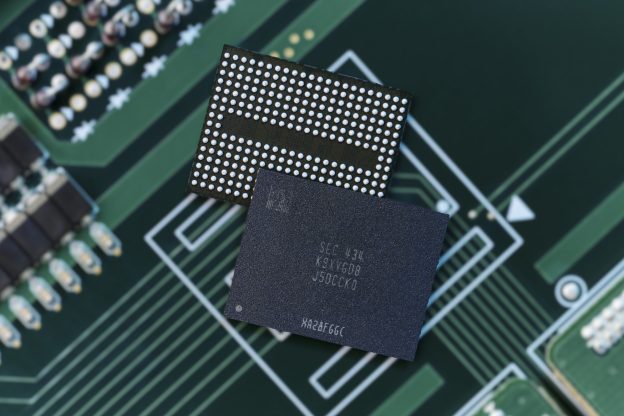
As major CSPs ramp up AI infrastructure and shift toward high-performance inference, demand for high-capacity storage keeps climbing—putting next-gen NAND development in the spotlight. Yet, according to ZDNet, Samsung Electronics is struggling to commercialize its ninth-generation (V9) high-capacity NAND, delaying full-scale V9 QLC NAND rollout to at least the first half of 2026.
The report highlights that Samsung’s V9 NAND features a 280-layer design, with initial mass production starting in April last year. The first batch reportedly used a TLC (triple-level cell) structure, achieving 1Tb capacity. Shortly after, in September 2024, Samsung began mass production of higher-capacity V9 QLC (quad-level cell) NAND, according to ZDNet.
However, multiple sources cited by ZDNet indicate that the initial V9 QLC units suffered from design flaws that caused performance issues, resulting in a delay. As the report points out, while Samsung still dominates the overall NAND market, it lags behind in the QLC segment. Its flagship QLC NAND products remain stuck at the V7 generation, with no QLC variant released for V8, the report notes.
SK hynix Challenges Samsung’s Lead
Notably, if Samsung fails to successfully roll out its V9 QLC NAND to meet soaring demand for high-capacity storage fueled by the rapid growth of inference AI services, it risks losing its competitive edge to rivals. In late August, SK hynix announced that it had completed development of its 321-layer 2Tb QLC NAND flash and had begun mass production, according to the company’s press release.
As noted by Ajunews, SK hynix’s latest breakthrough marks the world’s first QLC NAND with over 300 layers. The company says data transfer speeds have doubled compared with previous QLC products, while write performance has improved by up to 56% and read performance by 18%. Additionally, write power efficiency has risen by more than 23%, boosting competitiveness in AI data centers where low power consumption is essential.
On the other hand, the report notes that though Samsung unveiled its V10-class 1Tb TLC NAND with over 400 layers in February, the company has not disclosed an official rollout timeline. Meanwhile, Japan’s NAND leader Kioxia showcased its V10-class 332-layer NAND in early 2025, though full development and mass production are still pending, the report adds.
Read more
(Photo credit: Samsung)