[News] TSMC Arizona Delivers 2Q25 Investment Income; as Kumamoto Fab Struggles with Losses
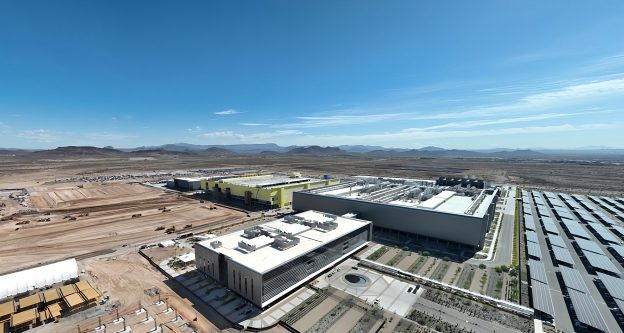
According to Commercial Times, TSMC reported a net profit of NT$398.27 billion in the second quarter of 2025. Within this, TSMC Arizona posted NT$4.232 billion in net income, its second straight quarter of profitability. For the first time, it also contributed NT$6.447 billion in investment income recognized by TSMC. Although this represented only 1.62% of TSMC’s quarterly net profit, it highlights that U.S. manufacturing is now on track—forming a sharp contrast with the losses at its Japanese operations.
The report notes that TSMC’s first fab in Arizona, with a monthly capacity of about 30,000 4nm wafers, is already fully booked by Apple, AMD, and others. Citing industry sources, the report notes that a fab’s profitability ultimately depends on UTR (capacity utilization rate). As the report points out, strong customer demand is the main reason TSMC’s U.S. fabs have been able to achieve profitability so quickly.
TSMC has invested US$165 billion in the U.S. As the report notes, the second fab has already completed construction, with supply chain sources estimating that tool move-in will begin in the third quarter of 2026, according to the report.
Challenges for TSMC in Japan: Low Utilization and Weak Demand
By contrast, in the first half of this year TSMC recognized a net loss of NT$4.52 billion from its Japanese subsidiary JASM, as the report points out. Industry sources note that JASM’s first fab operated at a utilization rate of only about 50% during the same period, mainly due to fierce competition in mature process nodes. Although TSMC is focusing on specialty processes, the lack of sufficient utilization has weighed on overall profitability even with subsidies, according to the report.
As the report highlights, citing sources, the absence of a clear recovery in the automotive and consumer markets is one reason for the slower pace of TSMC’s Kumamoto second fab construction. At the same time, the report points out that Japan’s lack of customers adopting cutting-edge process technologies—particularly in the automotive sector, where core autonomous driving chips are no longer dominated by Japanese manufacturers—is another factor behind the low utilization rate of TSMC’s Japanese operations.
TSMC’s second fab in Kumamoto, Japan, reportedly faces delays. A June MoneyDJ report, citing Nikkan Kogyo Shimbun, said the launch could be pushed back by up to a year and a half, with operations now expected to begin in the first half of 2029.
Read more
- [News] TSMC Reportedly Phases Out Legacy Production, Closing 6-Inch Fab 2 and 8-Inch Fab 5 by 2027
- [News] TSMC Reportedly Delays Kumamoto 2nd Fab Launch to 2029 Amid U.S. Expansion Push
(Photo credit: TSMC)
Please note that this article cites information from Commercial Times, MoneyDJ, and Nikkan Kogyo Shimbun.