[News] Samsung BioLogics Split Sparks Foundry Spin-Off Buzz: Potential Scenarios Unveiled
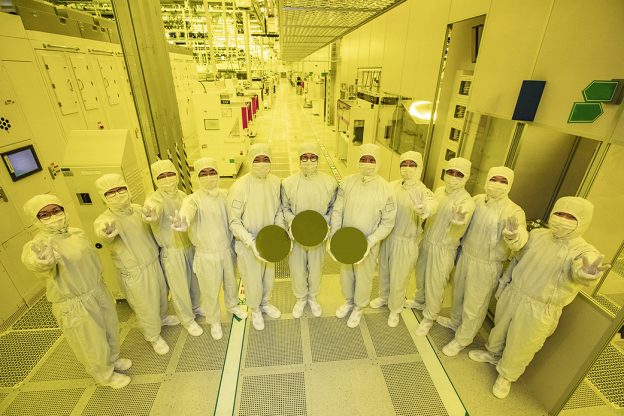
Facing continued challenges in securing major external orders for its foundry business, Samsung has sparked fresh speculation of a potential spin-off of its foundry unit—following its recent split of Samsung BioLogics—according to reports from Sedaily and Newsis.
The reports suggest that Samsung could apply the same playbook from the Samsung BioLogics spin-off to semiconductors. Just as Bioepis, a unit which develops “biosimilars,” was separated to avoid conflicts, spinning off System LSI could ease concerns over Samsung housing both chip design and manufacturing under the same roof.
Meanwhile, Sedaily adds it might even offer a way out of the division’s growing multibillion-dollar losses.
According to Reuters, while mobile sales stayed strong, Samsung’s chip division saw operating profit plunge 42% YoY to 1.1 trillion won in the first quarter. The Korea Economic Daily, on the other hand, indicates that Samsung’s foundry business posted more than 2 trillion won ($1.4 billion) in operating losses in the fourth quarter of 2024.
Samsung Foundry’s Future: Different Scenarios
Sedaily suggests that Samsung’s System LSI division has struggled with technological setbacks and worsening profits, triggering a deep management review by Samsung Global Research since early this year. With the review wrapping up soon, decisions on the DS division’s structure—especially regarding System LSI—could make or break the foundry spin-off plan, the report adds.
Sedaily reports that Samsung’s mobile AP team within System LSI might merge into the MX (Mobile Experience) division, which handles Galaxy smartphones and other IT devices. This move could boost the likelihood of a foundry spin-off.
However, as Newsis points out, Samsung’s DS Division currently profits only from memory, lacking the funds needed for the foundry’s massive investments—making a spin-off less likely.
Potential for a Comeback?
Since Samsung depends heavily on in-house chips like the Exynos 2500 and 2600 to utilize its advanced node capacity, its turnaround hinges on landing orders from major tech players. Recently, there seems to be some positive developments.
According to Chosun Biz, Samsung Foundry has entered the final phase of 2nm performance testing with NVIDIA GPUs and Qualcomm APs.
As per Sedaily, the Qualcomm AP in question could be the Snapdragon 8 Elite 2. If all goes as planned, TSMC will produce it on 3nm in the second half of 2025—while Samsung is aiming to leapfrog with its 2nm version, expected to debut in Galaxy phones by the second half of 2026.
If successful, this would be Samsung’s first Qualcomm smartphone AP order in three years, the report notes.
Read more
(Photo credit: Samsung)
Please note that this article cites information from Sedaily, Newsis, Reuters, Chosun Biz and the Korea Economic Daily.