[News] China’s DUV Could Reach High-Volume Production in 2–5 Years; EUV Reportedly Unlikely Within a Decade
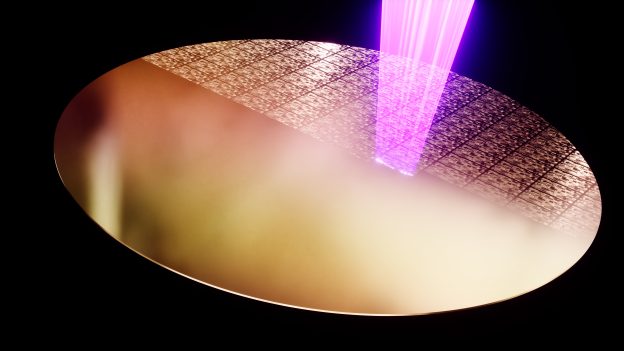
As China accelerates its push to develop advanced chipmaking equipment, it still appears to be years behind ASML in lithography technology. Bloomberg and BigGo Finance, citing UBS, report that China could achieve high-volume production of immersion deep ultraviolet (DUV) systems within two to five years, but is unlikely to develop EUV tools within the next decade.
UBS, according to Bloomberg, sees signs of progress, however, pointing to a surge in Chinese patent activity—particularly in light sources and laser subsystems—as a key indicator of technological maturity. The analysts said China’s capabilities appear comparable to where ASML stood around 2004, roughly 15 years before the Dutch company began mass-producing EUV systems.
For context, Bloomberg notes that ASML’s immersion DUV machines cost nearly US$90 million (RM363 million) each, compared with more than US$200 million for its most advanced EUV systems.
Even with the technology gap still wide, export restrictions are already taking a toll on ASML’s China business. EUV systems remain barred from being shipped to China, while Beijing’s push for semiconductor self-sufficiency is further weighing on demand. China accounted for 14% of ASML’s net system sales by shipment location in Q2 2026, down from 19% in Q1, according to the company’s latest results.
China’s DUV, EUV Progress in Focus
UBS’s assessment, as noted by BigGo Finance, comes as Beijing pursues a secretive, state-backed effort to build a homegrown EUV lithography system. The project has been likened to China’s “Manhattan Project,” reflecting the vast resources behind an initiative considered strategically vital to the country’s semiconductor ambitions, the report adds.
The scale of that effort became clearer in a late-2025 Reuters investigation, which revealed that China had already moved beyond the research stage to a EUV prototype. Completed in early 2025, the machine was undergoing testing and reportedly occupies nearly an entire factory floor. Citing people familiar with the project, Reuters said the system is operational and can generate EUV light, but has yet to produce a working chip.
On the other hand, a separate Reuters report noted in July that China has begun mass-producing domestically developed immersion deep-ultraviolet (DUV) lithography machines. Leading the production effort is Shanghai Aishengna Electronic Technology Group, a little-known Chinese state-owned company that has brought in teams from several leading domestic lithography startups, the report suggested.
According to The Information, China has a concrete roadmap for its DUV machines, as it plans to build about five this year and roughly 20 in 2027.
Chinese Chipmakers Embrace Homegrown Equipment
Meanwhile, domestic equipment makers are gaining traction as China’s semiconductor investment boom creates a growing home-market opportunity. South China Morning Post, citing Goldman Sachs, forecasts wafer-fab equipment spending in China to rise from roughly US$44.3 billion this year to US$53 billion in 2027 and US$60.7 billion in 2028.
That spending surge is also giving local equipment suppliers a powerful tailwind, particularly in the memory sector. As noted by the report, NAND giant YMTC, before being hit by US export restrictions in 2022, roughly half of its fab equipment came from US suppliers. Today, YMTC is moving toward fabs built predominantly with domestically sourced tools, the report adds.
Read more
- [News] U.S. May Push Near-Total ASML China Ban on DUV Sales and Servicing Amid China Domestic Lithography Push
- [News] China Reportedly Mass-Produces Immersion DUV Tools; SMIC, Hua Hong, CXMT Deliveries Expected This Year
(Photo credit: ASML)