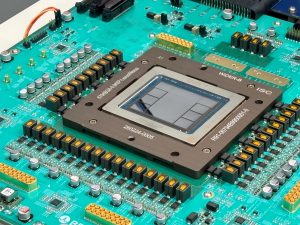
[News] CXMT Gross Margin Hits 87% in Q2 to Rival Memory Giants, as LPDDR6 Mass Production Reportedly Begins
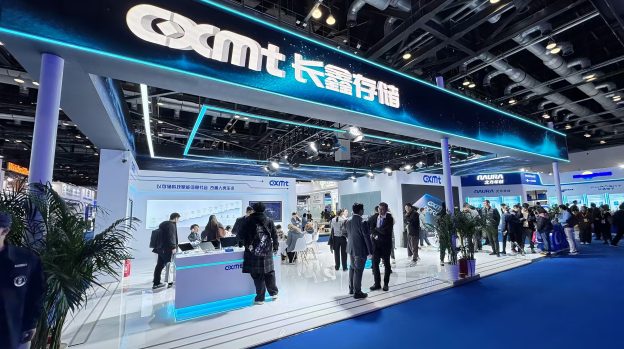
China’s DRAM leader CXMT has released its first half-year earnings report since going public, swinging into profit with net earnings of RMB 77.6 billion as revenue surged 873.64% YoY to RMB 150.3 billion. Beyond the headline numbers, CXMT’s half-year report offers several other key takeaways. Here are three worth watching.
2Q Gross Margin Hits 87%, Matching Global Memory Giants
As highlighted by the Economic Daily News, CXMT’s second-quarter profit jumped 113% QoQ to RMB 52.8 billion. According to CXMT, tight global DRAM supply pushed prices sharply higher, significantly lifting gross margins for the company’s major DRAM products.
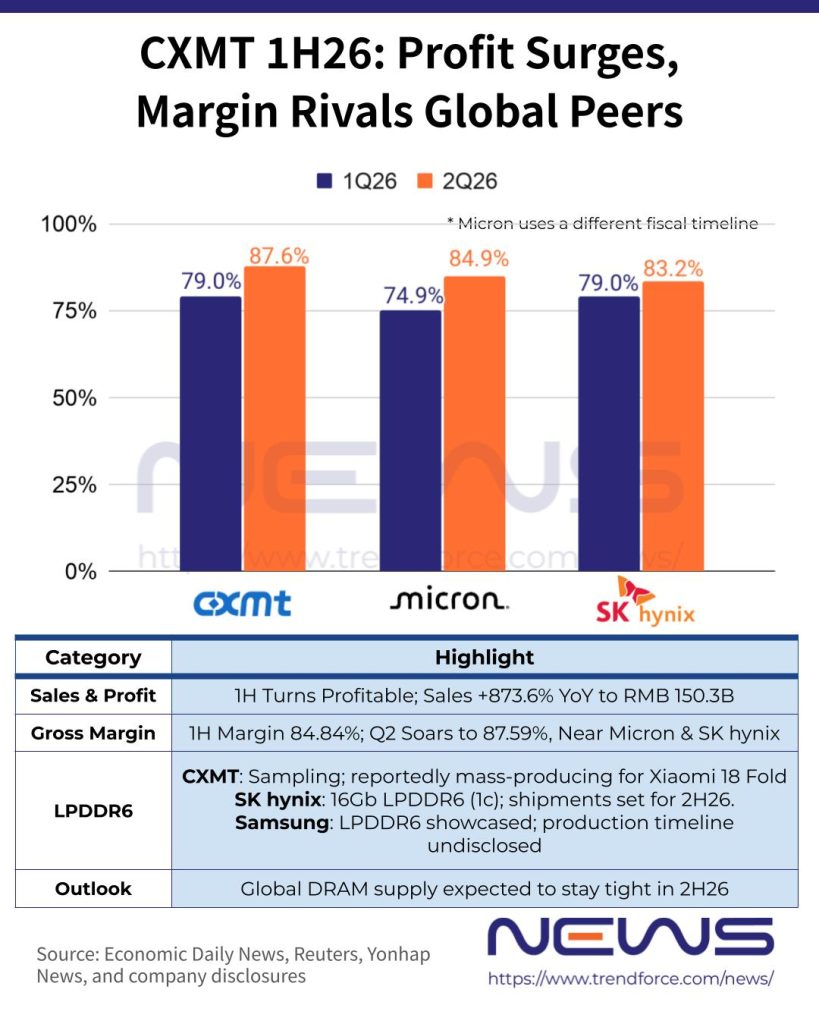
The strong pricing environment lifted CXMT’s profitability. Its first-half gross margin reached 84.84%, while Q2 gross margin climbed 8.44 percentage points QoQ—from roughly 79% in Q1—to 87.59%. Net margin also rose to 74.91%, up 9.92 percentage points QoQ and 88.57 percentage points YoY, according to the report.
Notably, that puts CXMT’s Q2 gross margin in line with those of the global memory leaders. Micron reported an 84.9% non-GAAP gross margin for its fiscal 3Q26, while SK hynix posted an 83.2% gross margin in 2Q26.
The favorable pricing trend is also expected to continue, as CXMT said that the global DRAM market is expected to remain undersupplied in the second half of the year.
R&D Spending Surges 87%
CXMT is also ramping up R&D investment alongside its strong profit growth. Total R&D spending reached RMB 6.859 billion in 1H26, up 87.38% YoY, driven by continued investment, a larger R&D workforce and higher testing and service costs, according to the company.
Despite the sharp increase, R&D spending as a share of operating revenue declined during the period, as revenue grew at a faster pace.
CXMT Enters LPDDR6 Mass Production
LPDDR products currently account for the bulk of CXMT’s business, contributing 65.86% of main business revenue, followed by DDR at 31.60%, while other products and services account for 1.68%, according to the Economic Daily News. That makes the company’s latest LPDDR6 progress especially consequential.
The Economic Daily News notes that LPDDR6 was absent from CXMT’s previous IPO prospectus but has now appeared in its latest interim report. The company said its LPDDR6 delivers speeds of up to 12,800Mbps and supports capacities of up to 16GB per chip, targeting applications across mobile devices, servers and smart cars. CXMT added that it has begun sampling LPDDR6 with key customers and is accelerating preparations for mass production.
Reuters, however, reports a more advanced timeline, saying CXMT has already begun mass production of LPDDR6 for Xiaomi’s upcoming 18 Fold. The milestone comes less than a year after CXMT ramped up mass production of its previous-generation LPDDR5 chips, underscoring the company’s rapid progress in next-generation mobile DRAM, the report adds.
The milestone was further confirmed by Xiaomi founder Lei Jun, who took to Weibo to congratulate CXMT, writing, “Congratulations to CXMT on achieving mass production of LPDDR6 memory—an impressive milestone!” He added that Xiaomi’s XRING O3 is the first platform to support CXMT’s LPDDR6, with the upcoming Xiaomi 18 Fold set to be the first smartphone to feature the new memory.
PRESS9 cautions that mass production alone does not put CXMT on par with Samsung Electronics or SK hynix, noting that the company has yet to disclose LPDDR6 yields or production volumes. Yonhap News, meanwhile, says the move signals intensifying competition in the LPDDR6 market.
SK hynix said in March that it had developed a 16Gb LPDDR6 DRAM using its sixth-generation 1c-class 10nm process and planned to begin shipments in the second half, as noted by Yonhap News. Samsung Electronics, meanwhile, showcased its LPDDR6 at CES 2026 in January but has yet to disclose a mass-production timeline, according to Yonhap.
Read more
- [News] Xiaomi XRING O3 Reportedly Features CXMT LPDDR6, TSMC 3nm, May Expand TSMC Ties to AI and Auto Chips
- [News] CXMT DDR5 Reportedly Tops 9,000 MT/s on AMD Platform, Narrowing Performance Gap With Global Leaders
(Photo credit: CXMT)