[News] Musk Signals Interest in FEL-EUV for Terafab, Potentially Cutting Power vs. ASML’s Current Light Source
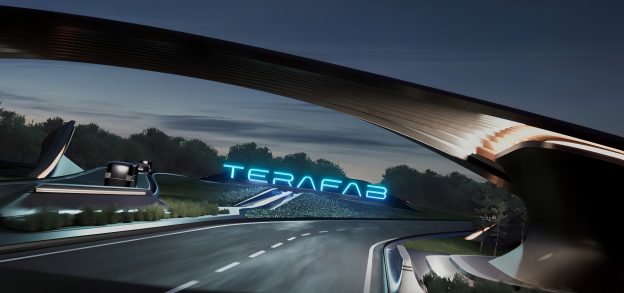
Elon Musk’s Terafab plans may include a new approach to EUV light generation. According to Bits and Chips, the facility may adopt free-electron lasers (FELs) instead of the laser-produced plasma (LPP) sources currently used by ASML. Responding to a post on X, Tesla CEO Elon Musk wrote “FEL, FTW” (Free-Electron Laser, For The Win), signaling his support for the technology.
As noted by Cailian Press, the industry currently relies on LPP technology, which uses high-power lasers to strike fast-moving tin droplets, creating high-temperature plasma that emits EUV light at a wavelength of 13.5 nm.
However, Cailian Press highlights two major drawbacks. Only around 0.1% of input electrical energy is converted into EUV output, while laser bombardment of tin droplets generates debris and contaminants that increase maintenance requirements. Despite these limitations, LPP remains the only EUV light-source technology used in large-scale production, partly because its compact size of just a few cubic meters allows it to be integrated into a lithography machine, the report adds.
FEL-EUV Promises Lower Power and Cleaner Light
By contrast, 36Kr notes that free-electron lasers (FELs) generate light directly from high-energy electron beams rather than plasma. Electrons are accelerated to near the speed of light and passed through alternating magnets, producing an intense, highly focused beam. By adjusting electron energy and magnet spacing, FELs can generate the 13.5 nm wavelength used in EUV lithography and theoretically extend to 6.x nm or shorter wavelengths. They also avoid tin contamination, reducing optical losses and maintenance downtime.
FELs could also significantly reduce power consumption. According to Cailian Press, producing 1 kW of EUV output is estimated to require around 4.4 MW of input power with current LPP technology, compared with theoretically about 0.7 MW using FEL.
Meanwhile, a major challenge for FELs is their enormous physical footprint. Cailian Press notes that such systems would have been too large for conventional semiconductor fabs. Terafab, however, is envisioned as an extremely large-scale facility, potentially making it better suited to accommodating a centralized FEL-based EUV system.
FEL-EUV Still Faces a Long Road to Commercialization
Still, the biggest question for FEL-EUV is when it can become commercially viable. As noted by Cailian Press, there are currently no established FEL light-source suppliers. The best-known startup, xLight, counts the U.S. government as a stakeholder and is chaired by former Intel CEO Pat Gelsinger, but currently expects to deliver only a working prototype by 2028. Notably, according to The Wall Street Journal, ASML’s most advanced lasers currently generate extreme ultraviolet light at a wavelength of about 13.5 nanometers, while xLight is targeting wavelengths as precise as 2 nanometers.
Cailian Press also highlights that regardless of which light source Terafab chooses, it is unlikely to eliminate its reliance on ASML. A complete lithography system also requires optics, masks, and control systems, all key areas of ASML’s technological strength. Musk’s FEL-EUV vision may therefore still depend on whether ASML can provide compatible lithography systems, particularly as TSMC and Samsung continue expanding capacity.
Read more
- [News] Tesla’s Terafab Takes Shape in Texas with $16.8B First Phase; Memory Engineering Hiring Signals DRAM Push
- [News] U.S. Invests $150M in xLight as Gelsinger-Led Startup Targets More Precise EUV Lasers Than ASML
(Photo credit: SpaceX on X)