[News] SMIC, Hua Hong Reportedly Lift Prices Amid AI-Driven Capacity Shifts; Hua Hong Expects More 12-Inch Hikes in 2026
With AI demand continuing to rise, China’s domestic foundries are seeing stronger orders and raising prices. According to Securities Times, around 80% of listed companies within the Shenwan semiconductor industry classification reported higher operating costs year over year in 1Q26, with wafer foundry price increases cited as a key factor driving costs higher. The report also cites sources at a leading domestic foundry as saying the company’s capacity utilization rate has risen sharply since May, nearly doubling from the third quarter of last year.
As the report highlights, in 1Q26, leading foundries SMIC and Hua Hong delivered resilient results despite the seasonal slowdown, while posting sequential gross margin improvement. The companies also raised prices for product categories facing supply shortages.
Chinese Foundries Raise Prices as Demand Strengthens
At SMIC’s 1Q26 earnings briefing, the company said it negotiated price increases with customers for product categories facing supply shortages. SMIC also noted that some customers, concerned about further supply chain cost increases, placed orders early to build inventory, supporting a strong order backlog. As the report notes, SMIC expects 2Q26 gross margins of 20%–22%, up by as much as two percentage points sequentially.
Based on customer demand, SMIC is optimistic about its outlook this year. According to TechNews, Co-CEO Zhao Haijun outlined five key growth drivers, including strong AI-driven demand for supporting chips such as power management semiconductors; overseas AI demand absorbing foundry capacity and pushing consumer electronics and IoT orders back to China in search of available production capacity; and AI-fueled demand from applications including Time-of-Flight (ToF) sensor, electric vehicles, and robotics.
As for Hua Hong, the company has steadily raised prices throughout 2025 and expects further increases in its 12-inch product segment in 2026. Hua Hong executives also pointed to a similar trend, noting rapid growth in the power management segment. Among product categories, MCUs, standalone flash memory, and BCD (integrated bipolar-CMOS-DMOS power chips) recorded strong growth rates, Securities Times adds.
Capacity Reallocation Opens Doors for China Foundries
Securities Times notes that as major players such as TSMC and Samsung Electronics shift capacity toward higher-margin advanced nodes, cutbacks in mature-node and 6-inch/8-inch production are creating opportunities for China’s mature-node foundries to attract new customers.
Furthermore, according to TrendForce, with Taiwanese foundries shifting capacity and raising prices, customers in HV processes and CIS applications are increasingly turning to Chinese foundries for more stable pricing and capacity availability. The shift has been evident since 2H25, driving strong demand for 90nm-and-above 12-inch wafers among Chinese foundries.
As foundries race to capture AI-related opportunities, China’s domestic foundries are accelerating acquisition-led expansion and industry consolidation. According to Securities Times, SMIC’s RMB 40.6 billion acquisition of a 49% stake in SMIC North was approved on May 11, paving the way for full ownership and expansion of its 12-inch foundry business. The report also indicates that Hua Hong is advancing a share issuance plan to acquire Hua Li Microelectronics, with a transaction value of RMB 8.268 billion.
Read more
- Capacity Cuts and Surging Demand for AI Power ICs Set Stage for Mature-Node Foundry Price Increases, Says TrendForce
- [News] SMIC Q1 Net Profit Up 5%, Misses Forecasts; Smartphone-Related Revenue Share Hits Lowest Since 2021
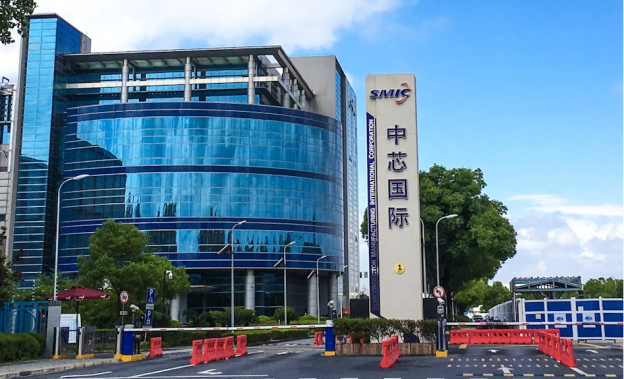
(Photo credit: SMIC)