[News] Huawei Takes Stake in InP Optical Chip Firm Milphoton Semiconductor
Corporate registration data from Tianyancha shows that Milphoton Semiconductor (Beijing) Co., Ltd. recently completed a significant shareholder restructuring, adding new investors including Huawei-affiliated Hubble and Suzhou Future Technology Enterprise Service Partnership (Limited Partnership).
The company’s registered capital increased from approximately CNY 5.155 million to CNY 5.514 million. The change coincided with the completion of its angel financing round, signaling the formal entry of leading strategic technology investors into the high-speed indium phosphide (InP) optical chip sector.
Founded in May 2021 and led by legal representative Yang Zhanyu, Milphoton is a deep-tech company focused on the development and production of indium phosphide (InP)-based high-speed optical chips. Its flagship products include uni-traveling-carrier photodetectors (UTC-PDs), which are designed for applications such as 800G and 1.6T high-speed optical modules, 6G all-photonic wireless base stations, and LiDAR/millimeter-wave radar fusion systems. The products are also positioned to support high-speed interconnect requirements in AI data centers, making the company a key supplier of critical components for next-generation optoelectronic convergence technologies.
The funding round was jointly backed by industry investors including Xinke Capital, affiliated with China Information and Communication Technologies Group (CICT), Oriza Holdings, and Huawei Hubble, among others. Proceeds from the financing will primarily support next-generation InP optical chip R&D, expansion of the company’s core engineering team, and the development of a pilot production line, accelerating commercialization of 6G all-photonic wireless technologies and high-speed optical interconnect products.
Against the backdrop of accelerating global deployment of AI computing clusters and intelligent computing infrastructure, demand for 800G and 1.6T optical modules continues to surge. However, high-speed InP-based optical chips have long remained dominated by overseas suppliers. As a III-V compound semiconductor material, indium phosphide offers irreplaceable performance advantages in high-frequency and optoelectronic applications, making it a critical substrate technology for 6G communications and next-generation high-speed optical modules.
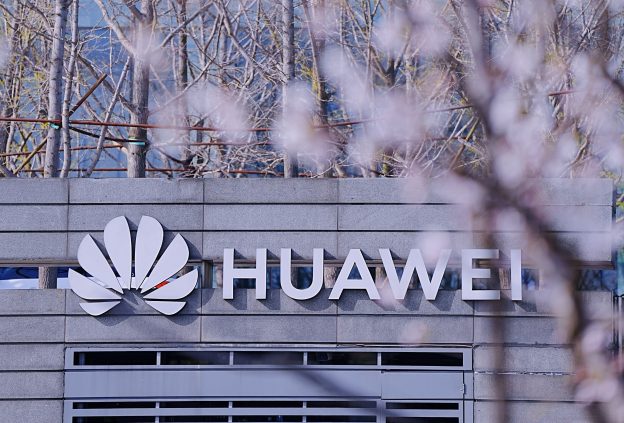
(Photo credit: Huawei)