[News] TI Reportedly Raises Power Component Prices 5–15% in July; De-China Shift Fuels Upcycle Momentum
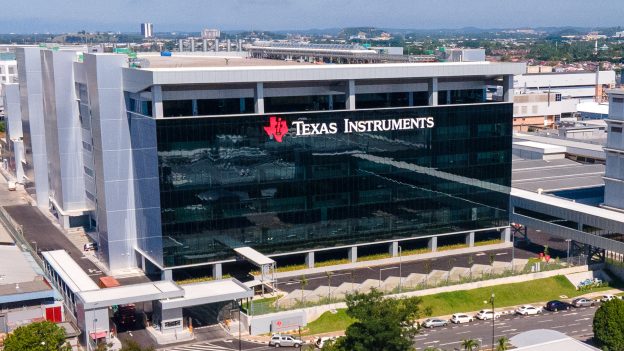
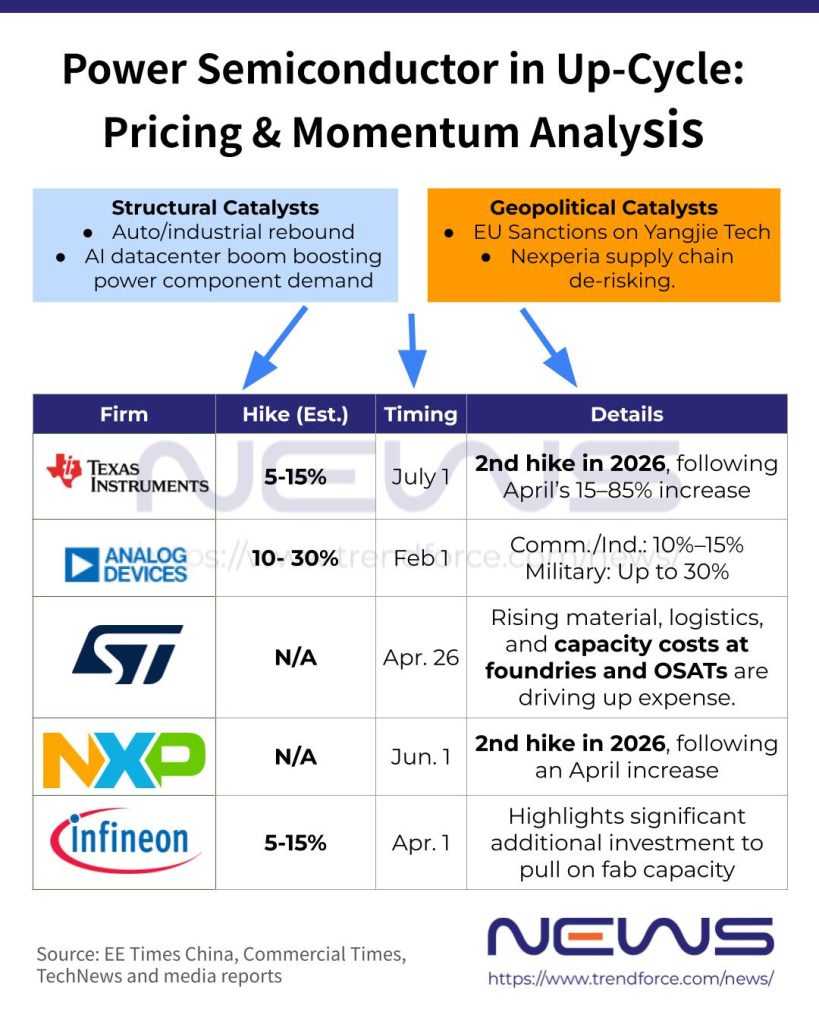
As demand rebounds and customers rebuild orders following pandemic-era inventory corrections, automotive and industrial chip markets are regaining momentum, with Texas Instruments emerging as one of the key beneficiaries. As previously reported by Sina, TI has notified customers of a price hike effective July 1, while supply chain sources cited by Commercial Times estimate increases of around 5%–15% in selected segments including power management ICs, MOSFETs, and industrial control chips.
As highlighted by the report, beyond reflecting rising raw material and supply-chain cost pressures, the move also signals that the analog IC and power semiconductor markets—after two years of intense price competition—are now officially entering a new upcycle of price increases.
Additionally, Commercial Times notes that the latest round of hikes reflects a broader structural shift in the analog and power semiconductor market. The report points out that surging AI infrastructure demand is reshaping the landscape, as next-generation data centers shift toward 800V HVDC power architectures to support high-power GPU clusters with increasingly stringent energy efficiency requirements.
Notably, the report highlights that rapid expansion in liquid cooling systems, CDU modules, and advanced power delivery solutions is further driving demand for the power components, reinforcing a longer-term tightening in the supply-demand balance.
Decoupling China Adds Momentum
While AI-driven demand is already straining global capacity, supply-side geopolitical risks are further tightening the market. Commercial Times notes that the global power device supply chain is bracing for another major restructuring following the inclusion of China-based Yangjie Technology in the EU’s 20th sanctions package against Russia. As a dominant force in the industry, Yangjie ranks second globally in power diodes and holds the top position in both bridge rectifiers and ESD protection components, the report adds.
MoneyDJ points out that the earlier Nexperia disruption had already severely dislocated the global automotive power semiconductor supply chain, extending lead times from around 30 days to as long as 30 weeks. Following the upheaval, the report notes that as automakers had begun qualifying alternative suppliers, including Taiwanese players and Yangjie Technology. Yangjie’s recent inclusion in sanctions-related measures has once again unsettled the market.
This heightened scrutiny, as per Commercial Times, reportedly accelerating a broader “de-China” diversification trend, as European and U.S. clients aggressively seek to de-risk their component sourcing.
Against the backdrop of surging AI demand and escalating U.S.–China tech tensions, this structural shift is positioned to benefit select Taiwan-based players—including Eris Tech, PANJIT, and Anpec Electronics—as they capture the diverted orders from the global market, according to Commercial Times.
Read more
- [News] Chip Price Hike Wave Builds as NXP, TI Reportedly Prepare Their Second Increases This Year for June and July
- [News] Chip Price Hike Wave: NXP Reportedly Sets Apr. 1 Increase as Texas Instruments, Infineon Also Raise Prices
(Photo credit: Texas Instruments)